

The Unseen Engine: The Will to Power and Human Desire
From the ancient Greeks grappling with the soul's conflicting impulses to modern thinkers dissecting the fundamental drivers of existence, the interplay between will and desire has remained a cornerstone of philosophical inquiry. This pillar page delves into the profound relationship between the inherent will that propels Man forward and the myriad desires that shape his actions, values, and ultimately, his understanding of Good and Evil. We will journey through the annals of philosophy, drawing insights from the Great Books of the Western World, to uncover how these twin forces define the human condition, challenging us to look beyond simplistic motivations and confront the deeper currents that stir within us.
The Primal Urge: Defining Will and Desire
Before we embark on our historical exploration, it is crucial to establish a working understanding of our core concepts. While often used interchangeably in common parlance, will and desire hold distinct, yet intimately connected, meanings in philosophy:
- Desire: Often understood as an appetite, a longing, or a yearning for something perceived as good or pleasurable. It is typically directed towards an object or an outcome – be it knowledge, wealth, love, power, or even the cessation of suffering. Desire is the magnetic pull towards an end state.
- Will: More complex, the will can be seen as the faculty of the mind by which Man chooses or decides upon a course of action. It is the active, driving force; the capacity to initiate and sustain action, often in pursuit of a desire or an ideal. In some philosophies, the will is a rational faculty; in others, it is a blind, unconscious, or even cosmic force.
The "Will to Power," as famously articulated by Nietzsche, transcends mere desire for power or domination. It is a fundamental, life-affirming instinct for growth, overcoming, and self-mastery – an intrinsic drive to expand, intensify, and assert oneself. This concept offers a radical lens through which to re-evaluate all human desires and actions.
Ancient Echoes: Desire, Reason, and the Good
In the classical world, the relationship between desire and a guiding will was central to understanding human morality and the pursuit of the Good.
- Plato's Chariot: In Phaedrus, Plato famously describes the soul as a charioteer (reason) guiding two winged horses: one noble and spirited (thumos), the other unruly and appetitive (epithymia, or desire). For Plato, the will (or the rational part of the soul) must assert control over base desires to ascend towards the Forms, particularly the Form of the Good. A life governed by unbridled desire leads to disorder and prevents Man from achieving true virtue.
- Aristotle's Teleology: Aristotle, in his Nicomachean Ethics, viewed desire (orexis) as a natural impulse towards perceived goods. However, true human flourishing (eudaimonia) requires that these desires be guided by practical reason, which shapes our will towards virtuous action. The will here is a rational appetite, choosing the mean between extremes. The desire for Good is inherent, but the will directs us to achieve it correctly.
For the ancients, the will was often seen as the rational faculty that could either master or be enslaved by desire, with the former leading to a life of virtue and the latter to vice. The distinction between Good and Evil was largely drawn along these lines of rational control versus passionate excess.
Medieval Contemplations: Divine Will and Human Freedom
With the rise of Christian philosophy, the concepts of will and desire took on new dimensions, deeply intertwined with divine command and the nature of human freedom.
- Augustine's Free Will: Saint Augustine, particularly in Confessions and The City of God, placed immense emphasis on the will as the seat of moral agency. His concept of free will (liberum arbitrium) is central to understanding sin and redemption. Man's desire for worldly pleasures, rather than for God, represents a misdirection of the will. The struggle between fleshly desires and the will to love God defines the human spiritual journey. Good and Evil are defined by whether the will aligns with or deviates from God's divine will.
- Aquinas's Rational Appetite: Thomas Aquinas, synthesizing Aristotle with Christian theology, viewed the will as a "rational appetite" – a desire for the good as apprehended by the intellect. Human desires are natural, but the will chooses which desires to pursue based on reason's judgment of what is truly good. The ultimate desire of Man is for God, the Supreme Good, which the will should strive to attain.
The medieval period solidified the idea of will as a moral compass, capable of choosing between Good and Evil, often in the face of conflicting desires.
The Modern Turn: Self-Assertion, Power, and the Subjective Will
The Enlightenment and subsequent philosophical movements brought a radical shift, emphasizing individual autonomy, the social contract, and eventually, a more raw, existential understanding of will and desire.
- Machiavelli's Will to Acquire: Niccolò Machiavelli, in The Prince, observed Man's desire for power and security as a fundamental, amoral force. The will of the ruler, driven by the necessity to maintain the state, often overrides conventional notions of Good and Evil. Man is inherently self-interested, and the will to acquire and keep power is a primary driver.
- Hobbes's Will to Survive: Thomas Hobbes, in Leviathan, posited that Man's most fundamental desire is for self-preservation. In the "state of nature," this desire leads to a "war of all against all." The will to escape this brutal existence leads to the formation of a social contract and the surrender of individual will to a sovereign. For Hobbes, Good and Evil are largely defined by what promotes or hinders self-preservation and social order.
- Kant's Good Will: Immanuel Kant, in his Groundwork of the Metaphysics of Morals, championed the concept of the "Good Will." For Kant, a truly moral action is not driven by desire or inclination, but by duty – by the will acting purely from respect for the moral law. The will is autonomous, capable of legislating universal moral principles. Desire is often seen as heteronomous, pulling Man away from true moral freedom.
- Schopenhauer's Blind Will: Arthur Schopenhauer, deeply influenced by Eastern thought, posited a metaphysical "Will" as the fundamental, blind, irrational force underlying all phenomena, including human desire. This Will is a restless, insatiable striving, leading to suffering. Human desires are merely manifestations of this cosmic Will. For Schopenhauer, Man is perpetually driven by this force, trapped in a cycle of wanting.
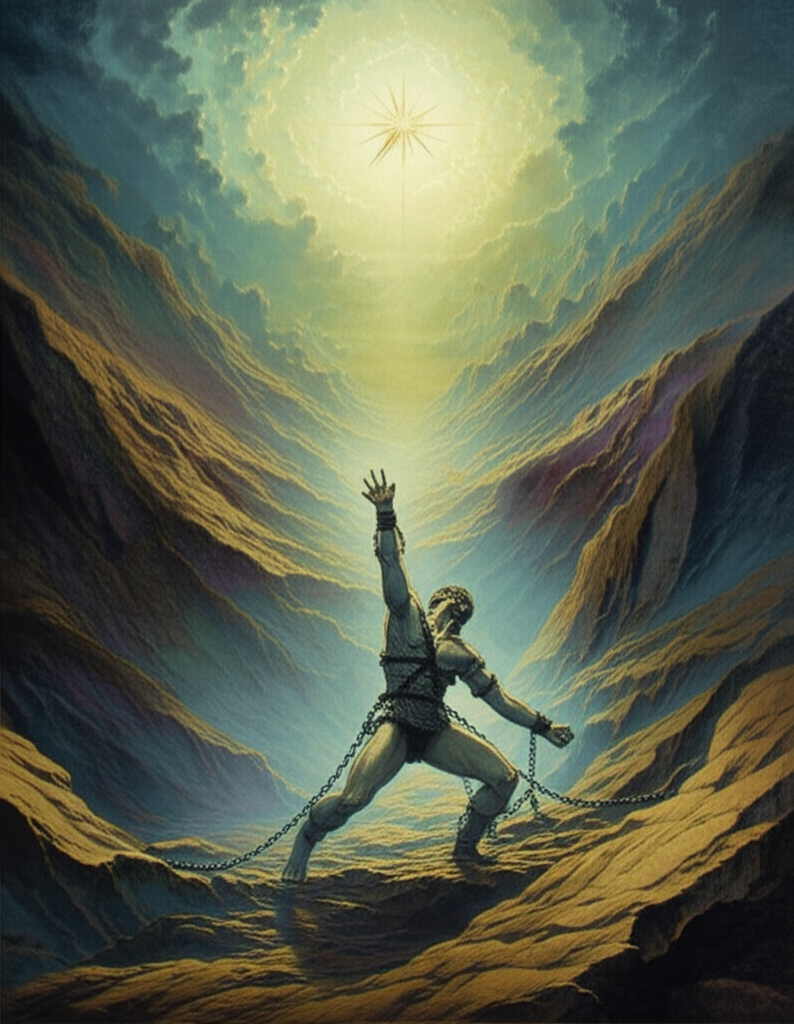
Nietzsche's Revaluation: The Will to Power as Life Itself
It is with Friedrich Nietzsche that the concept of the "Will to Power" takes center stage, offering a radical reinterpretation of Man's fundamental drive. For Nietzsche, the Will to Power is not merely a desire for external domination, but a profound, intrinsic drive for growth, overcoming, and self-overcoming.
- Beyond Good and Evil: Nietzsche argued that traditional morality (slave morality) often repressed this fundamental Will to Power, labeling its expressions as evil while valorizing weakness and conformity as good. He called for a "revaluation of all values," where Man embraces his inherent drive to create, to assert, and to elevate himself.
- Desire as Manifestation: In Nietzsche's view, all human desires – for knowledge, for love, for art, for revenge, for power – are ultimately manifestations of this underlying Will to Power. They are expressions of life's fundamental urge to expand and intensify itself. Man is not driven by the desire for happiness, but by the desire to overcome, to become more.
- The Overman: The ideal of the Overman (Übermensch) represents Man who has fully embraced and directed his Will to Power, creating his own values beyond conventional Good and Evil, and achieving self-mastery and profound self-affirmation.
Nietzsche's philosophy challenges us to see desire not as something to be suppressed or merely fulfilled, but as a dynamic expression of a deeper, more fundamental will to live, to grow, and to overcome.
The Interplay: Shaping Man, Morality, and Destiny
The historical journey through the Great Books reveals a complex and evolving understanding of Will and Desire.
| Philosophical Perspective | Primary View of Will | Primary View of Desire | Impact on Good and Evil |
|---|---|---|---|
| Plato/Aristotle | Rational control | Appetitive, needs reason | Good = rational control; Evil = unchecked desire |
| Augustine/Aquinas | Moral choice, rational appetite | Earthly vs. Divine | Good = alignment with God's Will; Evil = misdirected will |
| Hobbes/Machiavelli | Self-preservation, acquisition | For security, power | Good = what preserves life/state; Evil = what threatens it |
| Kant | Autonomous, duty-bound | Heteronomous, inclination | Good = acting from duty; Evil = acting from desire/inclination |
| Schopenhauer | Blind, irrational force | Manifestation of Will | Good = ascetic denial of Will; Evil = striving of Will |
| Nietzsche | Will to Power (growth, overcoming) | Manifestation of Will to Power | Good = life-affirming creation; Evil = life-denying repression |
This table highlights the profound divergence in how philosophers have conceptualized these forces. Yet, a common thread persists: the recognition that Man is not a passive being, but one driven by powerful internal dynamics.
The tension between will and desire continues to define our ethical landscapes. Is Good that which satisfies our desires, or that which transcends them? Is Evil the failure of will to control desire, or is it the repression of a fundamental life-affirming will? These questions, born from centuries of philosophical inquiry, remain profoundly relevant to understanding human nature, morality, and our place in the world.
Conclusion: The Enduring Question
The exploration of "The Will to Power and Human Desire" is not merely an academic exercise; it is an invitation to profound self-reflection. From Plato's charioteer to Nietzsche's Overman, philosophers have grappled with the invisible engines that propel Man. Whether we conceive of will as a rational faculty, a divine spark, or a primal, life-affirming force, and desire as a base urge or a dynamic manifestation of that will, their interplay remains central to our understanding of ourselves.
To truly comprehend Man, and to navigate the complex terrain of Good and Evil, we must continually interrogate the nature of our will and the origins of our desires. It is in this ongoing philosophical struggle that we uncover the depths of the human spirit and perhaps, glimpse the path to becoming truly who we are.
📹 Related Video: KANT ON: What is Enlightenment?
Video by: The School of Life
💡 Want different videos? Search YouTube for: ""Nietzsche Will to Power Explained""
📹 Related Video: PLATO ON: The Allegory of the Cave
Video by: The School of Life
💡 Want different videos? Search YouTube for: ""Plato's Republic: The Soul and Desire""