

The Unyielding Current: Exploring the Will to Power and Human Desire
The human experience, in its vast and often perplexing complexity, is fundamentally shaped by an internal dynamism – a relentless striving that propels us forward. At the core of this drive lies a concept both profound and provocative: the Will to Power. Far from a mere craving for dominance, as often misconstrued, Friedrich Nietzsche's Will to Power describes a fundamental, primordial force inherent in all life, a drive not just for survival, but for growth, overcoming, and self-mastery. This deep-seated will manifests in countless forms as human desire, shaping our individual paths, our societies, and our very understanding of what it means to be man, challenging traditional notions of Good and Evil.
This pillar page delves into the intricate relationship between the Will to Power and human desire, exploring its philosophical roots, its manifestations in the human psyche, and its profound implications for how we navigate our existence, drawing insights from the rich tapestry of thought found within the Great Books of the Western World.
The Primal Urge Within Man: What is the Will to Power?
At its most fundamental, the Will to Power is Nietzsche's assertion that the basic drive of all living things is not merely to survive, but to excel, to grow, to overcome resistance, and to affirm life in its fullest, most potent expression. It is an expansive force, a desire for self-overcoming and the constant creation of new values and perspectives. It's not a conscious choice but an underlying physiological and psychological imperative.
This concept radically redefines our understanding of man. We are not simply rational animals or beings driven by pleasure and pain, but rather intricate expressions of this fundamental will. Every action, every aspiration, every struggle, and every achievement can be viewed as a manifestation of this inherent drive to enhance one's power – not necessarily over others, but over oneself, over circumstances, and over the very meaning of existence.
Before Nietzsche, many philosophers in the Great Books tradition grappled with similar ideas of internal drives. Plato, with his tripartite soul, acknowledged the appetitive and spirited parts as forces that needed to be guided by reason. Aristotle spoke of a telos, an inherent drive towards an ultimate good or flourishing. Augustine wrestled with the concept of voluntas (will) and its power in human salvation or damnation. However, Nietzsche's Will to Power offered a distinctly biological, non-teleological, and often amoral interpretation that challenged millennia of philosophical and religious thought.
Distinguishing the Will to Power
It is crucial to differentiate the Will to Power from simpler, often misunderstood interpretations:
- Not merely a desire for political dominance: While it can manifest as such, it is far broader, encompassing artistic creation, intellectual pursuit, personal discipline, and even compassion.
- Not identical to Schopenhauer's Will to Live: Schopenhauer saw the will as a blind, irrational, and ultimately futile striving that led to suffering. Nietzsche, in contrast, saw the Will to Power as an affirmative, life-enhancing force that embraces suffering as a catalyst for growth.
- A drive for qualitative enhancement: It's about becoming more, stronger, deeper, more creative, rather than merely accumulating possessions or influence.
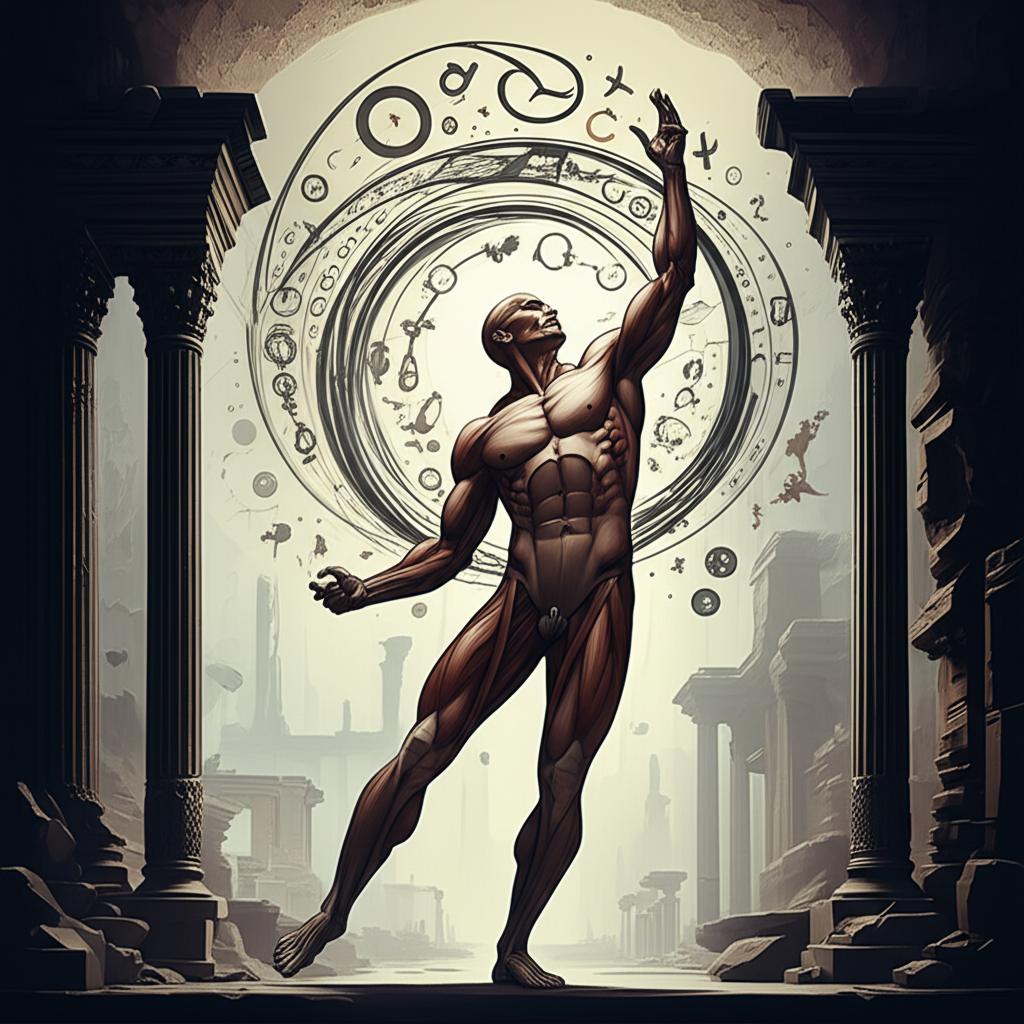
Human Desire: The Myriad Faces of the Will
If the Will to Power is the deep, unseen current, then human desire is the visible ripple on the surface. Our desires – for knowledge, for love, for wealth, for artistic expression, for recognition, for spiritual enlightenment – are all specific manifestations of this underlying will to grow and overcome. They are the means by which the Will to Power seeks to express itself in the phenomenal world.
Consider the diverse landscape of human aspiration:
| Type of Desire | Manifestation of the Will to Power |
|---|---|
| Desire for Knowledge | An urge to master understanding, to categorize and explain the world, thereby gaining intellectual control. |
| Desire for Love/Belonging | An expansion of the self through connection, influencing and being influenced, extending one's sphere of being. |
| Desire for Wealth/Resources | A means to greater freedom, security, and the ability to enact one's will upon the world without constraint. |
| Desire for Artistic Creation | The drive to impose one's vision onto reality, to overcome the formless with form, a profound act of self-overcoming. |
| Desire for Recognition/Fame | An affirmation of one's significance, a desire for one's values and achievements to be acknowledged and perpetuated. |
| Desire for Moral Purity | Often a will to impose a particular order on oneself and others, a striving for self-mastery and adherence to a chosen ideal. |
Every time man seeks to learn a new skill, climb a corporate ladder, fall in love, create a masterpiece, or even overcome a personal weakness, he is, consciously or unconsciously, expressing his will to power. Our desires are not random whims but purposeful vectors of this fundamental life-affirming force.
The Revaluation of Values: Good and Evil in the Shadow of Will
Perhaps the most radical implication of the Will to Power lies in its challenge to traditional morality. Nietzsche argued that our concepts of Good and Evil are not divinely ordained or universally objective, but rather creations of specific wills, serving particular forms of life. He famously distinguished between "master morality" and "slave morality."
- Master Morality: Arises from a strong, noble man who affirms life, creates his own values, and defines "good" as that which enhances his life, strength, and nobility. "Evil" is seen as weak, timid, and common. This morality is driven by an overflowing will to power.
- Slave Morality: Arises from the resentful desire of the weak and oppressed. It inverts master values, defining "good" as humility, pity, and patience, while "evil" becomes pride, strength, and ambition. This morality seeks to tame and devalue the powerful, often out of a suppressed will to power that cannot express itself directly.
This revaluation forces us to question the origins of our moral codes. Is "good" truly inherently good, or is it a label applied by a particular group to justify their existence and maintain their power? For Nietzsche, what is "good" is ultimately what contributes to the enhancement of life, to the growth and overcoming of the man who wills it. What is "evil" is that which diminishes life, fosters weakness, and denies the inherent drive of the will to power.
This perspective directly challenges the universal ethical systems proposed by thinkers like Immanuel Kant, who sought objective moral laws derived from reason, or the theological frameworks of Aquinas or Augustine, where Good and Evil are rooted in divine command or natural law. Nietzsche compels us to look beneath the surface of our moral pronouncements and discern the underlying will that shapes them.
Historical Echoes: Will and Desire Through the Ages (Great Books Perspective)
The concept of an inherent drive or will has preoccupied philosophers for millennia, long before Nietzsche articulated his Will to Power. A journey through the Great Books reveals a fascinating evolution of thought:
- Plato (c. 428–348 BCE): In The Republic, Plato describes the soul as a charioteer (reason) guiding two horses: one noble and spirited (honor, courage), the other unruly and appetitive (desire for bodily pleasures). Here, will is implicitly present in the charioteer's struggle to direct these inherent drives towards the Good.
- Aristotle (384–322 BCE): For Aristotle, every being has a telos, an inherent purpose or end towards which it strives. Human desire is often directed towards achieving eudaimonia (flourishing or living well), which aligns with our rational nature. This striving is a form of intrinsic will.
- Augustine of Hippo (354–430 CE): In Confessions and The City of God, Augustine extensively explores the concept of voluntas (will). He sees it as central to human agency, free to choose between good and evil, but profoundly affected by original sin. The desire for God is the ultimate good, but a fallen will often chooses lesser goods.
- Thomas Aquinas (1225–1274): Building on Aristotle and Augustine, Aquinas in Summa Theologica discusses the rational appetite (will) and the sensitive appetite (desire). The will, guided by intellect, naturally desires the good, but can be swayed by passions.
- Thomas Hobbes (1588–1679): In Leviathan, Hobbes describes man in a state of nature as driven by "a perpetual and restless desire of power after power, that ceaseth only in death." This echoes Nietzsche's concept in its relentless striving, though Hobbes views it as leading to conflict and necessitating an absolute sovereign.
- Jean-Jacques Rousseau (1712–1778): Rousseau, particularly in Discourse on Inequality, contrasts natural desires (amour de soi – self-love for preservation) with corrupted desires (amour propre – vain pride, comparison with others) that arise in society. His man is naturally good, but society corrupts his will and desires.
- Arthur Schopenhauer (1788–1860): A direct precursor to Nietzsche, Schopenhauer's The World as Will and Representation posits a blind, irrational, ceaseless Will as the fundamental reality underlying all phenomena. This will is insatiable and the source of all suffering, driving all desire. Nietzsche both admired and reacted against Schopenhauer, transforming the pessimistic Will into an affirmative Will to Power.
Nietzsche, therefore, stands on the shoulders of giants, re-interpreting and radicalizing these earlier discussions of will and desire into a singular, all-encompassing life-affirming principle.
The Modern Man and the Unseen Current
In the 21st century, the Will to Power and human desire continue to manifest in myriad ways, often beneath the surface of our conscious awareness. The relentless pursuit of achievement, the drive for self-optimization, the insatiable hunger for novelty and experience – these are all echoes of the fundamental will.
- Consumerism: The constant desire for new products, experiences, and statuses can be seen as a diluted expression of the will to power, seeking to expand one's influence and control through material acquisition.
- Social Media: The curated self, the pursuit of likes and followers, the craving for validation – these are modern manifestations of the desire for recognition and influence, a digital will to power.
- Entrepreneurship and Innovation: The drive to create, to disrupt, to build empires, to leave a mark – these are potent expressions of the will to power in its more creative and constructive forms.
- Self-Help and Personal Growth: The widespread emphasis on self-improvement, mindfulness, and resilience reflects a conscious effort to master oneself, to overcome limitations, and to enhance one's personal power.
For the modern man, understanding this inherent drive can be both liberating and challenging. It can empower us to recognize the source of our deepest motivations and to direct our desires towards genuine growth and self-overcoming, rather than being mere slaves to fleeting whims or external pressures.
📹 Related Video: ARISTOTLE ON: The Nicomachean Ethics
Video by: The School of Life
💡 Want different videos? Search YouTube for: ""Nietzsche Will to Power Explained" or "Human Desire Philosophical Analysis""
Navigating the Abyss: Criticisms and Complexities
While profoundly insightful, Nietzsche's Will to Power is not without its critics and complexities.
- Misinterpretation and Abuse: The concept has unfortunately been co-opted and distorted, particularly by totalitarian regimes, to justify aggression, dominance, and a disregard for human rights. This highlights the danger of separating the will to power from Nietzsche's broader philosophy of self-overcoming and the creation of value.
- Lack of Empirical Verification: As a philosophical concept, the Will to Power is not empirically verifiable in a scientific sense. It remains an interpretive framework for understanding life, rather than a scientific law.
- Moral Relativism: If Good and Evil are merely creations of different wills, does this lead to an unbridled moral relativism where anything goes? Nietzsche himself wrestled with this, arguing that not all wills are equal; some wills create life-affirming values, while others lead to decadence. The challenge lies in discerning and affirming the former.
- The Problem of "The Other": If every man is driven by a will to power, how do we reconcile individual striving with the needs and desires of others? While Nietzsche emphasized individual excellence, he also recognized the need for healthy, hierarchical societies that allow for the flourishing of different types of man.
These criticisms underscore the need for careful, nuanced engagement with Nietzsche's ideas, rather than superficial dismissal or blind adherence.
Conclusion: Embracing the Dynamic Flow
The Will to Power and human desire are not abstract philosophical concepts but living forces that shape every aspect of our existence. To understand them is to gain a profound insight into the very nature of man, the genesis of our values, and the relentless striving that defines our journey.
Nietzsche challenges us to look beyond conventional morality, to question the sources of our desires, and to recognize the inherent will within us to grow, to overcome, and to create. This understanding compels us to re-evaluate our notions of Good and Evil, not as fixed dogmas, but as expressions of life-affirming or life-denying wills.
By acknowledging the unyielding current of the Will to Power and its manifestation in our diverse desires, we can embark on a more conscious, deliberate path of self-creation. This journey is not without its challenges, but it offers the profound possibility for man to become more, to live more authentically, and to embrace the dynamic, ever-overcoming nature of life itself.
📹 Related Video: ARISTOTLE ON: The Nicomachean Ethics
Video by: The School of Life
💡 Want different videos? Search YouTube for: ""Nietzsche's Ethics and the Problem of Morality" or "The Philosophy of Self-Overcoming""