

The Unyielding Current: Exploring the Will to Power and the Depths of Human Desire
The concept of the "Will to Power," most famously articulated by Friedrich Nietzsche, cuts to the very core of human motivation, challenging traditional understandings of Man, morality, and the fundamental drivers of existence. Far from a simple drive for domination, it posits an intrinsic force within all living things, especially Man, not merely to survive, but to grow, overcome, and assert its being. This primal Will inextricably links with every facet of Human Desire, shaping our aspirations, our conflicts, and our very notions of Good and Evil. This pillar page delves into this profound philosophical idea, tracing its roots in Western thought, dissecting Nietzsche's radical reinterpretation, and examining its enduring implications for understanding the intricate tapestry of human experience.
The Genesis of Will and Desire in Western Thought
Before Nietzsche, philosophers wrestled with the nature of will and desire for millennia. The "Great Books of the Western World" offer a rich tapestry of these explorations:
- Ancient Greek Insights:
- Plato, in The Republic, speaks of the tripartite soul, where epithymia (desire/appetite) often conflicts with thumos (spirit/will) and logos (reason). The virtuous man achieves harmony through reason's governance.
- Aristotle, in Nicomachean Ethics, distinguishes between rational and irrational desires, positing that human actions are driven by a telos (purpose), often involving a desire for the Good (eudaimonia or flourishing).
- Medieval Christian Perspectives:
- Augustine's Confessions grapples with the problem of evil and the will. He sees the will as central to sin, where man chooses to turn away from God, driven by disordered desires. The struggle between the divine will and human will is paramount.
- Early Modern Reinterpretations:
- Baruch Spinoza, in Ethics, presents the conatus – an inherent striving of every being to persevere in its own being. This conatus is the essence of desire, and it drives all actions. For Spinoza, there is no free will in the traditional sense; rather, man acts according to the necessity of his nature.
- Immanuel Kant, in Critique of Practical Reason, elevates the rational will as the source of moral law. A truly moral act is one performed out of duty, dictated by an autonomous will that aligns with universal reason, not by inclination or desire.
- Arthur Schopenhauer, in The World as Will and Representation, provides a direct precursor to Nietzsche. He posits a blind, irrational, ceaseless cosmic Will as the fundamental reality of the universe, and all phenomena, including human desire and suffering, are manifestations of this Will. He sees human life as a constant struggle driven by this insatiable Will, leading inevitably to suffering.
These diverse perspectives laid the intellectual groundwork, revealing the profound and often contradictory nature of the will and desire in shaping the human condition.
Nietzsche and the Radical Revaluation: The Will to Power Defined
Friedrich Nietzsche's concept of the Will to Power is not a simple lust for domination or political control, though it can manifest in such ways. Instead, it is a fundamental, creative drive that underpins all life. For Nietzsche, every organism, every man, seeks not merely to survive, but to overcome, to grow, to master its environment and itself. It is a Will to expand, to affirm life, and to create values.
Nietzsche found Schopenhauer's pessimistic view of the Will too narrow. While Schopenhauer saw the Will as a source of suffering to be negated, Nietzsche saw it as the very engine of life's vitality and creativity. The Will to Power is:
- Not a Will to Survive: Survival is a consequence of the Will to Power, not its primary aim. A creature that merely seeks to survive is already in decline.
- *A Will to Overcome: It is a drive for self-overcoming, for growth, for transformation. It pushes man beyond his current state.
- *A Will to Create Values: In a world where traditional sources of meaning (like God) have died, man must create his own values, driven by his inherent Will to Power.
- *Expressed in All Aspects of Life: From the simplest biological processes to the loftiest artistic creations, the Will to Power manifests.
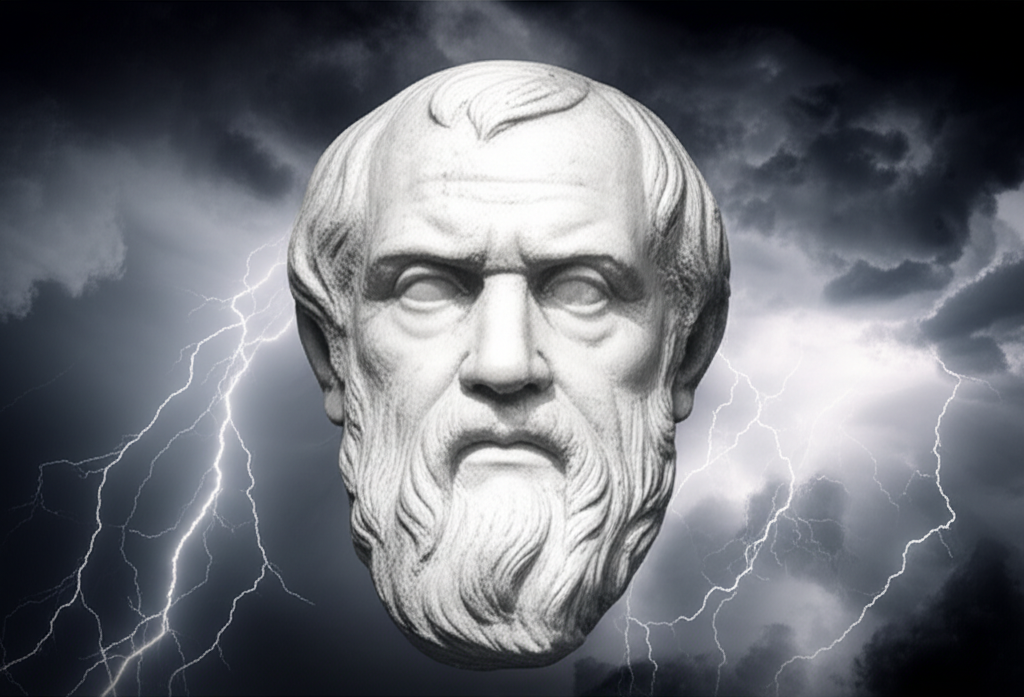
Human Desire: A Spectrum of Manifestations of the Will to Power
If the Will to Power is the fundamental drive, then human desire can be understood as its myriad expressions. Every aspiration, every longing, every impulse can be seen through this lens:
Common Desires as Expressions of the Will to Power:
- Desire for Knowledge: The drive to understand, to unravel mysteries, to master information, is a form of overcoming ignorance and expanding one's power over the unknown.
- Desire for Art and Creativity: The urge to create, to impose form upon chaos, to express unique visions, is a powerful manifestation of the Will to Power – shaping reality according to one's own will.
- Desire for Love and Connection: While seemingly altruistic, even the desire for love can be interpreted as a form of self-expansion, a desire to merge, to influence, and to be affirmed by another, thus increasing one's sense of being.
- Desire for Recognition and Status: The need to be seen, to be valued, to achieve prominence, is a direct expression of the Will to Power in a social context, seeking to elevate one's position within the hierarchy.
- Desire for Self-Improvement: The drive to become stronger, wiser, more virtuous, or more skilled is a classic example of self-overcoming, pushing beyond one's current limitations.
- Desire for Meaning: The search for purpose, for a narrative that makes sense of one's existence, is a deep-seated desire to impose order and significance, a fundamental act of will.
Nietzsche suggests that even seemingly "weak" desires, like the desire for pity or comfort, can be covert expressions of the Will to Power, albeit in a reactive or resentful form.
The Revaluation of Good and Evil
Perhaps the most radical implication of the Will to Power is its challenge to traditional morality. Nietzsche argued that concepts of Good and Evil are not eternal, divinely ordained truths, but rather creations that reflect the Will to Power of particular groups or individuals.
Master Morality vs. Slave Morality:
Nietzsche famously distinguished between two fundamental types of morality:
| Feature | Master Morality | Slave Morality |
|---|---|---|
| Origin | Created by the "masters" (strong, noble, powerful) | Created by the "slaves" (weak, oppressed, resentful) |
| Values | Good = noble, strong, courageous, proud, independent, life-affirming | Good = humble, patient, compassionate, self-sacrificing, suffering |
| Evil | Bad = ignoble, weak, cowardly, common, herd-like | Evil = arrogant, cruel, selfish, powerful, proud |
| Driving Force | Self-affirmation, active creation of values | Ressentiment (resentment), reaction against the strong |
| Goal | Self-overcoming, flourishing, greatness | Alleviation of suffering, equality, revenge against the strong |
| Nietzsche's View | Life-affirming, healthy | Life-denying, sick |
For Nietzsche, traditional Christian morality, with its emphasis on humility, compassion, and self-sacrifice, is a form of slave morality—a clever invention of the weak to restrain the strong. He called for a "revaluation of all values," urging man to transcend these reactive moralities and create new values that affirm life and the Will to Power. This often meant embracing a morality beyond conventional Good and Evil, where the "overman" (or Übermensch) wills his own values and lives authentically according to his own powerful will.
The Perils and Promises of Unfettered Will
The Will to Power is a double-edged sword. Its misinterpretation has led to accusations of advocating for brute force, tyranny, and moral relativism that justifies any action.
Potential Perils:
- Nihilism: If all values are merely expressions of Will to Power, does anything truly matter? Nietzsche wrestled with this, arguing that the Will to Power is precisely the answer to nihilism – the drive to create new meaning.
- Tyranny and Domination: A crude understanding of the Will to Power can indeed be used to justify oppression and the subjugation of others, focusing solely on external power over others rather than internal self-overcoming.
- Moral Vacuum: The rejection of conventional Good and Evil can be disorienting and potentially dangerous if not accompanied by a strong, self-directed ethical framework.
Profound Promises:
- Individual Empowerment: It empowers man to take responsibility for his own values and destiny, to become the sculptor of his own life.
- Creativity and Innovation: It underscores the drive for artistic, intellectual, and personal creation as a fundamental human urge.
- Affirmation of Life: It encourages a robust, courageous embrace of life in all its complexity, including suffering and struggle, as opportunities for growth and overcoming.
- Authenticity: It challenges man to live authentically, according to his deepest will, rather than conforming to externally imposed norms.
Contemporary Resonance and Lasting Impact
Nietzsche's ideas, particularly the Will to Power, have profoundly influenced 20th and 21st-century thought.
- Psychology: His emphasis on unconscious drives and the will to mastery resonates with psychological theories of motivation and self-actualization.
- Existentialism: The call for man to create his own meaning in a meaningless world directly prefigures existentialist philosophy.
- Postmodernism: His critique of universal truths and the historical construction of values laid groundwork for postmodern thought.
- Self-Help and Personal Development: Concepts of self-overcoming, embracing challenge, and forging one's own path are pervasive in modern self-improvement literature, often unknowingly drawing from Nietzschean wellsprings.
The ongoing conversation about motivation, ethics, and the human condition continues to grapple with the provocative insights offered by the Will to Power and its intricate relationship with human desire.
The Enduring Quest
The Will to Power and Human Desire remain central to understanding the human experience. From the ancient Greek pursuit of the Good to Nietzsche's radical revaluation of Good and Evil, philosophers have sought to grasp the fundamental currents that drive Man. This journey through the "Great Books of the Western World" reveals a persistent quest to define what it means to will, to desire, and to live a life of meaning in the face of an ever-unfolding existence.
📹 Related Video: KANT ON: What is Enlightenment?
Video by: The School of Life
💡 Want different videos? Search YouTube for: "Nietzsche Will to Power Explained"
📹 Related Video: PLATO ON: The Allegory of the Cave
Video by: The School of Life
💡 Want different videos? Search YouTube for: "Philosophy of Desire from Plato to Modernity"