

The Unyielding Drive: Exploring the Will to Power and Human Desire
Summary: The Relentless Engine of Human Existence
At the heart of human experience lies a fundamental, often unsettling, dynamic: the interplay between the "Will to Power" and our myriad desires. This pillar page delves into the profound philosophical concept, most famously articulated by Friedrich Nietzsche, which posits that the deepest drive in Man is not merely self-preservation or the pursuit of pleasure, but an inherent urge for growth, mastery, and overcoming. Far from a simple craving for domination, the Will to Power, when properly understood, illuminates the very essence of human creativity, aspiration, and the revaluation of Good and Evil. We will navigate its origins, its manifestations in our daily desires, and its challenging implications for our understanding of morality and purpose, drawing insights from the grand tapestry of Western thought.
The Genesis of a Concept: What is the Will to Power?
Friedrich Nietzsche, a titan of 19th-century philosophy, introduced the "Will to Power" not as a political manifesto for tyranny, but as a metaphysical principle underlying all life, especially human striving. For Nietzsche, life itself is an expression of this will – an inexorable impulse to expand, to overcome resistance, to create, and to affirm itself. It is not simply about exerting power over others, but about self-overcoming, self-mastery, and the continuous growth of one's own capabilities.
- Beyond Survival: Unlike earlier philosophical models that emphasized survival (e.g., Hobbes's state of nature) or pleasure (e.g., Epicureanism) as primary motivators, Nietzsche argued these were secondary. The deeper Will is to become more, to impose form upon chaos, to elevate oneself.
- A Creative Force: This Will manifests not just in aggression, but profoundly in artistic creation, intellectual pursuit, moral innovation, and the architecting of meaning in a godless world. It is the Man who strives for excellence, for new values, for self-perfection.
Human Desire: The Language of the Will
If the Will to Power is the fundamental engine, then human desire is its complex and varied language. Our desires—for love, knowledge, wealth, recognition, safety, or spiritual fulfillment—are not arbitrary whims but specific manifestations of this underlying will to grow and overcome.
The Spectrum of Desire
| Type of Desire | Manifestation of Will to Power | Philosophical Context (Great Books) |
|---|---|---|
| Material Desire | The will to acquire resources, secure comfort, control environment. | Hobbes's Leviathan (desire for power as a means to future good), Machiavelli's The Prince (desire for dominion and security). |
| Intellectual Desire | The will to know, understand, master concepts, create theories. | Plato's Republic (desire for truth and knowledge, ascent from the cave), Aristotle's Metaphysics (all men by nature desire to know). |
| Social Desire | The will to be recognized, respected, to belong, to influence. | Rousseau's Discourse on Inequality (amour-propre, desire for esteem), Hegel's master-slave dialectic (desire for recognition). |
| Creative Desire | The will to express, to innovate, to leave a mark, to build. | Nietzsche's Thus Spoke Zarathustra (the creator, the bridge-builder, the overman). |
| Moral/Spiritual Desire | The will to define meaning, to live by values, to transcend. | Augustine's Confessions (desire for God, the restless heart), Kant's Critique of Practical Reason (the good will, duty). |
- From Instinct to Aspiration: Even basic instincts, like hunger or sexual drive, can be seen as primal expressions of the Will to Power – the will of an organism to perpetuate and affirm itself. But in Man, these drives are sublimated and transformed into higher aspirations, leading to complex cultural and individual achievements.
- The Drive to Overcome: Our desire to overcome challenges, whether intellectual puzzles, physical limitations, or social obstacles, is a direct echo of the Will to Power. It is the joy of mastery, the satisfaction of growth.
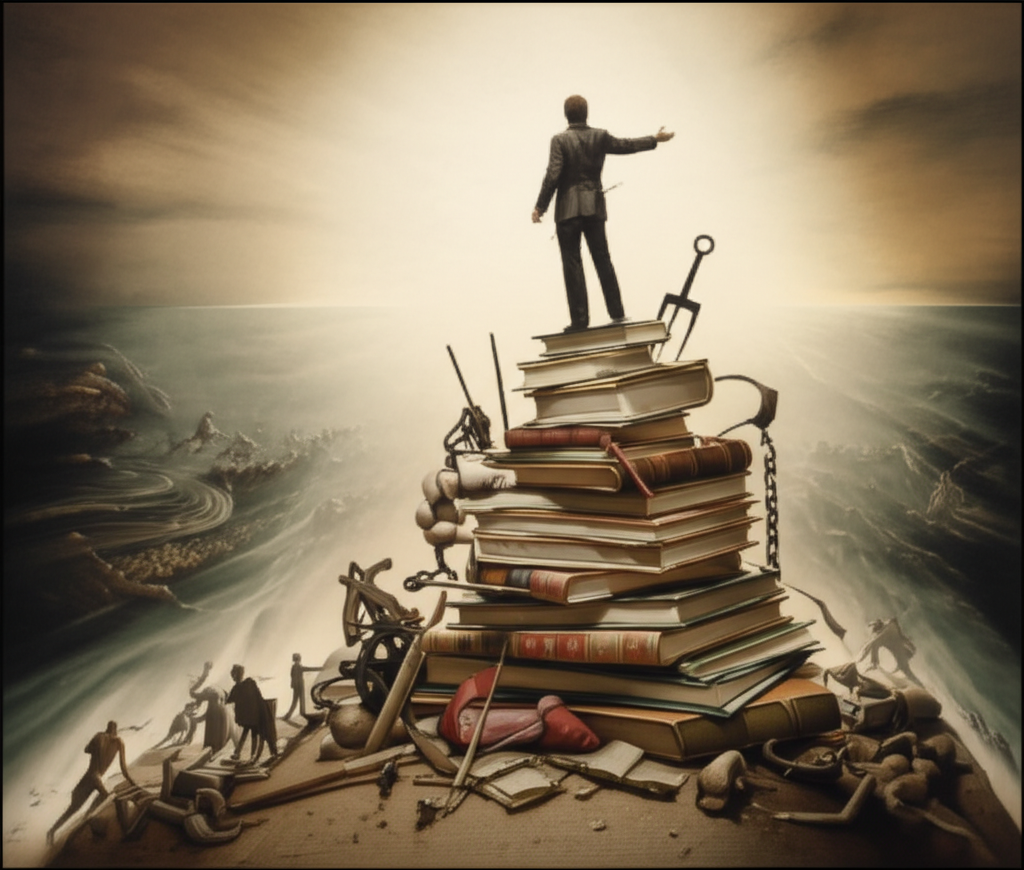
The Will to Power and the Revaluation of Good and Evil
Nietzsche's most provocative application of the Will to Power was his radical re-evaluation of Good and Evil. He argued that traditional morality, particularly Christian morality, represented a "slave morality"—a system of values born from weakness and resentment, designed to suppress the strong and elevate the mediocre.
- Master Morality vs. Slave Morality:
- Master Morality: Arises from the noble, the powerful, the self-affirming. It defines "good" as that which is strong, proud, creative, and courageous. "Bad" is that which is weak, cowardly, and slavish. This morality values strength, beauty, and authenticity.
- Slave Morality: Arises from the oppressed, the weak, the resentful. It defines "good" as that which alleviates suffering, promotes equality, and fosters pity (e.g., humility, patience, charity). "Evil" is that which is strong, proud, and assertive, as these traits are perceived as threatening.
- Challenging Conventional Virtue: For Nietzsche, virtues like humility and compassion, while appearing benevolent, could be manifestations of a weakened Will—a desire to avoid conflict and responsibility. True Good, in his view, would align with the flourishing of the Will to Power: courage, independence, creativity, and the relentless pursuit of one's highest potential.
- Beyond Good and Evil: Nietzsche's aim was not to endorse cruelty, but to encourage Man to look "beyond Good and Evil" to create new values that affirm life in its fullness, rather than deny it out of fear or resentment. This involves a profound introspection into one's own desires and their underlying motivations.
The Individual and the Will to Power: Becoming Who You Are
The concept of the Will to Power fundamentally shifts the focus to the individual's responsibility for their own becoming. It is a call to authenticity, to self-creation, and to the active shaping of one's life.
Pathways of Self-Overcoming
- Embracing Challenge: Rather than avoiding difficulties, the individual driven by the Will to Power seeks them out as opportunities for growth and mastery. Every obstacle overcome strengthens the Will.
- Creative Expression: Channeling inherent desires into artistic, intellectual, or personal creation is a prime manifestation of the Will to Power. It's the urge to leave one's unique imprint on the world.
- Self-Legislation: True freedom lies in defining one's own values and purposes, rather than passively accepting those imposed by society or tradition. This requires a courageous re-evaluation of Good and Evil.
- Affirmation of Life: Despite suffering and tragedy, the individual affirms life in its entirety, seeing even adversity as fuel for growth and a testament to the strength of their Will.
This relentless drive for self-overcoming is not without its perils. Misinterpretations of the Will to Power have led to justifications for aggression and nihilism. However, when understood as an internal, creative imperative, it offers a powerful framework for understanding human aspiration and the profound depth of our desires. It challenges Man to live a life of meaning, forged through the crucible of self-mastery and the continuous affirmation of one's unique Will.
Conclusion: The Enduring Echo of the Unyielding Will
The Will to Power and human desire remain powerful lenses through which to examine the deepest currents of human motivation. From the ancient Greek philosophers who pondered the soul's inclinations to the modern existentialists grappling with freedom, the idea of an innate, driving force within Man has resonated throughout philosophical history. Nietzsche's radical formulation compels us to scrutinize our desires, question our moral frameworks of Good and Evil, and ultimately, to confront the profound responsibility of becoming who we are, driven by an unyielding Will to grow, create, and overcome. It is a concept that continues to provoke, inspire, and illuminate the relentless engine of human existence.
YouTube Video Suggestions:
-
📹 Related Video: KANT ON: What is Enlightenment?
Video by: The School of Life
💡 Want different videos? Search YouTube for: "Nietzsche Will to Power Explained"
2. ## 📹 Related Video: PLATO ON: The Allegory of the Cave
Video by: The School of Life
💡 Want different videos? Search YouTube for: "Master Slave Morality Explained"