

The Steady Hand: Temperance as a Cornerstone of Political Leadership
Summary: In the complex arena of public service, the virtue of temperance stands as an indispensable quality for effective and just political leadership. Far from mere abstinence, temperance (or sophrosyne as the ancients called it) is the reasoned self-mastery that allows leaders to govern their own appetites and impulses, thereby enabling them to make sound, unbiased decisions for the common good. Without this foundational virtue, leaders are prone to the vices of excess, avarice, and recklessness, inevitably undermining the very Government they are sworn to uphold.
Introduction: The Soul of the State and the Leader's Character
The enduring questions surrounding good Government have occupied the greatest minds throughout history, prompting profound explorations into the ideal qualities of those who wield power. While we often focus on policy acumen or strategic brilliance, the foundational character of a leader—their internal disposition and moral fortitude—is arguably more critical. Among the classical virtues, temperance emerges as a quiet but potent force, a bulwark against the inherent temptations of power. It is the steady hand that guides the helm, preventing the ship of state from veering off course due to the captain's personal failings.
What is Temperance? A Philosophical Foundation
For the philosophers of the Great Books of the Western World, temperance was not simply about avoiding pleasure, but about achieving a harmonious balance within oneself.
- Plato, in his Republic, conceived of sophrosyne (temperance) as a state of internal order, where the rational part of the soul holds sway over the appetitive and spirited parts. For the state, this translated to a society where all classes understood and accepted their rightful place, leading to collective harmony. A temperate leader, therefore, is one whose desires are in alignment with their reason, capable of self-control.
- Aristotle, in his Nicomachean Ethics, placed temperance firmly within his doctrine of the "golden mean." It is the virtue concerned with the moderation of bodily pleasures—food, drink, and sex—steering a course between the vice of insensibility (deficiency) and self-indulgence (excess). For a leader, this extends beyond personal habits to the management of power itself, ensuring decisions are not swayed by personal gratification or fleeting desires.
Temperance, therefore, is not a call to asceticism, but a call to self-mastery, a conscious and deliberate ordering of one's inner world to serve a higher purpose.
Temperance vs. Vice: The Stakes in Government
The absence of temperance in political leadership inevitably opens the door to a host of corrosive Virtue and Vice dynamics. When a leader lacks self-control, personal appetites can quickly morph into public failings, with devastating consequences for the populace.
Consider the following contrasts:
- Excess vs. Moderation: An intemperate leader might pursue grandiose projects driven by ego rather than necessity, leading to fiscal irresponsibility and unsustainable debt. A temperate leader practices fiscal prudence, prioritizing long-term stability over short-term spectacle.
- Avarice vs. Integrity: The vice of greed, a direct antithesis to temperance, fuels corruption. Leaders lacking temperance are susceptible to bribes, illicit gains, and the abuse of public office for private enrichment. Temperance fosters integrity, ensuring public resources are managed with utmost care and honesty.
- Recklessness vs. Deliberation: Impulsive decisions, often driven by anger, fear, or a desire for immediate gratification, are the hallmarks of an intemperate mind. These can lead to ill-conceived policies, international blunders, or unnecessary conflicts. A temperate leader approaches challenges with calm deliberation, weighing consequences and seeking wise counsel.
The history of Government is replete with examples where the personal Virtue and Vice of leaders directly impacted the fate of nations. The downfall of empires, the erosion of public trust, and the suffering of citizens can often be traced back to the unchecked desires of those in power.
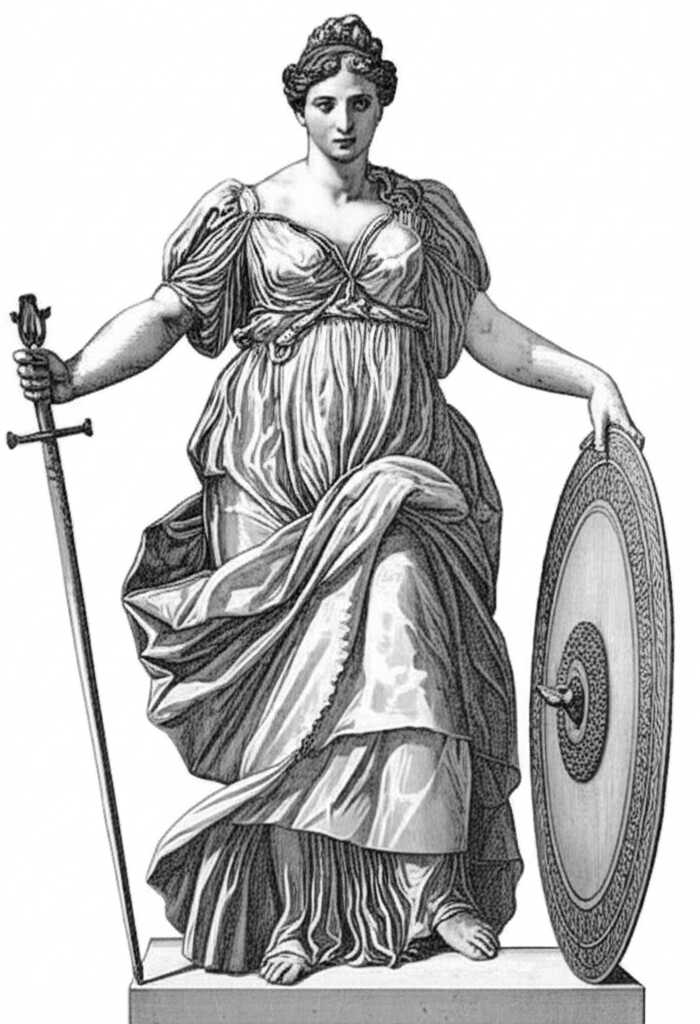 in flowing robes, holding a bridle or a measuring cup, symbolizing self-control and moderation. The figure stands calmly amidst a scene of potential chaos or excess, with a subtle background suggestion of a bustling marketplace or a political assembly, emphasizing the application of this virtue in public life.)
Prudence: Temperance's Wise Companion
While temperance provides the self-control and internal discipline, it finds its most powerful ally in prudence (phronesis). Prudence is practical wisdom, the intellectual virtue that enables one to discern the appropriate means to achieve a virtuous end.
- Aristotle identified prudence as essential for all other virtues, stating that one cannot be truly virtuous without it. It is the ability to deliberate well about what is good and advantageous for oneself and for human beings in general.
- Thomas Aquinas, building on Aristotle, saw prudence as the "charioteer of the virtues," guiding them to their proper application.
A leader imbued with both temperance and prudence is a formidable force for good. Temperance ensures that their judgment is not clouded by personal bias or desire, while prudence directs that purified judgment towards the most effective and ethical course of action. Without temperance, prudence might be swayed by passion; without prudence, temperance might lead to inaction or misguided rigidity. Together, they form a powerful duo for enlightened Government.
Manifestations of Temperance in Leadership
The virtue of temperance manifests in diverse and crucial ways within the realm of political leadership:
- Fiscal Responsibility: Managing public funds with restraint, avoiding excessive spending, and prioritizing long-term economic health over short-term political gains.
- Measured Decision-Making: Resisting the urge to react impulsively to crises or public pressure, instead taking the time for careful deliberation, consultation, and foresight.
- Resilience Against Popular Whims: Possessing the inner strength to stand firm on principled decisions, even when unpopular, rather than succumbing to demagoguery or fleeting public opinion.
- Personal Integrity and Avoidance of Scandal: Maintaining a disciplined personal life, free from the excesses that can compromise moral authority and distract from public duties.
- Long-Term Vision over Short-Term Gratification: Prioritizing sustainable policies and strategic planning over immediate, often superficial, successes designed for re-election.
- Humility in Power: Recognizing the limits of one's own knowledge and authority, fostering an environment of open discussion and valuing diverse perspectives.
These attributes, all rooted in temperance, are critical for building and maintaining trust between the Government and its citizens, fostering stability, and ensuring the pursuit of genuine common good.
The Great Books Perspective: A Timeless Call to Virtue
The enduring relevance of temperance in leadership is a theme woven throughout the Great Books of the Western World. From the ancient Greek city-states to the Roman Republic, through medieval scholasticism and the Enlightenment, thinkers grappled with the challenge of governing both self and state.
- Cicero's On Duties emphasizes the importance of moderation and self-control for public servants, linking personal integrity directly to civic duty.
- Machiavelli's pragmatic advice in The Prince, while often interpreted as advocating for ruthlessness, still implicitly acknowledges that a prince who cannot control his own desires risks losing his state.
- Locke's philosophy of self-governance, which underpins much of modern democratic thought, inherently requires individuals (and thus leaders) to exercise reason and restraint to protect natural rights and uphold the social contract.
These texts, spanning centuries and diverse political philosophies, consistently underscore that the inner discipline of a leader is as vital as their external actions.
Conclusion: The Enduring Necessity of Temperate Leadership
In an age often characterized by polarization, instant gratification, and the relentless pursuit of power, the virtue of temperance in political leadership has never been more crucial. It is the quiet strength that underpins all other virtues, safeguarding against the corrupting influence of unchecked ambition and desire. By cultivating self-mastery, leaders can transcend personal failings to truly serve the collective, ensuring that Government remains a force for order, justice, and the flourishing of human society. The call for temperate leadership is not merely an idealistic aspiration; it is a pragmatic necessity for the stability and moral integrity of any state.
YouTube Video Suggestions:
-
📹 Related Video: PLATO ON: The Allegory of the Cave
Video by: The School of Life
💡 Want different videos? Search YouTube for: ""Plato Republic Temperance Sophrosyne Political Philosophy""
2. ## 📹 Related Video: ARISTOTLE ON: The Nicomachean Ethics
Video by: The School of Life
💡 Want different videos? Search YouTube for: ""Aristotle Nicomachean Ethics Virtue Prudence Leadership""