

The Indispensable Virtue of Temperance in Political Leadership
Summary: In the tumultuous arena of public service, the virtue of temperance stands as a cornerstone for effective and ethical political leadership. Far from mere abstinence, temperance embodies a profound self-mastery, a rational control over one's desires and impulses, which is essential for sound judgment, equitable governance, and the avoidance of the myriad vices that plague government. Drawing deeply from the wisdom of the Great Books of the Western World, this article argues that a leader's capacity for moderation and balance, guided by prudence, is not merely a personal attribute but a vital prerequisite for the stability and prosperity of the state.
The Enduring Relevance of Classical Virtues in Modern Governance
In an age characterized by rapid change, instant gratification, and often, unbridled ambition, the classical virtues might seem anachronistic. Yet, for those who delve into the enduring wisdom of the Great Books of the Western World, it becomes clear that certain principles remain eternally relevant. Among these, temperance emerges as a particularly crucial virtue for anyone wielding political power. It is the quiet strength that underpins all other virtues, allowing reason to prevail over passion, and long-term vision to overcome short-sighted impulse.
Defining Temperance: More Than Just Moderation
Often misunderstood as mere abstinence or asceticism, temperance (Greek: sophrosyne, Latin: temperantia) is, in its philosophical essence, a state of healthy self-control and moderation. It is the harmonious alignment of one's desires with reason, ensuring that appetites do not dictate actions.
- Self-Mastery: The ability to govern one's own impulses, emotions, and desires.
- Balance: Finding the 'mean' between excess and deficiency, as articulated by Aristotle.
- Rational Control: Subordinating lower, animalistic urges to the higher faculty of reason.
- Prudence's Ally: Temperance is not blind; it works hand-in-hand with prudence (practical wisdom), which discerns the right course of action, while temperance provides the will to execute it without succumbing to temptation or distraction.
A temperate leader is not one devoid of ambition or passion, but one whose ambition is channeled for the common good, and whose passions are disciplined to serve the ends of justice and public welfare.
Temperance vs. Vice: The Perilous Path of Excess
The absence of temperance in political leadership inevitably leads to a descent into vice. History is replete with examples of leaders whose downfall, and often the ruin of their government, stemmed directly from an inability to control their desires.
| Vice Opposed by Temperance | Impact on Political Leadership |
|---|---|
| Greed/Avarice | Corruption, embezzlement, prioritizing personal gain over public good, fiscal irresponsibility. |
| Hubris/Arrogance | Unchecked power, disregard for counsel, tyrannical rule, inability to admit error, contempt for the populace. |
| Impulsiveness/Rashness | Hasty decisions, ill-conceived policies, instability, unpredictable governance. |
| Gluttony/Profligacy | Extravagant spending of public funds, moral decay, loss of public respect and trust. |
| Lust for Power | Authoritarianism, suppression of dissent, perpetual conflict, erosion of democratic institutions. |
Without temperance, a leader is susceptible to these corrupting influences, transforming the noble pursuit of public service into a vehicle for self-aggrandizement. The Great Books warn us repeatedly about the dangers of unchecked power, and temperance is presented as the internal check, the self-imposed limit that prevents such corruption.
The Practical Manifestations of Temperance in Government
How does this philosophical virtue translate into tangible benefits for government and the citizenry?
- Fiscal Responsibility: A temperate leader manages public resources with an eye towards sustainability and equity, avoiding wasteful spending, excessive debt, and the temptation to buy votes with unsustainable promises.
- Measured Decision-Making: Rather than reacting impulsively to crises or public pressure, a temperate leader exercises prudence, gathering information, considering long-term consequences, and seeking wise counsel.
- Resistance to Corruption: By controlling personal appetites for wealth, status, or power, the temperate leader is less susceptible to bribes, illicit influence, and the allure of illicit gains.
- Personal Integrity and Public Trust: A leader known for self-control and moderation inspires confidence and respect from both colleagues and constituents, fostering a climate of trust essential for effective governance.
- Fairness and Justice: Temperance allows a leader to set aside personal biases and prejudices, ensuring that policies and judgments are based on objective criteria and the common good, rather than favoritism or vendetta.
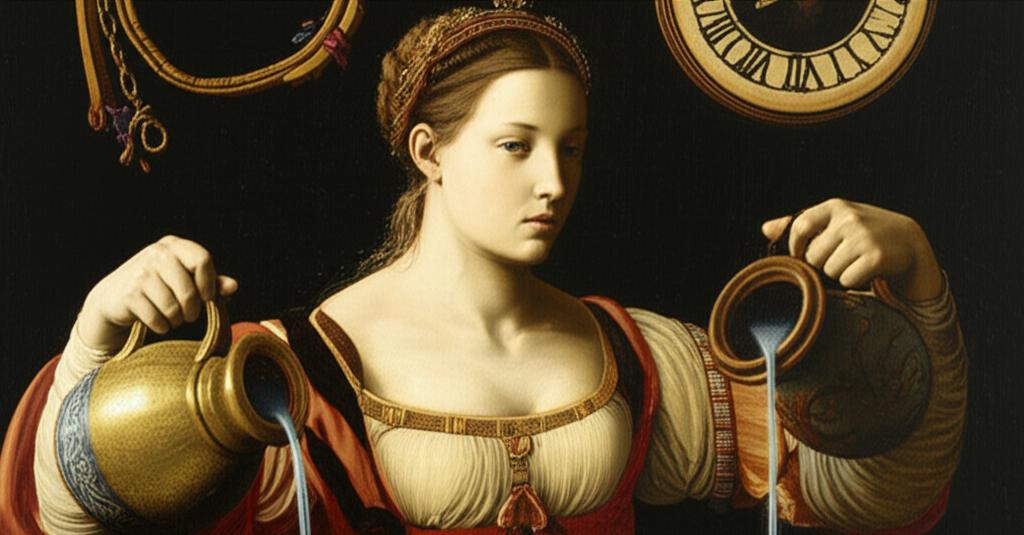
Voices from the Great Books: Temperance as a Foundational Virtue
The concept of temperance is not a modern invention but a thread woven throughout the foundational texts of Western thought.
- Plato's Republic: For Plato, sophrosyne (temperance) is one of the four cardinal virtues, signifying the harmony and order within the soul when reason rules the appetites. In the ideal state, temperance is the agreement among all citizens about who should rule, ensuring that the lower classes consent to the rule of the wiser. It is the "health" of the state, preventing internal strife and excess.
- Aristotle's Nicomachean Ethics: Aristotle defines temperance as the mean between the extremes of insensibility (a lack of desire) and self-indulgence (excessive desire). It is a moral virtue concerned with pleasures and pains, particularly those related to touch and taste. A temperate person enjoys pleasures appropriately and in moderation, guided by prudence. For a leader, this means not being swayed by the allure of luxury or immediate gratification.
- Cicero's On Duties: Cicero emphasizes temperantia as a key component of propriety (decorum), essential for public life. He argues that moderation, self-restraint, and dignity are vital for maintaining the respect of the citizenry and for the stability of the Roman Republic. A public servant must exhibit a calm and composed demeanor, free from the excesses of emotion or appetite.
These thinkers, across centuries, consistently underscore that the ability to govern oneself is a prerequisite for governing others effectively and justly.
Conclusion: Temperance as a Beacon for Responsible Leadership
In an era desperately seeking principled leadership, the ancient virtue of temperance offers a powerful and practical guide. It is not a call for austerity but for balance; not for weakness but for disciplined strength. A temperate leader, guided by prudence, navigates the complex currents of government with a steady hand, resisting the siren calls of vice and upholding the public trust. By prioritizing self-mastery, they lay the groundwork for a more stable, just, and prosperous society, proving that the wisdom of the Great Books remains as relevant today as ever before.
YouTube:
- "Plato's Republic: The Virtue of Temperance and the Just State"
- "Aristotle's Ethics: Understanding Temperance as a Moral Virtue"
📹 Related Video: ARISTOTLE ON: The Nicomachean Ethics
Video by: The School of Life
💡 Want different videos? Search YouTube for: "The Virtue of Temperance in Political Leadership philosophy"