

The Virtue of Temperance in Political Leadership: A Bulwark Against Vice
Summary
Temperance, often overshadowed by more dramatic virtues, stands as a cardinal pillar in the edifice of ethical political leadership. Far from mere abstinence, it is the profound self-mastery that orders desires and passions, ensuring decisions serve the common good rather than personal excess. Drawing deeply from the Great Books of the Western World, this article elucidates how temperance, understood through the lens of classical philosophy, is an indispensable quality for those entrusted with the reins of government. We will explore its distinction from vice, its intrinsic link to prudence, and its practical implications for fostering just, stable, and truly effective governance.
The Unseen Strength of Self-Restraint
In the tumultuous arena of public service, the allure of power often eclipses the discipline required to wield it wisely. We are quick to admire charisma, strategic acumen, or decisive action, yet we often overlook the quiet, foundational strength that underpins truly virtuous leadership: temperance. This is not merely a call for austerity, but a profound philosophical assertion that the true measure of a leader lies not in the power they amass, but in the self-governance with which they manage their own desires and actions. True leadership, as the ancients understood, is fundamentally about the temperance that governs one's desires and actions, ensuring decisions serve the common good rather than personal indulgence or unbridled ambition. This discourse aims to unravel the historical philosophical understanding of temperance, its practical manifestations in government, and its pivotal role in distinguishing virtuous leadership from its corrupting vices.
Understanding Temperance: A Classical Perspective
To appreciate the profound relevance of temperance, we must first turn to its classical origins, where it was considered one of the four cardinal virtues alongside justice, fortitude, and prudence.
Sophrosyne and Continentia: The Roots of Self-Control
Our journey begins with the Greeks. Plato, in his Republic, introduces the concept of sophrosyne, often translated as temperance, but carrying a richer meaning encompassing self-knowledge, self-mastery, and a harmonious ordering of the soul's faculties. For Plato, sophrosyne is the agreement between the naturally superior and inferior parts of the soul as to which should rule, ensuring that reason governs appetite and spirit. A city, like a soul, achieves sophrosyne when its various classes perform their proper functions in harmony, guided by the wisdom of its philosopher-kings.
Aristotle, in his Nicomachean Ethics, provides a more focused definition. He defines temperance as the "mean" concerning pleasures, particularly those of touch and taste—the bodily appetites. It is the virtue that lies between the vice of insensibility (a deficiency of pleasure) and self-indulgence or intemperance (an excess of pleasure). For Aristotle, the temperate person desires what is appropriate, in the right quantity, at the right time, and for the right reason. This is not about the suppression of desire, but its proper orientation.
Moving to Rome, Cicero, in De Officiis, discusses continentia (self-restraint) as a key component of honestas (moral goodness) and ethical statesmanship. He emphasizes that public office demands a rejection of personal gain and a dedication to the public good, which inherently requires a temperate spirit to resist the temptations of wealth, power, and fleeting popular acclaim.
More Than Abstinence: The Cultivation of Right Desire
It is crucial to understand that temperance is not merely the absence of desire or the act of abstaining. Instead, it is the cultivation of right desire, the ordering of one's appetites and passions according to reason. It is about desiring good things in the right way, and having the inner strength to resist desires that are harmful, excessive, or contrary to the greater good. A truly temperate leader does not suffer from a lack of passion, but rather directs their passions towards noble ends, guided by wisdom and a commitment to public welfare.
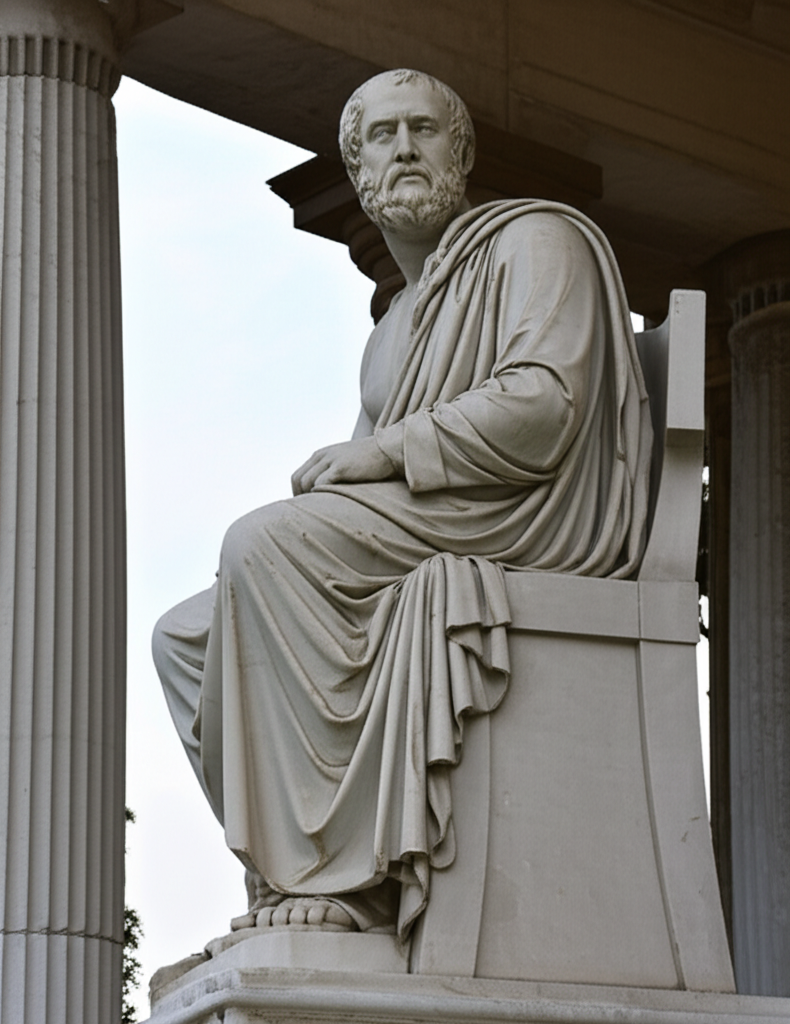
Temperance in the Halls of Power: A Practical Imperative
The theoretical understanding of temperance finds its most critical application in the practical realm of government. The stakes are higher, as the untempered desires of a leader can have far-reaching, detrimental consequences for an entire populace.
The Corrupting Influence of Untempered Desire
When temperance is absent, the door is flung open to a host of vices that erode trust, corrupt institutions, and ultimately undermine the very fabric of society. Consider the following manifestations of intemperance in leadership:
- Greed and Extravagance: An untempered desire for wealth or material possessions can lead to corruption, embezzlement, cronyism, and the squandering of public funds for private gain. This directly contradicts the leader's duty as a steward of the people's resources.
- Lust for Power: Beyond the legitimate pursuit of authority to serve, an insatiable appetite for power can manifest as authoritarianism, suppression of dissent, and the manipulation of democratic processes to maintain control indefinitely.
- Gluttony for Resources: This can extend beyond food to include an unbridled desire for territory, natural resources, or economic dominance, leading to unsustainable policies, exploitation, or even aggressive expansionism.
- Uncontrolled Anger: Leaders who lack control over their temper are prone to rash decisions, public outbursts, and punitive actions driven by personal pique rather than reasoned judgment, destabilizing both internal and external relations.
- Imprudence and Haste: While distinct from temperance, an untempered desire for quick results can bypass careful deliberation, leading to poorly conceived policies with unintended, negative consequences.
These vices are the antithesis of good government, fostering an environment of fear, injustice, and instability.
The Pillars of Tempered Governance
Conversely, the presence of temperance fortifies a leader against these temptations, allowing for decisions rooted in principle and foresight. Here, the practical benefits become strikingly clear:
| Aspect of Leadership | Untempered Vice | Tempered Virtue | Impact on Governance |
|---|---|---|---|
| Financial Prudence | Greed, Extravagance | Frugality, Stewardship | Responsible budgeting, public trust, sustainable economy |
| Exercise of Power | Tyranny, Authoritarianism | Moderation, Respect for Law | Rule of law, protection of rights, democratic stability |
| Decision Making | Impulsiveness, Rashness | Deliberation, Patience | Sound policy development, long-term vision, thoughtful reform |
| Public Discourse | Demagoguery, Slander | Honesty, Respectful Debate | Productive dialogue, civic unity, informed citizenry |
| Personal Conduct | Scandal, Self-Indulgence | Integrity, Discipline | Moral authority, public confidence, exemplary behavior |
Temperance and Prudence: Inseparable Allies
While temperance is essential, it rarely acts alone. Its effectiveness in the complex world of government is profoundly amplified when paired with another cardinal virtue: prudence.
The Guiding Hand of Phronesis
Aristotle's concept of phronesis, or practical wisdom (often translated as prudence), is the intellectual virtue that guides the moral virtues. If temperance provides the will to act rightly—the inner discipline to order one's desires—then prudence discerns what is right in specific, often ambiguous, situations. A leader needs temperance to resist the temptation to make a self-serving decision, but they need prudence to identify the most ethical and effective path forward for the community.
Consider a leader faced with a difficult economic choice. Temperance ensures they are not swayed by personal financial interests or the desire for popular, but unsustainable, spending. Prudence, however, is what allows them to weigh various economic models, consult experts, consider long-term impacts, and ultimately choose the policy that genuinely serves the public good, even if it requires short-term sacrifices. The two virtues are symbiotic: temperance without prudence might lead to well-intentioned but misguided actions, while prudence without temperance might result in clear-sighted analysis that is ultimately abandoned for personal gain.
Balancing Competing Demands
The challenges of modern government often involve balancing competing demands—economic growth versus environmental protection, individual liberty versus collective security, immediate needs versus future sustainability. It is in these complex scenarios that the alliance of temperance and prudence becomes indispensable. Prudence helps a temperate leader navigate these trade-offs, seeking the appropriate mean, the balanced solution. Temperance ensures that these difficult decisions are not swayed by personal gain, unbridled ambition, or the clamor of a vocal minority, but rather by a steadfast commitment to the common good, thoughtfully discerned.
The Cultivation of Temperance in Public Service
The question then arises: how can this vital virtue be cultivated and sustained in the demanding environment of public service?
Beyond Personal Asceticism: A Societal Imperative
While temperance is fundamentally a personal virtue, its societal impact is undeniable. Therefore, its cultivation extends beyond individual asceticism to the very structures and culture of government.
- Institutional Safeguards: Checks and balances, robust accountability mechanisms, independent oversight bodies, and clear ethical codes are institutional expressions of a collective desire for temperate leadership. They serve as external constraints against intemperate action where internal self-control might falter.
- Civic Education: A society that values and teaches the cardinal virtues, including temperance, in its educational systems and public discourse is more likely to demand and elect temperate leaders. Understanding the historical lessons from the Great Books of the Western World regarding the rise and fall of states due to virtuous or vicious leadership is paramount.
- Public Example: Leaders themselves, through their consistent demonstration of temperance, set a powerful example. Their personal discipline in matters of finance, rhetoric, and the exercise of power can inspire a culture of integrity throughout the public service.
A Call for Deliberate Self-Governance
Ultimately, temperance is an active, ongoing effort, not a passive state. It requires constant vigilance, self-reflection, and a deliberate commitment to ordering one's inner life in alignment with reason and the public good. For those who aspire to lead, or who currently hold the immense responsibility of government, the cultivation of temperance is not merely an ethical nicety, but a practical necessity for the flourishing of their communities.
Conclusion: The Enduring Legacy of Tempered Leadership
The wisdom gleaned from the Great Books of the Western World consistently reminds us that the health and stability of any political entity are inextricably linked to the moral character of its leaders. Temperance, far from being a quaint or outdated concept, remains a foundational virtue for sound government. It is the inner discipline that allows leaders to resist the siren call of vice, to exercise prudence in their judgments, and to dedicate themselves wholeheartedly to the welfare of their constituents.
In an age often characterized by excess and immediate gratification, the call for temperate leadership is more resonant than ever. It is a call for leaders who are masters of themselves, and thus fit to govern others; leaders whose ambition is tempered by humility, whose power is restrained by justice, and whose decisions are guided by a profound and cultivated self-control. The enduring legacy of tempered leadership is not found in grand monuments, but in the stable, just, and prosperous societies it helps to build and sustain.
YouTube Video Suggestions:
-
📹 Related Video: PLATO ON: The Allegory of the Cave
Video by: The School of Life
💡 Want different videos? Search YouTube for: "Plato Republic Sophrosyne explained"
-
📹 Related Video: ARISTOTLE ON: The Nicomachean Ethics
Video by: The School of Life
💡 Want different videos? Search YouTube for: "Aristotle Nicomachean Ethics Temperance virtue"