

The Virtue of Temperance in Political Leadership
The effective functioning of any government hinges significantly on the moral character of its leaders. Among the classical virtues, temperance stands out as particularly crucial for those entrusted with public power. Far from mere abstinence, temperance in leadership signifies a profound self-mastery, a rational control over appetites and impulses, and a balanced approach to decision-making. This article explores how this ancient virtue, deeply rooted in the Great Books of the Western World, remains an indispensable quality, distinguishing wise governance from the pitfalls of vice and short-sightedness.
The Enduring Relevance of Temperance in Public Life
In an era often characterized by rapid change, impassioned rhetoric, and complex global challenges, the need for steady, thoughtful leadership has never been greater. It is here that temperance asserts its timeless importance. As a fundamental virtue, temperance offers a bulwark against the excesses that can corrupt power and derail good governance. It is the quiet strength that allows a leader to prioritize long-term public good over immediate gratification, popular appeal, or personal gain. Without it, the ship of state risks being tossed by every passing storm of impulse or ambition.
Defining Temperance: A Classical Philosophical Perspective
The concept of temperance (Greek: sophrosyne, Latin: temperantia) has been a cornerstone of Western philosophy since antiquity, thoroughly explored in the Great Books of the Western World.
-
Plato's Harmony: In Plato's Republic, temperance is presented not merely as a personal trait but as a societal virtue – a kind of internal harmony or agreement among the different parts of the soul, where the rational element governs the appetitive and spirited parts. For the state, this translates to a harmonious order where different classes understand and accept their roles, guided by reason. A temperate leader, therefore, embodies this internal order, reflecting it in their governance.
-
Aristotle's Golden Mean: Aristotle, in his Nicomachean Ethics, characterizes temperance as a mean between the vices of insensibility (a deficiency of pleasure) and self-indulgence (an excess of pleasure). It is the disposition to feel and act appropriately with regard to pleasures and pains, particularly those associated with bodily appetites. For a political leader, this translates into a measured approach to power, resources, and public acclaim, avoiding both ascetic detachment and rampant indulgence.
Essentially, temperance is the rational control of desires and passions, ensuring they serve, rather than subvert, the pursuit of good.
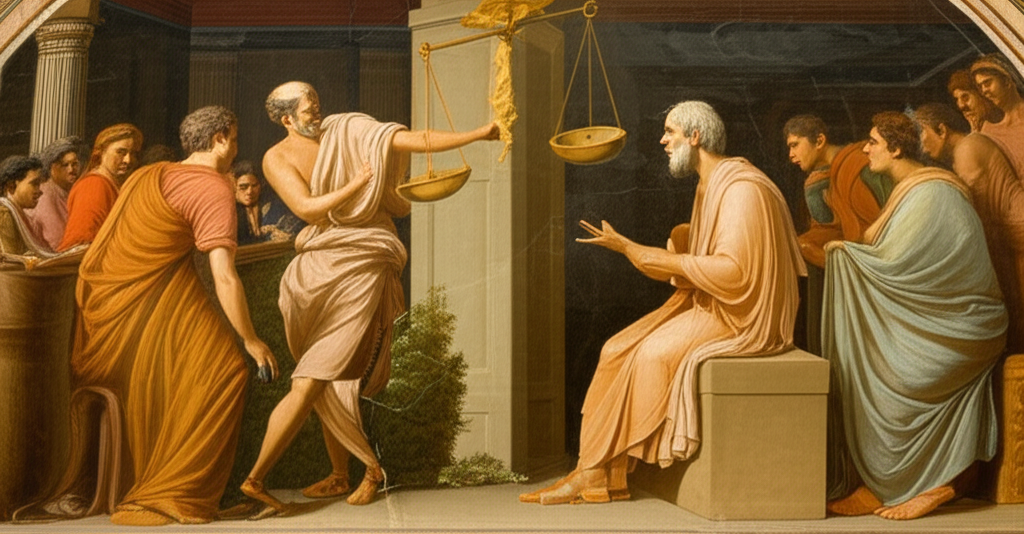
Temperance in the Realm of Government: A Bulwark Against Vice
The application of temperance to government leadership is profound. A temperate leader exhibits:
- Measured Decision-Making: They resist impulsive actions driven by anger, fear, or popular pressure. Instead, they gather information, weigh consequences, and consult widely.
- Fiscal Responsibility: Temperance manifests as a responsible approach to public funds, avoiding wasteful spending or extravagant projects that burden future generations. It stands in direct opposition to the vice of fiscal profligacy.
- Integrity and Resistance to Corruption: Personal self-control makes a leader less susceptible to the allure of illicit gains, power grabs, or the abuse of authority. The vice of unchecked ambition is held in check by the virtue of temperance.
- Calm in Crisis: In moments of national emergency, a temperate leader maintains composure, providing a steady hand and rational guidance rather than succumbing to panic or rash decisions.
- Humility in Power: Recognizing the limits of their own knowledge and authority, they are open to counsel and avoid the vice of hubris.
The Interplay of Temperance and Prudence
While distinct, temperance and prudence (practical wisdom) are deeply intertwined, particularly in leadership.
- Prudence is the intellectual virtue that enables one to deliberate well about what is good and advantageous for oneself and for others. It is the ability to discern the right means to achieve a good end.
- Temperance is the moral virtue that ensures our desires do not override our rational judgment.
A leader needs prudence to identify the best course of action, but temperance to ensure that personal desires, emotional biases, or temptations of power do not obstruct the execution of that prudent judgment. For example, a prudent leader might identify a necessary but unpopular policy. A temperate leader will have the self-control to pursue it despite the political cost, rather than yielding to the vice of seeking only popular approval.
Practical Manifestations of Temperate Leadership
Consider these contrasts in leadership behavior:
| Temperate Leadership | Intemperate Leadership |
|---|---|
| Decision-Making: Thoughtful, evidence-based, long-term perspective. | Impulsive, reactive, driven by short-term gains or emotions. |
| Public Discourse: Respectful, measured, seeks common ground. | Divisive, inflammatory, prone to personal attacks. |
| Resource Allocation: Fiscally responsible, prioritizes public good. | Extravagant, self-serving, prone to patronage. |
| Personal Conduct: Exemplary, modest, avoids ostentation. | Indulgent, arrogant, prone to scandals. |
| Response to Criticism: Open to feedback, willing to adjust. | Defensive, dismissive, views dissent as disloyalty. |
The Cost of Intemperance in Government
History is replete with examples of the catastrophic consequences of intemperate leadership. Leaders driven by insatiable ambition, greed, or unbridled passion have often led their nations to ruin. Wars of conquest, economic collapses due to reckless spending, and the erosion of democratic institutions can frequently be traced back to a fundamental lack of temperance at the highest levels of government. Such leaders, succumbing to vice, ultimately betray the trust placed in them, undermining the stability and prosperity of the societies they govern.
Cultivating Temperance in Leaders
The question then arises: can temperance be cultivated? Philosophical traditions suggest it can. Through education, self-reflection, and the conscious practice of self-restraint, individuals can strengthen their rational faculties over their appetites. For those aspiring to or holding political office, this means:
- Ethical Education: Exposure to philosophical texts and ethical frameworks that emphasize virtue.
- Accountability Mechanisms: Strong institutional checks and balances that limit unchecked power and encourage self-restraint.
- Personal Discipline: A commitment to practices that foster self-control and moderation in all aspects of life.
Conclusion: A Call for Balanced Leadership
The virtue of temperance is not a relic of ancient thought but a vital requirement for effective and ethical government. It is the bedrock upon which prudence can build sound policies and just societies. In an age where the temptations of power are ever-present and the consequences of vice are far-reaching, a renewed emphasis on cultivating temperance in our political leaders is not merely an idealistic aspiration but a practical necessity for the health and longevity of any nation.
YouTube Video Suggestions:
- YouTube: Plato Republic Temperance Virtue
- YouTube: Aristotle Nicomachean Ethics Temperance Prudence
📹 Related Video: ARISTOTLE ON: The Nicomachean Ethics
Video by: The School of Life
💡 Want different videos? Search YouTube for: "The Virtue of Temperance in Political Leadership philosophy"