

The Enduring Echo: Exploring the Universal Principle of Immortality
The concept of immortality has captivated human thought since time immemorial, transcending cultures and epochs. Far from being a mere wishful fantasy, philosophical inquiry, deeply rooted in the Great Books of the Western World, reveals a profound and persistent exploration of a Universal Principle suggesting that existence, in some fundamental sense, endures beyond the confines of individual mortality. This article delves into this enduring idea, examining how ancient thinkers grappled with the nature of the Soul and its potential for an unending journey, bridging the chasm between the Universal and Particular in our understanding of life, death, and what lies beyond.
Unveiling the Principle: What is Universal Immortality?
At its heart, the Universal Principle of Immortality posits that there is an intrinsic, foundational aspect of reality that is not subject to decay or cessation. This isn't necessarily a guarantee of individual, personal survival in a conventional sense, but rather an assertion that existence itself, or a fundamental component of consciousness or being, possesses an eternal dimension. It's a search for the bedrock of being that resists the entropy of time and the finality of death. Philosophers have often sought this bedrock within the concept of the Soul.
- The Soul as the Locus of Immortality: From Plato onwards, the Soul has been the primary candidate for housing this immortal Principle. It is often conceived as distinct from the perishable body, serving as the essential self, the seat of reason, consciousness, and moral character.
- Beyond the Individual: While we often think of Immortality in terms of our personal continuation, the Universal Principle invites us to consider if there's a larger, overarching framework of eternal existence of which our individual lives are but particular manifestations.
A Philosophical Journey Through Time: Insights from the Great Books
The Great Books of the Western World offer a rich tapestry of perspectives on immortality, primarily through the lens of the Soul.
Plato and the Eternal Forms
Plato, in works like the Phaedo and the Republic, provides some of the most compelling early arguments for the Soul's immortality. For Plato, the Soul is inherently akin to the eternal, unchanging Forms – perfect, abstract blueprints of reality. If the Soul can grasp these eternal truths, it must itself possess an eternal nature.
- Argument from Recollection: Knowledge, particularly of universal truths like mathematical principles, is seen as recollection of what the Soul knew before birth, implying its prior existence.
- Argument from Opposites: Life arises from death, and death from life, suggesting a cyclical nature where souls pass between realms.
- The Indestructible Essence: The Soul, being simple and non-composite, cannot be broken down or destroyed like the body.
For Plato, the Universal Principle of an eternal reality (the Forms) directly informs the particular immortality of the individual Soul.
Aristotle's Nuanced View of the Soul
Aristotle, while differing from Plato on the separability of the Soul from the body, still contributed significantly to understanding its nature in De Anima. He viewed the Soul as the "form" of the body, the animating principle that gives a living thing its essence and function. While he was more cautious about personal immortality, he hinted at the potential for the active intellect (nous) to be separable and perhaps immortal, suggesting a universal, impersonal mind that transcends individual existence. This introduces a fascinating distinction between the particular soul (tied to a body) and a potentially universal aspect of intellect.
Theistic Traditions and Divine Immortality
With the advent of monotheistic religions, particularly Christianity as explored by figures like St. Augustine and St. Thomas Aquinas, the Universal Principle of Immortality took on new dimensions. The Soul became a direct creation of God, endowed with an immortal nature to ensure its capacity for eternal relationship with its creator.
| Philosopher/Tradition | Key Concept of Soul | View on Immortality | Universal/Particular Link |
|---|---|---|---|
| Plato | Akin to Forms, simple, non-composite | Inherently immortal, pre-existent | Universal Forms underpin particular soul's immortality |
| Aristotle | Form of the body, animating principle | Active intellect potentially separable/immortal | Universal nous as an enduring aspect, distinct from particular souls |
| Augustine/Aquinas | Created by God, rational, spiritual | Divinely endowed personal immortality | God's universal plan ensures particular soul's eternal destiny |
Bridging the Universal and Particular
The quest for a Universal Principle of Immortality compels us to consider how such an overarching truth manifests in our individual, particular lives. Is the immortality of the Soul a universal birthright, or a potential achieved through philosophical understanding, moral virtue, or divine grace?
- The Universal Aspiration: The human yearning for meaning and continuity beyond death seems to be a universal phenomenon, suggesting an innate drive towards acknowledging something greater than our finite existence.
- Particular Manifestations: While the Principle might be universal, its understanding and experience differ wildly. Some believe in personal reincarnation, others in a heavenly afterlife, and still others in an impersonal absorption into a cosmic consciousness. Each is a particular interpretation of a universal yearning.
- The Enduring Legacy: Even if individual consciousness does not persist, the Universal Principle can be seen in the enduring impact of ideas, the continuity of culture, and the timeless truths discovered by reason. Our contributions, our love, our creations—these, too, achieve a form of immortality, echoing beyond our physical demise.
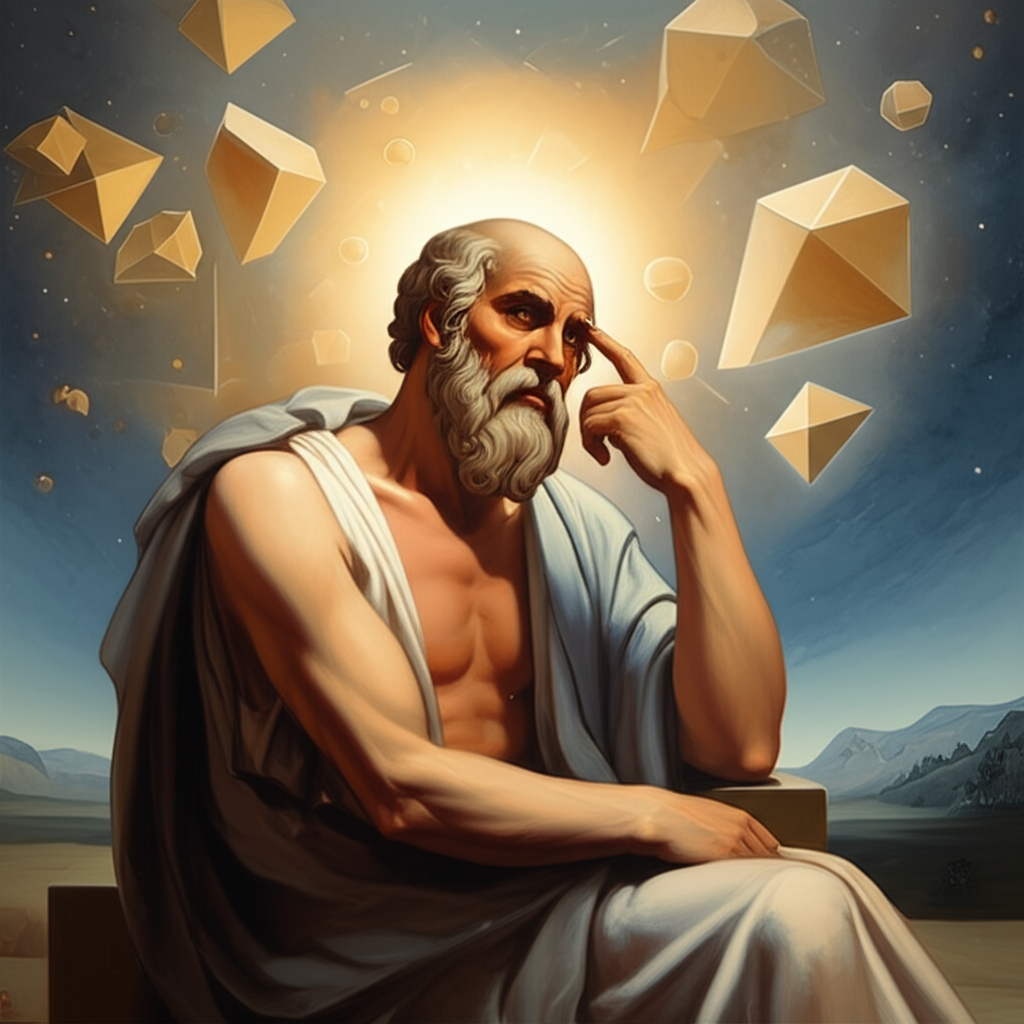
Conclusion: The Unfolding Mystery
The Universal Principle of Immortality remains one of philosophy's most profound and elusive subjects. From the rational arguments of Plato to the nuanced distinctions of Aristotle and the theological certainties of Augustine, the Great Books of the Western World provide a continuous dialogue, inviting us to ponder the enduring nature of the Soul and its place within the grander tapestry of existence. While definitive answers may remain beyond our grasp, the very act of inquiry enriches our understanding of life's meaning, purpose, and the potential for something truly eternal that binds the Universal and Particular in a timeless dance.
📹 Related Video: PLATO ON: The Allegory of the Cave
Video by: The School of Life
💡 Want different videos? Search YouTube for: "Plato Phaedo immortality arguments explained"
📹 Related Video: ARISTOTLE ON: The Nicomachean Ethics
Video by: The School of Life
💡 Want different videos? Search YouTube for: "Aristotle De Anima soul philosophy"