

The question of whether beauty is a purely subjective experience or possesses an objective, universal foundation has captivated philosophers for millennia. This article delves into the Nature of Beauty, exploring arguments for its Universal appeal while acknowledging its Particular manifestations, drawing insights from the Great Books of the Western World. We will examine how thinkers from Plato to Kant have grappled with the idea of a shared aesthetic experience, seeking the underlying Form that might make beauty intelligible across diverse cultures and individual tastes.
The Enduring Debate: Universal vs. Particular Beauty
At the heart of any discussion on beauty lies the tension between the Universal and the Particular. Is beauty merely "in the eye of the beholder," a subjective response unique to each individual, or are there fundamental qualities, patterns, or Forms that resonate across humanity, eliciting a similar sense of appreciation?
Historically, philosophers have leaned into both sides of this argument, seeking to understand the very Nature of what we call beautiful. The particularist view suggests that taste is culturally conditioned, individually learned, and entirely relative. What one culture finds exquisite, another might find unremarkable or even grotesque. Conversely, the universalist perspective posits that there are certain principles, harmonies, or ideal Forms of Beauty that transcend such differences, speaking to a deeper, shared human sensibility.
To illustrate this core philosophical divide, consider the following:
| Aspect of Beauty | Universal Perspective (e.g., Plato, Kant) | Particular Perspective (e.g., Hume, Subjectivism) |
|---|---|---|
| Source | Objective Form, inherent qualities, rational principles | Subjective taste, individual preference, cultural conditioning |
| Experience | Shared recognition of ideal Forms, harmonious structures, or moral good | Personal emotional response, learned association, unique sensory input |
| Judgment | Seeks common ground, rational justification for aesthetic claims | "Beauty is in the eye of the beholder," no objective standard for taste |
| Transcendence | Beauty can transcend time and culture, appealing to a shared humanity | Beauty is bound by context, era, and individual psychological states |
Platonic Forms and the Ideal of Universal Beauty
Perhaps the most profound argument for the Universal Nature of Beauty comes from Plato, as articulated in dialogues such as the Symposium and Phaedrus, found within the Great Books of the Western World. For Plato, Beauty itself was not merely an attribute of things, but an eternal, immutable Form existing independently of the physical world. Individual beautiful objects—a person, a piece of music, a work of art—are beautiful only insofar as they participate in or imperfectly reflect this ultimate Form of Beauty.
- The Ascent to Beauty: Plato describes a gradual ascent from the appreciation of individual beautiful bodies to the Beauty of souls, then to the Beauty of laws and institutions, and finally to the Beauty of knowledge itself, culminating in the apprehension of the Form of Beauty. This journey suggests that while our initial encounters with beauty are particular, they serve as stepping stones to a Universal understanding.
- The Intelligible Realm: The Form of Beauty resides in the intelligible realm, accessible not through the senses, but through the intellect. This means that true Beauty is not fleeting or relative, but absolute and unchanging, serving as a standard against which all particular instances of beauty can be measured.
Aristotle's Empiricism and Objective Qualities
While not subscribing to Plato's transcendent Forms, Aristotle, another titan from the Great Books, also recognized objective elements contributing to Beauty. In his Poetics and Metaphysics, Aristotle suggests that Beauty in objects is often linked to qualities such as order, symmetry, definiteness, and magnitude.
- Order and Proportion: For Aristotle, a beautiful object or artwork exhibits a harmonious arrangement of its parts. It has a proper size (not too large to be grasped, not too small to be perceived) and a clear structure. This emphasis on objective, measurable qualities implies that Beauty is not arbitrary but arises from a specific, discernible Nature.
- Wholeness and Unity: A beautiful entity, whether a living organism or a dramatic plot, must possess a unity where all its parts contribute to the whole. This organic unity, distinct from mere aggregation, contributes to its aesthetic appeal. These principles, rooted in the observation of the natural world and human creations, point towards a Universal appreciation for balance and coherence.
Kant's "Disinterestedness" and Subjective Universality
Moving into the Enlightenment, Immanuel Kant, in his Critique of Judgment (a cornerstone of the Great Books collection), offered a nuanced perspective that attempts to bridge the gap between subjective experience and universal claims. Kant argued that a truly aesthetic judgment of Beauty must be "disinterested"—meaning it is not tied to any personal desire, utility, or moral purpose.
- Judgment of Taste: When we call something beautiful, according to Kant, we are not merely stating a personal preference ("I like this"), but we are implicitly claiming that others ought to find it beautiful too. This "subjective universality" arises from the idea that the mental faculties involved in making a judgment of Beauty (imagination and understanding) are common to all rational beings.
- Purposiveness Without a Purpose: Kant describes beautiful objects as exhibiting "purposiveness without a purpose." They appear to be designed with intention, yet they serve no specific practical end. This perceived harmony and order resonate with our cognitive faculties, leading to a feeling of pleasure that we expect others to share. While the experience begins subjectively, the structure of our cognitive apparatus suggests a Universal basis for certain aesthetic judgments.
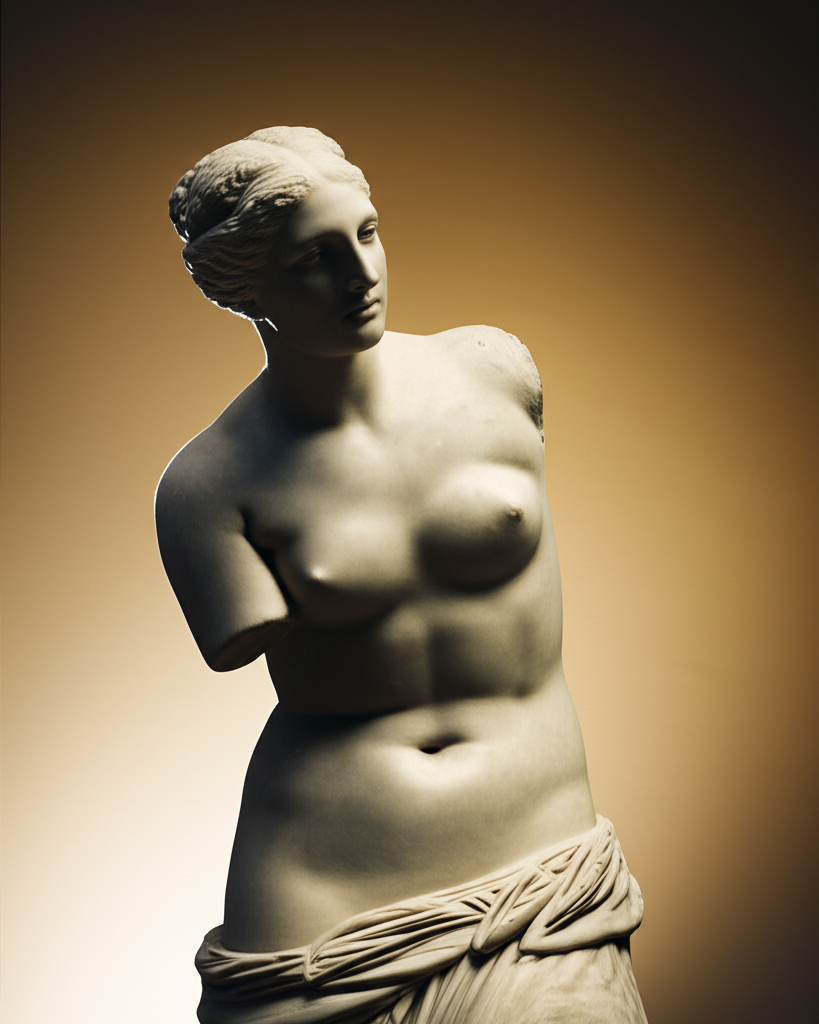
The Enduring Quest for Universal Beauty
The journey through philosophical thought reveals that the concept of Universal Beauty is complex and multifaceted. While individual preferences and cultural nuances undeniably shape our aesthetic experiences (Particular), the persistent search for underlying principles, ideal Forms, and shared cognitive structures suggests that there is indeed a Nature to Beauty that resonates across humanity. From Plato's transcendent Forms to Aristotle's emphasis on order and Kant's concept of disinterested pleasure, the Great Books of the Western World consistently invite us to look beyond the surface and ponder the deeper, potentially Universal, dimensions of aesthetic appreciation.
Further Exploration
📹 Related Video: PLATO ON: The Allegory of the Cave
Video by: The School of Life
💡 Want different videos? Search YouTube for: "Plato's Theory of Forms and Beauty Explained"
📹 Related Video: KANT ON: What is Enlightenment?
Video by: The School of Life
💡 Want different videos? Search YouTube for: "Kant's Aesthetics - The Critique of Judgment Summary"