

The Unseen Hand: Exploring the Universal Laws of Nature
Summary: The concept of Universal Laws of Nature lies at the heart of humanity's quest to understand existence. These are not mere human decrees, but fundamental principles believed to govern the very fabric of reality, from the smallest subatomic particle to the grandest cosmic dance. This article delves into what these "laws" entail, distinguishes between the universal and particular, and reflects on their profound implications for philosophy, science, and our perception of nature.
Unveiling the Cosmos: What are the Universal Laws?
From the predictable rhythm of the seasons to the consistent fall of an apple, we intuitively sense an underlying order to the world. Philosophy, since its earliest stirrings, has sought to articulate this order. The "Universal Laws of Nature" are precisely this: fundamental principles or rules that are believed to apply everywhere, at all times, independent of human observation or intervention. They are the bedrock upon which the cosmos operates, dictating how matter and energy interact, how systems evolve, and perhaps even how consciousness emerges.
These are distinct from human-made laws, which are prescriptive and can be broken. The laws of nature, conversely, are descriptive – they describe how things are and must be. To violate a natural law is, by definition, impossible; if an observation contradicts a supposed law, it indicates either a misunderstanding of the law or that the "law" itself was incomplete.
The Crucial Distinction: Universal and Particular
One of the most enduring philosophical debates centers on the relationship between the universal and particular. This distinction is vital when discussing natural laws:
- Universal Laws: These are the overarching principles that hold true across all instances. Think of gravity, the conservation of energy, or the laws of thermodynamics. They are abstract, general, and without exception within their defined scope. A universal law posits that all objects with mass exert gravitational pull, not just this apple on this tree.
- Particular Manifestations: These are the specific instances or events that occur because of the universal laws. The trajectory of a specific comet, the growth of a particular tree, or the melting of a unique snowflake are all particular outcomes governed by universal laws acting on specific initial conditions.
Understanding this interplay helps us appreciate how a relatively small set of universal laws can give rise to the immense diversity and complexity we observe in nature. The universal provides the framework; the particular fills in the details.
The Nature of Law: Descriptive or Prescriptive?
When we speak of a "Law of Nature," are we describing something inherent to the universe, or something imposed upon it?
- Descriptive View: Many modern scientists and philosophers lean towards the descriptive view. Laws are seen as humanity's best attempts to describe patterns and regularities observed in the universe. They are summaries of how things behave, not commands issued to them. This perspective aligns with empiricism, where knowledge is derived from experience. Isaac Newton's laws of motion, for instance, were groundbreaking descriptions of how objects move, enabling accurate predictions.
- Prescriptive View: Historically, especially in pre-Enlightenment thought and within certain philosophical traditions (e.g., Stoicism, some forms of rationalism), there was often a sense that natural laws were prescriptive – an inherent rational order, a divine decree, or a fundamental blueprint that the universe must follow. This view often connects natural law to moral philosophy, suggesting that human nature and ethics are also governed by universal, discoverable principles.
The shift from a prescriptive to a descriptive understanding of natural law mirrors the broader scientific revolution, moving from teleological explanations (things happen for a purpose) to mechanistic ones (things happen due to cause and effect).
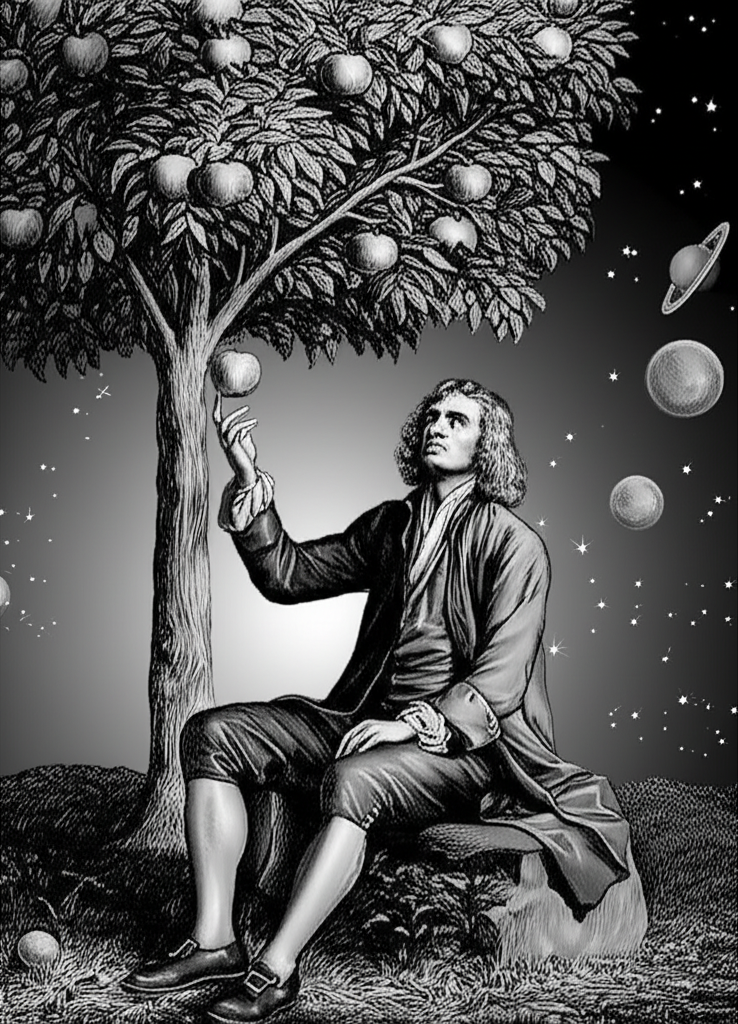 are shown in their orbits, symbolizing the unified laws governing both earthly and cosmic phenomena.)
Exploring Key Philosophical Principles Related to Natural Law
Many foundational philosophical inquiries revolve around the implications of universal laws.
| Philosophical Principle | Description | Connection to Universal Laws
The Universal Laws of Nature are not merely scientific curiosities; they form the basis for many philosophical inquiries.
- Causality: The idea that every effect has a cause is a cornerstone of our understanding of the universe. Universal laws are essentially descriptions of these causal relationships.
- Determinism vs. Free Will: If the universe operates according to strict, predictable laws, does true free will exist? This age-old question gains urgency when considering the implications of a fully lawful cosmos.
- Rationality of the Cosmos (Logos): Ancient Greek philosophers, particularly the Stoics, believed in a rational principle (Logos) pervading the universe, which manifested as natural laws. For them, living in accordance with nature meant living in accordance with reason and these universal principles.
- Cosmological Arguments: The existence of universal laws often features in arguments for a divine creator or an ultimate rational ground for existence. Why is there order rather than chaos? Why are these laws precisely tuned for life?
The Enduring Mystery and Our Place in Nature
Even with our incredible scientific advancements, the "Universal Laws of Nature" retain an air of profound mystery. Why these particular laws? Are they arbitrary, or are they the only possible laws that could give rise to a stable, complex universe capable of supporting life and consciousness?
As Emily Fletcher, I find myself drawn to this profound inquiry. It's not just about understanding physics or chemistry; it's about understanding our place in the grand tapestry of existence. To uncover a universal law is to glimpse a fundamental truth about the cosmos, a truth that transcends cultures, languages, and individual perceptions. It reminds us that despite our unique and particular experiences, we are all participants in a universe governed by magnificent, enduring principles.
The pursuit of these laws is a testament to humanity's insatiable curiosity and our deep-seated desire to comprehend the ultimate nature of reality. It's a journey that began with the first stargazers and continues today in particle accelerators and astronomical observatories, always pushing the boundaries of what we know and what we can ever truly comprehend.
YouTube: "Philosophy of Science Laws of Nature"
YouTube: "Determinism vs Free Will Debate"
📹 Related Video: What is Philosophy?
Video by: The School of Life
💡 Want different videos? Search YouTube for: "The Universal Laws of Nature philosophy"