

Unveiling the Immutable: Exploring the Universal Laws of Nature
The cosmos, in its grand and intricate dance, operates not on whim or caprice, but according to a set of profound and immutable rules. These are the Universal Laws of Nature, the fundamental principles that govern reality itself, from the subatomic to the galactic, and perhaps even extending into the realm of human experience and morality. This article delves into what these laws entail, how philosophers throughout history have grappled with their meaning, and the enduring quest to understand the underlying architecture of existence. We will explore the crucial distinction between the Universal and Particular, illuminating how these overarching laws manifest in the myriad specific instances that constitute our world.
What are the "Laws of Nature"? A Philosophical Inquiry
At its core, a "Law of Nature" is more than just a scientific observation or a human construct; it is seen as an inherent truth, an objective principle that dictates the behavior and properties of everything within Nature. Unlike human laws, which can be broken or changed, these natural laws are considered inviolable and constant. They represent the very fabric of reality, the foundational rules by which the universe operates.
From the earliest inquiries found in the Great Books of the Western World, thinkers have sought to understand the order behind the apparent chaos. Plato, with his world of Forms, posited eternal and unchanging blueprints for reality, suggesting a deeper, universal structure. Aristotle meticulously cataloged the natural world, seeking the inherent "natures" and teleological purposes within things, implying a predictable, lawful order.
The Ancient Roots: From Cosmos to Code
The concept of universal laws has a rich lineage, deeply embedded in Western thought. Early Greek philosophers observed the regularities of the heavens and the predictable cycles of the Earth, inferring an underlying order. This quest for order evolved through centuries:
- Pre-Socratics: Sought a single, unifying principle (arche) from which all things derived, hinting at a fundamental law governing existence.
- Plato and Aristotle: While differing in their approach, both emphasized an inherent order. Plato’s Forms suggest universal truths that particular instances merely participate in, while Aristotle's emphasis on the "essence" or "nature" of things points to intrinsic governing principles.
- Stoics: Developed the concept of Logos, a rational, divine principle pervading the universe, which orders all things according to Nature's unyielding laws.
- Medieval Philosophers: Integrated classical thought with theological perspectives, often viewing natural laws as expressions of divine reason, as seen in the works of Aquinas, who built upon Aristotle's framework.
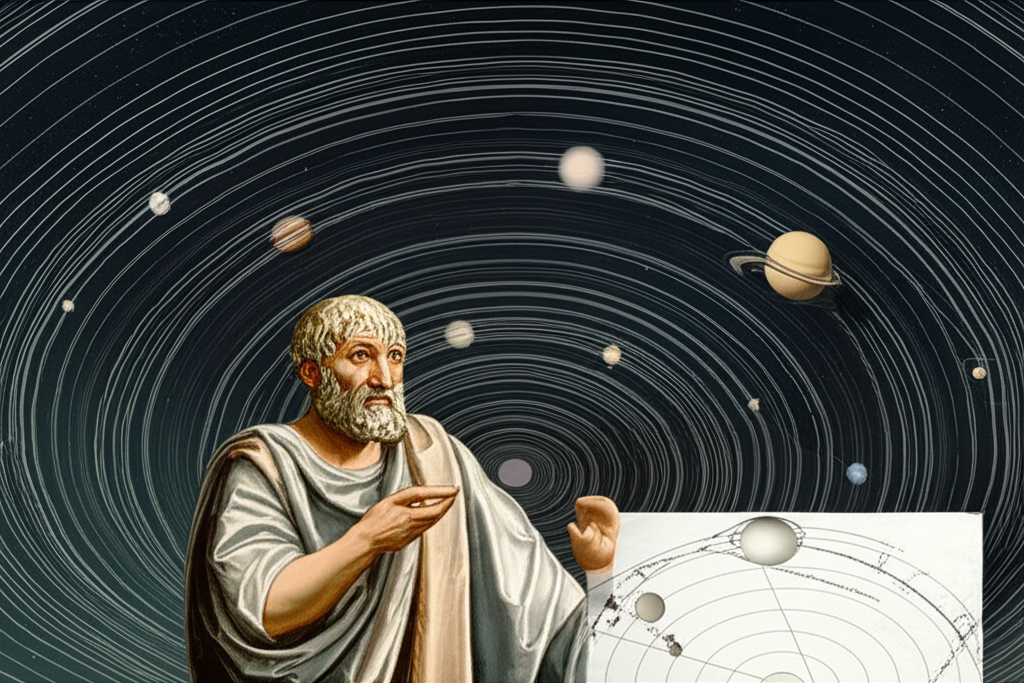
Universal vs. Particular: A Fundamental Distinction
One of the most enduring philosophical discussions related to the Laws of Nature is the relationship between the Universal and Particular.
| Aspect | Universal | Particular |
|---|---|---|
| Definition | An overarching principle or law that applies without exception across all instances. | A specific instance, event, or object that embodies or is governed by a universal law. |
| Scope | Applies everywhere, always, and to everything within its domain. | Limited to a specific time, place, and set of circumstances. |
| Nature | Abstract, general, often conceived as immutable and eternal. | Concrete, specific, transient, and subject to change within the bounds of the universal law. |
| Example | The Law of Gravity (objects with mass attract each other). | An apple falling from a tree (a particular event governed by the universal law of gravity). |
| Inquiry | Seeks to discover the fundamental rules that govern all phenomena. | Seeks to understand individual phenomena and their specific characteristics, often through observation. |
Understanding this distinction is crucial. While we observe particular phenomena in Nature, our philosophical and scientific quest is often to abstract from these particulars to discern the universal principles that explain them.
Characteristics of Nature's Principles
What defines these grand principles that constitute the Universal Laws of Nature?
- Immutability: They are unchanging. A law discovered today would have been true a million years ago and will remain true a million years from now.
- Objectivity: They exist independently of human perception or belief. We discover them; we do not create them.
- Universality: They apply everywhere in the cosmos, not just in specific locations or under specific conditions.
- Necessity: They describe what must happen, given certain conditions, rather than merely what does happen. This implies a causal chain.
- Discoverability: While profound, they are, in principle, comprehensible to the human intellect through observation, experimentation, and rational thought.
- Predictive Power: A deep understanding of these laws allows us to predict future events and understand past ones.
The Quest for Understanding: Reason and Experience
The search for these Universal Laws of Nature has propelled both scientific discovery and philosophical debate. Thinkers like Isaac Newton, whose Principia Mathematica laid out groundbreaking physical laws, demonstrated the power of mathematical reasoning combined with empirical observation. Later, Immanuel Kant grappled with how we can know such universal and necessary truths, proposing that some organizing principles are inherent to the structure of the human mind itself.
The ongoing challenge lies in discerning whether these laws are inherent in Nature itself, waiting to be discovered, or if our understanding of them is shaped by the frameworks of our own minds. This tension between empiricism (knowledge from experience) and rationalism (knowledge from reason) remains a vibrant area of philosophical inquiry. Regardless of the epistemological route, the very act of seeking these fundamental principles underscores humanity's profound desire to comprehend the ultimate laws governing our existence.
Conclusion: The Enduring Mystery of Order
The Universal Laws of Nature represent the bedrock of our understanding of reality. They are the silent, unwavering principles that orchestrate the cosmic symphony, providing the framework within which all particular events unfold. From the elegant simplicity of gravity to the complex dance of quantum mechanics, these laws invite us to look beyond the immediate and grasp the profound order that underpins all existence. The quest to fully articulate and understand these laws is an ongoing journey, a testament to the enduring human spirit of inquiry, ever seeking to unravel the deepest mysteries of Nature.
YouTube Video Suggestions:
-
📹 Related Video: What is Philosophy?
Video by: The School of Life
💡 Want different videos? Search YouTube for: ""Great Books of the Western World natural law philosophy""
2. ## 📹 Related Video: What is Philosophy?
Video by: The School of Life
💡 Want different videos? Search YouTube for: ""physics universal laws explained philosophy""