

Unveiling the Fabric of Existence: The Universal Laws of Nature
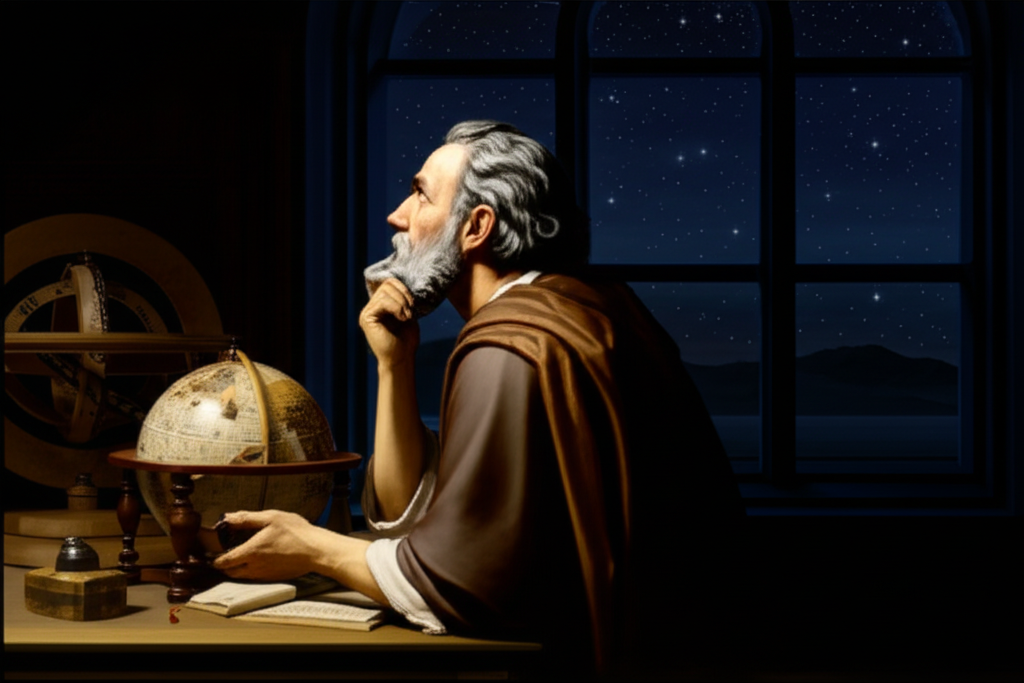
The concept of "Universal Laws of Nature" stands as a cornerstone in philosophical inquiry, probing the very essence of reality and our place within it. At its heart, this idea suggests that beneath the seeming chaos and diversity of the world, there lies an immutable order – a set of fundamental principles that govern everything from the celestial dance of planets to the moral imperatives of human action. These laws, whether understood as divine decrees, inherent properties of the cosmos, or empirically derived observations, offer a framework for understanding not just what happens, but why it happens, shaping our understanding of Nature itself.
Defining Our Terms: What Constitutes a Universal Law?
Before we delve deeper, it's crucial to clarify what we mean by these potent terms.
- Universal: Implies applicability across all times, places, and instances. It transcends the Particular, suggesting a pervasive truth that doesn't vary.
- Law: This term carries significant weight. In philosophy, it can refer to:
- Prescriptive Laws: Rules or commands that dictate how things should be, often tied to ethics, morality, or divine will (e.g., Natural Law).
- Descriptive Laws: Statements that describe how things are or do behave, often derived from observation and empirical evidence (e.g., laws of physics).
- Nature: The entire physical and metaphysical cosmos, including all phenomena, processes, and structures. It's the grand stage upon which these laws operate.
- Principle: Often used interchangeably with law, but can also denote an underlying truth or fundamental doctrine from which other truths are derived.
The philosophical journey to understand these laws is a testament to humanity's enduring quest for order and meaning.
A Historical Tapestry of Thought: From Cosmos to Conscience
The notion of an ordered cosmos governed by inherent laws is not new. It has captivated thinkers across millennia, evolving through different philosophical epochs as chronicled in the Great Books of the Western World.
-
Ancient Greece:
- Pre-Socratics: Early philosophers like Heraclitus spoke of a universal logos or reason that orders the cosmos. Parmenides, on the other hand, argued for an unchanging, eternal reality.
- Plato: His theory of Forms posited eternal, immutable Principles existing independently of the physical world, serving as blueprints for all particular things.
- Aristotle: While grounded in observation, Aristotle's teleological view of Nature suggested an inherent purpose or final cause guiding all processes, a kind of internal law for growth and development.
- Stoics: Their concept of logos was a rational, divine Principle permeating the universe, dictating both cosmic order and human moral conduct – a clear early articulation of Natural Law.
-
Medieval Philosophy:
- Thomas Aquinas: Synthesized Greek philosophy with Christian theology, distinguishing between Eternal Law (God's rational governance), Divine Law (revealed truth), Natural Law (human participation in Eternal Law through reason), and Human Law (specific societal rules). Natural Law, for Aquinas, represents objective moral principles discoverable by reason.
-
The Enlightenment and Scientific Revolution:
- Isaac Newton: His laws of motion and universal gravitation demonstrated the power of descriptive laws to explain vast cosmic phenomena with astonishing precision. This era cemented the idea of a mechanistic universe governed by predictable, mathematical principles.
- John Locke: Argued for natural rights, stemming from a Universal Natural Law that precedes government, influencing modern political thought profoundly.
This intellectual lineage highlights the continuous struggle to reconcile the observed particulars of existence with underlying universal principles.
The Two Faces of Law: Prescriptive and Descriptive
When we speak of "Universal Laws of Nature," it's vital to distinguish between two primary interpretations:
-
Natural Law (Prescriptive): The Moral Compass
- These are often seen as inherent moral principles or ethical guidelines that are universally applicable to human conduct, discoverable through reason. They dictate what ought to be.
- Examples: The Principle that it is wrong to unjustly kill, or the inherent right to self-preservation. These are considered universal because they are believed to apply to all rational beings, regardless of culture or creed.
- Philosophical Roots: Found in thinkers like Cicero, Aquinas, Locke, and Kant, who sought to establish a foundation for ethics independent of specific religious doctrines or societal conventions.
-
Scientific Laws (Descriptive): The Cosmos's Blueprint
- These are statements that describe observed regularities in Nature, typically expressed mathematically, and are predictive. They tell us what is or will be.
- Examples: The law of gravity, the laws of thermodynamics, the laws of conservation of energy and mass. These are universal in that they are expected to hold true across the entire physical universe.
- Philosophical Roots: Stemming from empirical observation and rational deduction, exemplified by Galileo, Newton, and later developments in physics, chemistry, and biology.
While seemingly distinct, these two categories often intersect. The very existence of a rational, predictable physical Nature has, for many, implied a deeper, perhaps even moral, order.
The Interplay of the Universal and the Particular
One of the profound challenges in understanding Universal Laws is their relationship with the Particular. A law is universal precisely because it applies to all instances, yet we only ever experience the world through particular phenomena.
Consider the law of gravity: it is a universal principle, yet we observe its effects only in particular events – an apple falling, a planet orbiting, a person jumping. The law itself is an abstraction, a conceptual framework that explains these diverse particulars.
| Aspect | Universal Laws | Particular Instances |
|---|---|---|
| Nature | Abstract, general, unchanging principles | Concrete, specific, transient events or objects |
| Scope | Applies everywhere and always | Occurs at a specific time and place |
| Function | Explains, predicts, provides underlying order | Demonstrates, exemplifies, is explained by the law |
| Discovery | Through reason, observation, and theoretical models | Through sensory experience and direct observation |
This dynamic tension between the universal and the particular is fundamental to both scientific discovery and philosophical insight. We infer the universal law from repeated observations of particular occurrences, yet the law itself is understood to govern these particulars even before we observe them.
Why Do These Laws Matter? The Quest for Order and Meaning
The pursuit and understanding of the Universal Laws of Nature are not merely academic exercises; they profoundly impact our worldview and existence:
- Order and Predictability: They provide a sense of order in a vast, complex universe, allowing for prediction and the development of technology. Without them, Nature would be chaotic and inscrutable.
- Foundation for Science: They are the bedrock of scientific inquiry, enabling us to formulate hypotheses, conduct experiments, and build comprehensive theories about how the world works.
- Ethical Frameworks: Natural Law provides a basis for universal human rights and ethical principles, transcending cultural relativism and offering a common ground for moral discourse.
- Philosophical Insight: They compel us to ponder deeper questions about the origin of these laws, whether they are inherent to Nature, divinely ordained, or products of human reason.
In essence, the Universal Laws of Nature represent humanity's enduring quest for a coherent understanding of reality, a search for the fundamental principles that weave the intricate tapestry of existence. They invite us to look beyond the surface of things and contemplate the profound order that underpins all that is.
YouTube Video Suggestions:
-
📹 Related Video: What is Philosophy?
Video by: The School of Life
💡 Want different videos? Search YouTube for: ""Natural Law Philosophy Explained""
-
📹 Related Video: KANT ON: What is Enlightenment?
Video by: The School of Life
💡 Want different videos? Search YouTube for: ""The Laws of Physics Explained: A Journey Through Universal Principles""