

The Enduring Quest for Universal Laws of Nature
The concept of "Universal Laws of Nature" stands as a cornerstone in humanity's perennial quest to comprehend the fundamental fabric of existence. At its heart, this philosophical inquiry seeks to identify those immutable principles that govern reality, transcending specific phenomena to dictate the very essence of how things are and how they must be. Unlike the descriptive scientific laws we derive from observation, the philosophical pursuit of Universal Laws of Nature delves into the a priori — the underlying, often unseen, principles that grant coherence and order to the cosmos, from the smallest particle to the grandest celestial dance. This article explores the profound implications of these laws, their distinction between the universal and particular, and their enduring significance in shaping our understanding of nature itself.
Unpacking the Concept: What is a "Law of Nature"?
When we speak of a "law of nature" in a philosophical context, we are often referring to something more profound than a mere statistical regularity or an empirically observed pattern. It implies an inherent, necessary truth about reality. These are not merely descriptions of what does happen, but rather statements about what must happen, or what fundamentally is.
Consider these characteristics often attributed to such laws:
- Necessity: They are not contingent; they could not be otherwise.
- Immutability: They are unchanging across time and space.
- Universality: They apply everywhere, to everything within their scope, without exception.
- Foundation: They are the bedrock upon which all other truths and phenomena rest.
The philosophical endeavor to articulate these laws draws heavily from the intellectual traditions preserved within the Great Books of the Western World, where thinkers from ancient Greece to the Enlightenment grappled with the distinction between convention and nature, and between arbitrary decree and inherent order.
The Dynamic Interplay of the Universal and the Particular
One of the central challenges in conceptualizing the Universal Laws of Nature lies in reconciling the universal with the particular. How do these overarching principles manifest in the myriad, diverse instances we observe in the world?
- The Universal: Refers to that which applies without exception, a general truth or property shared by all members of a class. A universal law would therefore be a truth that holds true across all possible instances, everywhere and always.
- The Particular: Refers to individual instances, specific events, or unique entities. Our empirical observations are always of particulars.
The philosophical debate often centers on whether universal laws are discovered by abstracting commonalities from particular observations (an inductive approach), or whether they are grasped through reason as inherent truths that explain the order of particulars (a deductive, perhaps even Platonic, approach). For instance, the universal principle of causality might explain why every particular event has a cause, rather than being derived solely from observing countless cause-and-effect sequences. This distinction is crucial for understanding the epistemological roots of our knowledge of nature.
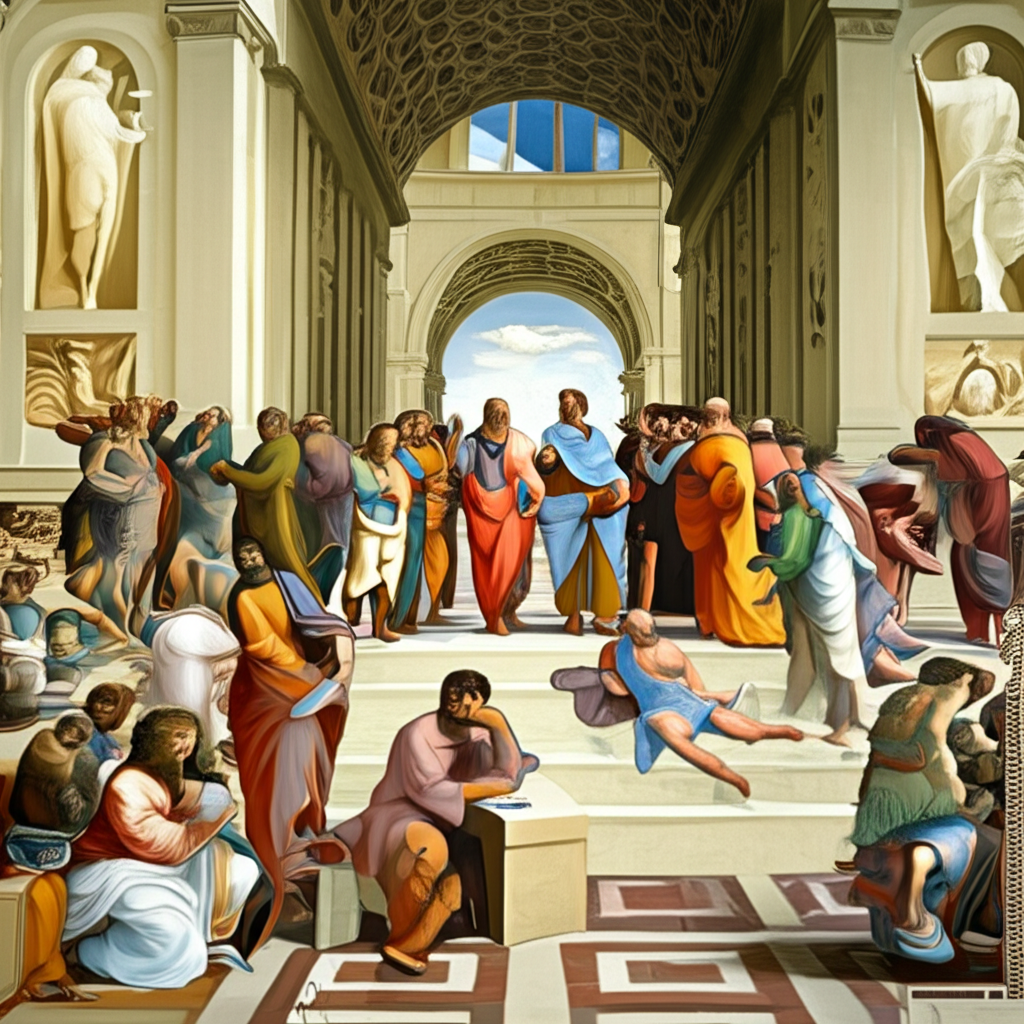
Nature's Immutable Principles: The Bedrock of Reality
If Universal Laws of Nature exist, they constitute the most fundamental principles governing the cosmos. These are not human constructs, but rather inherent properties of reality itself. They speak to the very essence of nature, defining its capabilities and limitations.
For many philosophers, these principles provide the intelligibility of the world. Without them, nature would be an arbitrary, chaotic spectacle, devoid of predictable patterns or rational coherence. The search for these principles is, in essence, a search for the deepest truths about existence.
Consider the Stoic notion of Logos, an all-pervading rational principle that orders the cosmos, or the Aristotelian concept of final causes, which posits inherent purposes within nature. While their specific interpretations differ, both point to an underlying, rational structure that dictates the behavior and development of all things. These are not merely scientific models, but profound philosophical insights into the intrinsic order of being.
The Enduring Relevance of the Inquiry
The philosophical investigation into the Universal Laws of Nature remains profoundly relevant today. It underpins our understanding of:
- Metaphysics: What is the fundamental structure of reality? Are there necessary truths that define existence?
- Epistemology: How do we come to know these laws? Through reason, experience, or intuition?
- Ethics: Are there natural moral laws that derive from the inherent order of nature, guiding human conduct?
- Philosophy of Science: What is the relationship between philosophical principles and the empirical laws formulated by science? Do scientific laws merely approximate deeper, universal truths?
The dialogue about these laws continues to shape our intellectual landscape, urging us to look beyond the surface of phenomena to grasp the deeper, underlying order that gives nature its enduring form and coherence. It is a testament to the human spirit's relentless drive to understand not just what happens, but why it must.
📹 Related Video: What is Philosophy?
Video by: The School of Life
💡 Want different videos? Search YouTube for: ""Natural Law Philosophy: An Introduction""
📹 Related Video: KANT ON: What is Enlightenment?
Video by: The School of Life
💡 Want different videos? Search YouTube for: ""Metaphysics: Universal and Particulars Explained""