

The Immutable Fabric: Unveiling the Universal Laws of Mathematics
Mathematics, often perceived as a mere tool for calculation, stands as a profound testament to a deeper, universal order. This article explores the philosophical underpinnings of mathematical laws, arguing that they represent not human invention, but rather the discovery of fundamental principles that govern existence, transcending the particular and revealing the universal. We shall delve into why these truths appear immutable, how they inform our understanding of reality, and their enduring significance in philosophical inquiry.
A Glimpse into the Absolute: The Unyielding Nature of Mathematical Truth
From the earliest inquiries of the ancients to the most complex theories of modernity, a singular observation persists: the truths of mathematics possess an astonishing universality. Unlike the fluctuating laws of physics, which are derived from empirical observation and can be revised by new data, mathematical principles seem to exist independently of our senses, holding true across all cultures, epochs, and even hypothetical realities. When we speak of the "Universal Laws of Mathematics," we are pondering not just a system of numbers and symbols, but a window into the very structure of being. It is a realm where the particular example illuminates a universal truth, a domain where logic and consistency reign supreme, offering a bedrock for all rational thought.
The Essence of Mathematical Law: Beyond Empirical Observation
What distinguishes a mathematical law from, say, a physical law like gravity? The fundamental difference lies in their epistemology. Physical laws are inductive; they are generalizations drawn from repeated observations of the physical world. They are contingent, meaning they could theoretically be otherwise. Mathematical laws, conversely, are deductive and a priori. They are derived from self-evident axioms and definitions through logical reasoning, and their validity does not depend on empirical verification.
Consider the Pythagorean Theorem: $a^2 + b^2 = c^2$. This is not a description of how triangles happen to behave on Earth; it is a principle that defines the very essence of a right-angled triangle in Euclidean geometry. It is a truth that holds equally true in the mind, on a blackboard, or in the vastness of space.
Key Characteristics of Mathematical Laws:
- Necessity: They cannot be otherwise without contradiction.
- A Priori: Known independently of experience.
- Universality: Applicable everywhere, always, and to everyone.
- Abstractness: Deal with concepts, not physical objects.
- Consistency: Form coherent, logical systems.
These characteristics underscore why mathematical laws are often considered principles of reason itself, rather than mere descriptions of phenomena.
From the Particular Instance to the Universal Principle
Our initial encounter with mathematics often begins with the particular: counting individual objects, drawing specific shapes. Yet, the power of mathematics lies in its ability to abstract from these particulars to grasp universal truths. The concept of "threeness" is not tied to three apples or three stars; it is an abstract principle that applies to any collection of three distinct items.
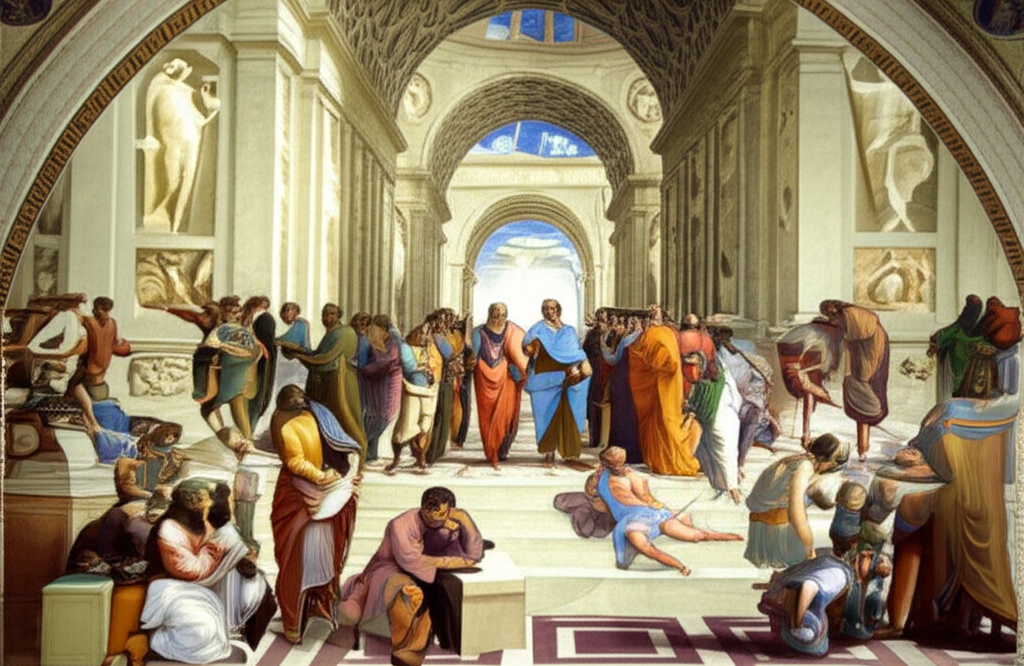
This journey from the particular to the universal is central to philosophical inquiry into mathematics. It echoes ancient discussions about Forms and Ideas, suggesting that mathematical objects (numbers, shapes, functions) exist in a realm of perfect, unchanging being, which our minds can access through reason. When we prove a theorem, we are not creating a new truth, but rather unveiling a pre-existing universal principle.
Mathematics as the Language of Reality: A Universal Dialect
If mathematical laws are indeed universal principles, what does this imply about the nature of reality? Many thinkers, from Plato to Galileo, have posited that the universe itself is fundamentally mathematical. Galileo famously declared that the book of nature is "written in the language of mathematics." This perspective suggests that the laws governing the cosmos are not arbitrary but are expressions of these underlying mathematical principles.
This is why, regardless of culture or era, a mathematician in ancient Greece could communicate the same geometric truths to a contemporary in China, and those truths would resonate with a scientist studying black holes today. The language of mathematics transcends the particular dialects of human speech, offering a truly universal means of understanding and describing the cosmos. It is the bedrock upon which scientific laws are often formulated and tested, providing the framework for our most profound insights into the physical world.
The Enduring Philosophical Challenge: Discovery or Invention?
The profound universality of mathematical principles leads to a perennial philosophical debate: Are mathematical laws discovered or invented?
- Platonism/Realism: This view holds that mathematical objects and truths exist independently of human minds, in a timeless, abstract realm. We discover these universal laws, much like explorers discover new continents.
- Formalism/Constructivism: This perspective suggests that mathematics is a human construct, a formal system of symbols and rules we invent. The "universality" comes from the shared human capacity for logic and the consistent application of these rules.
While the debate continues, the practical effect remains the same: mathematics provides an unparalleled framework for reliable knowledge. Whether we are unearthing pre-existing principles or meticulously crafting a perfect logical system, the resulting edifice of mathematical law stands as humanity's most robust intellectual achievement, a testament to the power of reason to grasp the universal from the myriad particulars of experience. It is a continuous source of wonder, prompting us to ponder the very fabric of reality and our place within its mathematically ordered grandeur.
📹 Related Video: PLATO ON: The Allegory of the Cave
Video by: The School of Life
💡 Want different videos? Search YouTube for: ""Platonism in Mathematics" or "Philosophy of Mathematics Universal Laws""