

The Unseen Threads: Exploring the Universal Concept of Law
The quest for a universal concept of law is one of philosophy's most enduring and fascinating journeys. It asks whether, beneath the myriad of rules and regulations that govern our diverse societies, there lies a fundamental, unchanging principle accessible to all. This article delves into the historical and philosophical exploration of this idea, examining how thinkers throughout the ages, drawing from the wellspring of the Great Books of the Western World, have grappled with the tension between the universal aspirations of justice and the particular manifestations of human legislation. We’ll explore the deep roots of natural law, the Enlightenment's emphasis on reason, and the ongoing debate about what makes a law truly just, regardless of time or place.
The Enduring Quest: What Makes Law Universal?
From ancient city-states to modern global institutions, humanity has consistently sought to establish order through law. But is this order merely a social construct, or does it reflect a deeper, more profound truth? The universal concept of law posits that certain fundamental principles of justice, morality, and reason are inherent to human nature or the cosmos itself, transcending cultural, historical, and geographical boundaries. This isn't just about having similar laws in different places; it's about the underlying justification, the moral bedrock upon which all just particular laws ought to stand.
Ancient Echoes: Reason, Nature, and the Polis
Our journey begins with the foundational insights gleaned from the Great Books of the Western World, specifically the ancient Greeks. They laid much of the groundwork for understanding law not just as decrees, but as reflections of a deeper order.
- Plato's Ideal Forms and Justice: In works like The Republic, Plato grappled with the concept of justice itself, suggesting that there true, eternal Forms of justice, goodness, and beauty exist independently of human opinion. For Plato, a just law in a particular society would be one that approximates these universal Forms. The ideal state, governed by philosopher-kings, would strive to embody these universal principles.
- Aristotle's Natural Law and Practical Reason: Aristotle, while more grounded in observation, also recognized a natural order. In his Nicomachean Ethics and Politics, he discusses natural justice, stating that "there is a natural and a legal justice." Natural justice, for Aristotle, is that which "has the same force everywhere and does not depend on people's thinking this or that." It’s an inherent principle that guides human flourishing, discernible through reason. Human law, therefore, should aim to align with these natural principles, adapting them to the particular circumstances of the polis.
- The Stoics and Cosmic Reason: Later, the Stoics took this further, positing a universal cosmic logos or reason that pervades the entire universe. For them, living virtuously meant living in accordance with this natural law, which was accessible to all rational beings. The concept of law here is deeply intertwined with the very fabric of existence.
Medieval Syntheses: Divine Order and Human Statutes
The medieval period, heavily influenced by Christian theology, integrated these ancient ideas with a divine framework, further solidifying the notion of a universal law.
-
Thomas Aquinas and the Hierarchy of Law: Perhaps the most systematic exposition comes from Thomas Aquinas in his Summa Theologica. He presents a four-fold classification of law, illustrating the seamless connection between the universal and the particular:
- Eternal Law: God's rational governance of the entire universe – the ultimate principle from which all other laws derive. This is the most universal concept of law.
- Divine Law: Revealed by God, such as the Ten Commandments, which guides humanity towards its supernatural end.
- Natural Law: The participation of rational creatures in the Eternal Law. It is knowable through human reason and dictates fundamental moral principles like "do good and avoid evil." This is the core of the universal concept of law as applied to human conduct.
- Human Law: Specific statutes enacted by governments for the common good. These are particular applications that must conform to Natural Law to be just. An unjust human law, for Aquinas, is "no law at all."
Table 1: Aquinas's Hierarchy of Law
Type of Law Source / Nature Scope Relationship to Universal Eternal Law God's governance of the universe Cosmic, ultimate Most Universal Principle Divine Law God's revelation (e.g., Scripture) Specific to faith Universal moral guidance Natural Law Human reason's participation in Eternal Law Universal moral principles Core Universal Concept Human Law Enacted by human authority for common good Particular societies Must derive from Natural
The Enlightenment: Reason, Rights, and the Categorical Imperative
The Enlightenment era shifted the focus from divine command to human reason as the primary source of universal principles for law.
- John Locke and Natural Rights: In his Two Treatises of Government, Locke argued for inherent natural rights (life, liberty, and property) that pre-exist government. These rights are not granted by any authority but are universal and inalienable, discoverable by reason. Legitimate law and government, therefore, must protect these universal principles, serving as a framework for particular societies.
- Immanuel Kant and the Categorical Imperative: Kant, in works like Groundwork of the Metaphysics of Morals, sought to establish moral law on pure reason alone, independent of consequences or desires. His Categorical Imperative provides a universal principle: "Act only according to that maxim whereby you can at the same time will that it should become a universal law." For Kant, moral law is a self-imposed principle of reason, binding on all rational beings, forming the very concept of duty.
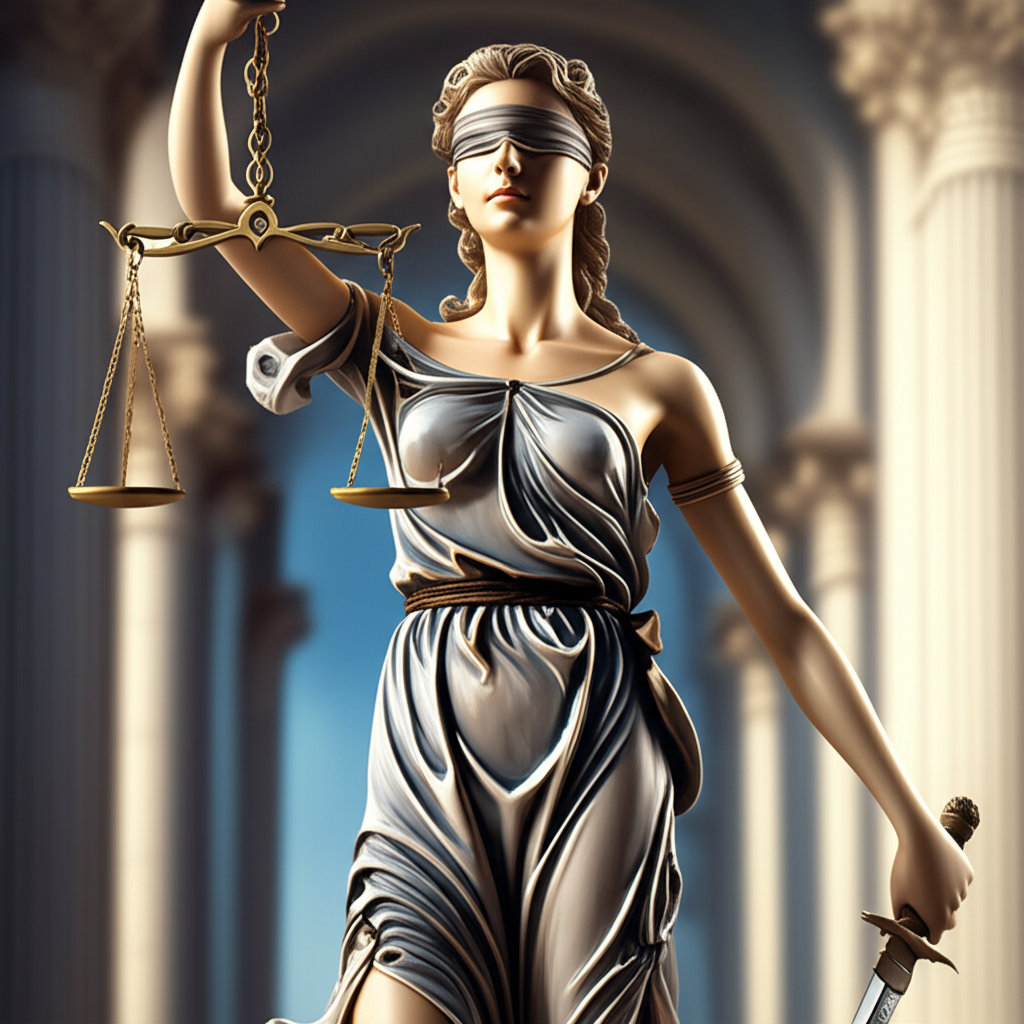
The Tension: Universal Aspiration vs. Particular Manifestation
Despite the compelling arguments for a universal concept of law, the reality of diverse legal systems presents a persistent tension.
- The Challenge of Cultural Relativism: Critics often point to the vast differences in laws across cultures and historical periods. If a universal law exists, why do societies legislate so differently on matters like marriage, property, or punishment? This highlights the dynamic interplay between universal principles and their particular application.
- Legal Positivism's Counter-Argument: Philosophers like Jeremy Bentham and John Austin, proponents of legal positivism, argued that law is simply what is enacted by a sovereign authority. There is no necessary connection between law and morality. A law is valid because it was properly made, not because it conforms to some universal principle. This perspective emphasizes the particular, man-made nature of law.
- The Ongoing Dialogue: The debate continues to shape contemporary legal philosophy. How do we reconcile the universal principle of human dignity with particular cultural practices? International human rights law is a modern attempt to codify universal principles, yet its enforcement and interpretation often face challenges from particular national interests and cultural norms.
Conclusion: The Unfinished Symphony of Universal Law
The journey to define a universal concept of law is an ongoing philosophical endeavor. From Plato's Forms to Kant's Categorical Imperative, and Aquinas's hierarchy, thinkers have consistently sought to identify the bedrock principles that lend legitimacy and justice to human governance. While the particular manifestations of law will always vary with societal needs and values, the aspiration for a universal standard—a common ground of reason, justice, and humanity—remains a powerful and necessary ideal. It reminds us that beyond the statutes and codes, there's a deeper concept of what law ought to be, guiding our continuous pursuit of a more just and equitable world.
YouTube Video Suggestions:
-
📹 Related Video: What is Philosophy?
Video by: The School of Life
💡 Want different videos? Search YouTube for: ""Natural Law Philosophy Explained Aquinas""
-
📹 Related Video: KANT ON: What is Enlightenment?
Video by: The School of Life
💡 Want different videos? Search YouTube for: ""Kant Categorical Imperative Universal Law Formulation""