

The Enduring Quest for a Universal Concept of Law
The idea of law is fundamental to human society, guiding our actions, shaping our institutions, and defining our sense of justice. But is there a universal concept of law, a foundational principle that transcends the myriad codes and customs across cultures and epochs? This article delves into the philosophical journey, drawing from the Great Books of the Western World, to explore whether such a universal bedrock exists, examining the interplay between the universal and particular manifestations of legal thought. We will investigate how thinkers from antiquity to modernity have grappled with the notion that beneath the surface of diverse legal systems lies a common human aspiration for order, fairness, and a governing structure rooted in reason or nature.
Unpacking the Concept of Law: A Philosophical Starting Point
Before we can seek a universal understanding, we must first consider what we mean by "law." Is it merely a set of rules enforced by a sovereign power, or does it embody a deeper moral or rational imperative? Philosophers across the ages have offered varied answers, but many have converged on the idea that law, at its most fundamental, aims to establish order, protect rights, and promote the common good. The search for a universal principle of law is, in essence, a quest for the enduring essence of these aims, independent of specific historical or cultural contexts.
The Ancient Roots of Universal Law
Our philosophical lineage, particularly through the Great Books, reveals an early and persistent engagement with the idea of a law that is more than human invention.
Plato and the Ideal Forms of Justice
In Plato's Republic, the concept of justice, which is inextricably linked to law, is presented as an eternal and unchanging Form, accessible through reason. For Plato, a truly just society would be structured according to these ideal principles, rather than arbitrary decrees. This suggests a universal standard against which all particular laws could be measured.
Aristotle and Natural Teleology
Aristotle, in works like Nicomachean Ethics and Politics, explored law in relation to human flourishing (eudaimonia). He argued that certain principles of justice are embedded in human nature and the natural order of the world. A good law, for Aristotle, aligns with humanity's inherent telos, guiding individuals and societies towards their proper ends. This "natural law" is a powerful precursor to later universalist theories.
The Stoics and Cosmic Reason
The Stoics, whose influence resonates through Roman thought (e.g., Cicero), posited a universal cosmic reason (logos) that pervades the universe. For them, true law is an emanation of this rational order, accessible to all rational beings. To live in accordance with nature, therefore, meant living in accordance with this universal principle of law and reason.
The Enduring Legacy of Natural Law
The concept of natural law became a cornerstone for understanding the universal concept of law, particularly through the medieval period.
Thomas Aquinas's Synthesis:
In his Summa Theologica, Thomas Aquinas masterfully synthesized Aristotelian philosophy with Christian theology. He articulated a hierarchy of laws:
- Eternal Law: The divine reason governing the entire universe. This is the ultimate universal principle.
- Natural Law: Humanity's participation in the eternal law, discoverable through human reason. It dictates fundamental moral principles like "do good and avoid evil."
- Human Law: Specific statutes and ordinances created by human societies. These are particular applications that must, to be just, derive from and align with natural law.
- Divine Law: Revealed by God (e.g., the Ten Commandments), guiding humanity towards supernatural ends.
Aquinas's framework clearly distinguishes between the universal principle of law (eternal and natural law) and its particular applications (human law), asserting that the latter's legitimacy hinges on its adherence to the former.
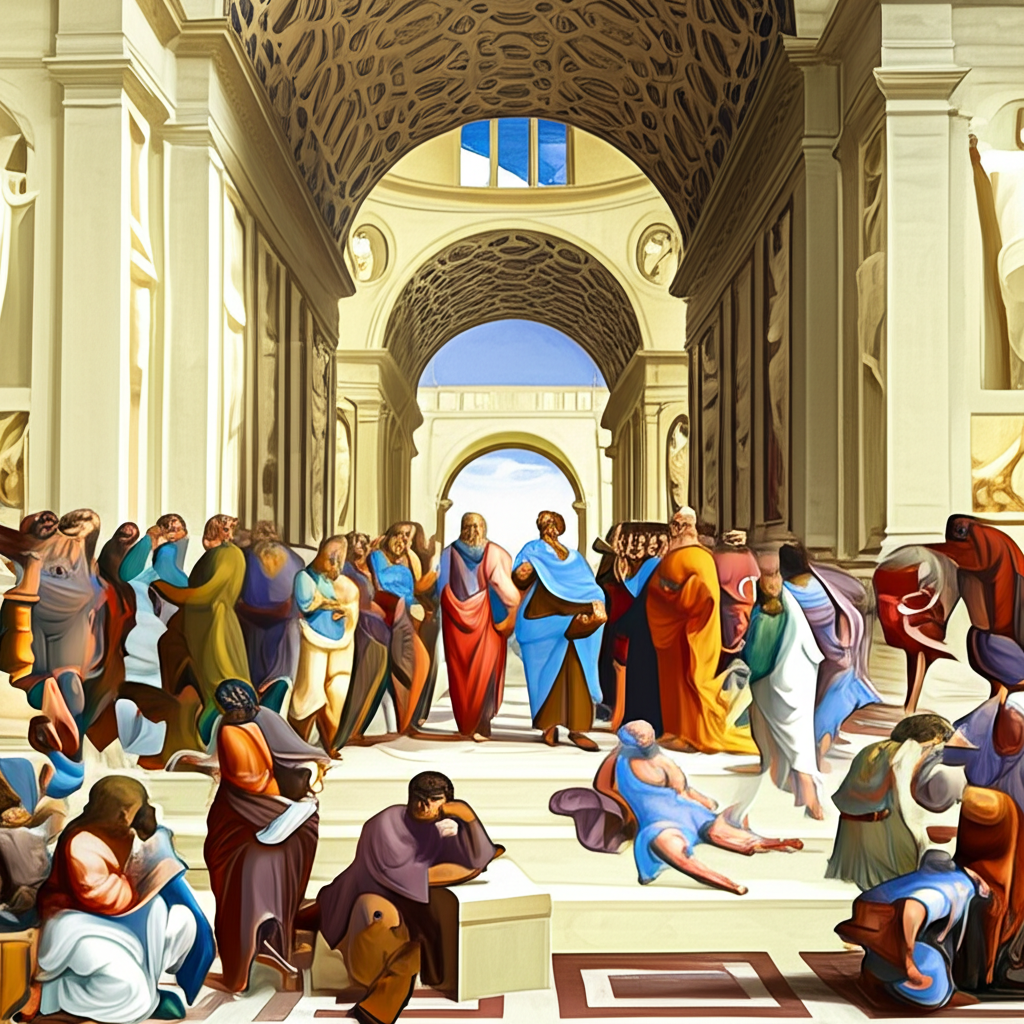
Universal Principles vs. Particular Laws: A Dynamic Tension
The tension between the universal and particular is central to the discussion of law. While the aspiration for universal principles of justice, fairness, and order persists, the actual manifestation of law is always particular, shaped by specific historical, cultural, and societal contexts.
| Aspect | Universal Principles of Law | Particular Laws (Human Law) |
|---|---|---|
| Nature | Abstract, foundational, ideal, often moral or rational. | Concrete, specific, codified, enforced by a state. |
| Source | Reason, nature, divine command, inherent human rights. | Legislative bodies, customs, judicial precedents. |
| Scope | Applies to all humanity, timeless. | Limited to a specific jurisdiction, time-bound, changeable. |
| Examples | The principle that murder is wrong, the right to life. | A specific country's criminal code regarding homicide. |
| Relationship | Particular laws ideally derive their legitimacy from universal principles. | Universal principles provide a standard for critiquing and improving particular laws. |
This table illustrates that while legal systems globally differ vastly – from ancient codes like Hammurabi's to modern constitutional democracies – the underlying concept of seeking justice, maintaining order, and defining rights often points to a shared, if unspoken, set of universal principles.
Modern Perspectives on Law's Universality
The Enlightenment brought new dimensions to the universal concept of law, often grounding it in reason and individual rights.
Kant's Categorical Imperative
Immanuel Kant, in Groundwork of the Metaphysics of Morals, proposed the categorical imperative as a universal principle for moral action, which directly informs law. His famous formulations, such as "Act only according to that maxim whereby you can at the same time will that it should become a universal law," provide a purely rational basis for determining universally binding moral and, by extension, legal duties.
Social Contract Theorists
Thinkers like John Locke and Jean-Jacques Rousseau (from Two Treatises of Government and The Social Contract, respectively) explored the origins of political society and law. While their specific models differed, they all posited a universal rational basis for individuals to consent to a social contract, giving rise to legitimate laws. This contract, even if hypothetical, implies universal principles of governance and rights that all rational beings would agree to.
Challenges to Universalism and its Enduring Appeal
Despite the robust philosophical tradition supporting a universal concept of law, challenges arise from legal positivism, cultural relativism, and historicism, which emphasize the constructed, context-dependent nature of law. These perspectives question whether any principle can truly be universal, given the vast diversity of human values and societal structures.
However, the pursuit of a universal concept of law remains compelling. It fuels international human rights movements, underpins calls for global justice, and provides a critical lens through which to evaluate the fairness and legitimacy of particular legal systems. The quest for universal principles of law is not merely an academic exercise; it is a fundamental human aspiration for a world governed by justice, reason, and shared ethical foundations.
YouTube: search for "Natural Law philosophy explained"
YouTube: search for "Kant Categorical Imperative law"
📹 Related Video: What is Philosophy?
Video by: The School of Life
💡 Want different videos? Search YouTube for: "The Universal Concept of Law philosophy"