

The Universal Concept of Law: An Enduring Philosophical Quest
The quest for a Universal Concept of Law has captivated thinkers for millennia, underpinning our understanding of justice, morality, and societal order. This article delves into the profound philosophical inquiry into whether a set of governing Principles exists that transcends cultural, historical, and geographical boundaries, applicable to all humanity. We will navigate the intricate relationship between the Universal and Particular expressions of law, drawing insights from the rich tapestry of thought found within the Great Books of the Western World. Ultimately, we explore the possibility and implications of such a universal framework in shaping our ethical landscapes.
Unpacking the Concept of Law: Beyond Statutes
When we speak of "law," our minds often default to statutes, codes, and judicial decrees—the positive laws enacted by states. However, the philosophical Concept of Law is far more expansive. It encompasses a search for fundamental Principles that govern not just human behavior, but perhaps even the cosmos itself.
At its core, this philosophical pursuit asks:
- Is there an inherent order to the universe?
- Do certain moral truths hold true for everyone, everywhere?
- Can reason alone uncover these immutable laws?
This distinction between positive law (man-made) and a higher, more fundamental law (often termed natural law or moral law) is crucial. The latter is what we consider when contemplating a Universal Concept of Law. It suggests that justice, fairness, and inherent rights are not merely conventions, but rather reflections of an underlying, objective reality.
Natural Law vs. Positive Law: A Fundamental Dichotomy
| Aspect | Natural Law | Positive Law |
|---|---|---|
| Origin | Inherent in nature, reason, or divine will | Enacted by human authority (legislatures, courts) |
| Scope | Universal, immutable, eternal | Particular to a specific society, time, and place |
| Basis | Morality, ethics, justice, human reason | Social contract, political power, societal needs |
| Validity | Self-evident, discoverable through reason | Enforced through sanctions and state power |
| Example | The Principle that murder is wrong | A country's specific penal code against murder |
The Tension Between the Universal and Particular
The most compelling challenge to a Universal Concept of Law arises from the undeniable diversity of human cultures and their particular legal systems. How can we reconcile the idea of universal Principles with the vast array of customs, beliefs, and legal practices observed across the globe?
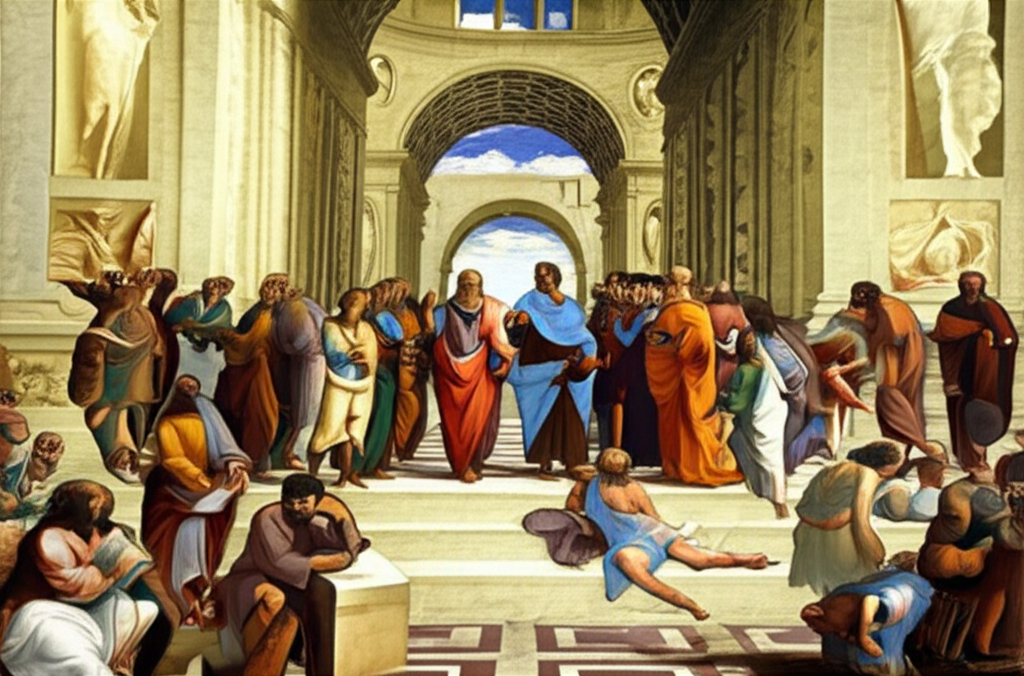
Philosophers from Plato to Kant have grappled with this tension. Plato, in his theory of Forms, posited eternal, unchanging ideals (like Justice itself) that exist independently of our imperfect world. For him, particular laws enacted in a city-state were merely imperfect reflections of these perfect Universal Forms. Aristotle, while more grounded in empirical observation, still sought universal patterns and teleological ends in human nature, suggesting a common ethical framework for flourishing.
This leads us to a critical question: If a Universal Concept of Law exists, how does it manifest in the particularities of human experience? Is it a blueprint, a guiding star, or merely a shared human aspiration?
Navigating Cultural Relativism
The existence of diverse legal systems and moral codes often leads to arguments for cultural relativism, suggesting that all laws and moral truths are products of their specific cultural context. This perspective poses a significant hurdle for the notion of a Universal Concept of Law. However, proponents of universalism often argue that while the particular expressions and applications of law may vary, underlying Principles—such as the prohibition against unprovoked violence, the importance of truth-telling, or the need for fairness in dispute resolution—can be found in nearly every society, albeit in different guises.
Echoes from the Great Books of the Western World
The enduring dialogue on the Universal Concept of Law is richly documented in the Great Books. From ancient Greece to the Enlightenment, thinkers have sought to articulate these fundamental Principles.
Ancient Roots: Stoicism and Natural Law
The Stoics, particularly figures like Cicero, were ardent proponents of natural law. Cicero, in De Re Publica, famously articulated:
"True law is right reason in agreement with nature; it is of universal application, unchanging and everlasting; it summons to duty by its commands, and averts from wrongdoing by its prohibitions."
This Principle suggests a law accessible through reason, binding on all, and superior to any human decree. Centuries later, Thomas Aquinas, drawing on Aristotelian thought and Christian theology, further developed the Concept of natural law in his Summa Theologica. For Aquinas, natural law is humanity's participation in the eternal law of God, discoverable through reason and guiding us towards our proper end.
Enlightenment Reason: Kant's Categorical Imperative
Immanuel Kant, a towering figure of the Enlightenment, sought a purely rational basis for a Universal moral Law. His Categorical Imperative, articulated in works like Groundwork of the Metaphysic of Morals, proposes that moral actions must be guided by Principles that one could universalize without contradiction. For example, "Act only according to that maxim whereby you can at the same time will that it should become a universal law." This is a profound attempt to derive a Universal Concept of Law from the very structure of practical reason itself, independent of any particular desires or consequences.
Modern Challenges and Continued Relevance
In the modern era, the Universal Concept of Law faces challenges from legal positivism, which asserts that law is simply what is posited by a sovereign authority, regardless of its moral content. Yet, even in the face of such critiques, the idea of a higher law persists, often invoked during discussions of human rights, international justice, and the moral limits of state power. The Nuremberg trials, for instance, implicitly appealed to a universal sense of justice that transcended national laws.
Is a Universal Concept of Law Truly Possible?
The debate over the possibility of a Universal Concept of Law remains vibrant.
Arguments in its favor often point to:
- Shared Human Nature: Despite differences, humans share fundamental needs, vulnerabilities, and capacities for reason and empathy.
- Cross-Cultural Moral Overlaps: Many basic moral prohibitions (e.g., against murder, theft, deceit) appear in virtually all societies.
- The Power of Reason: The belief that rational inquiry can uncover objective truths, including moral ones.
- The Necessity for International Order: The practical need for common Principles to govern global interactions and prevent chaos.
Conversely, skeptics highlight:
- Cultural Relativism: The undeniable diversity of moral and legal practices.
- The Is-Ought Problem: The difficulty of deriving moral "oughts" from factual "is" statements about human nature or the world.
- Historical Abuses: How appeals to "universal law" have sometimes been used to justify oppression or cultural imperialism.
Despite these complexities, the pursuit of a Universal Concept of Law is not merely an academic exercise. It is a profound philosophical endeavor that speaks to our deepest aspirations for justice, order, and a shared humanity. It compels us to critically examine our particular laws against a broader standard, pushing us to strive for legal systems that are not just effective, but also inherently just and humane.
The Ongoing Dialogue
The dialogue between the Universal and Particular in law is a dynamic one. It encourages us to appreciate the richness of diverse legal traditions while simultaneously seeking common ground that binds us as a species. The Principle of universal human dignity, for example, serves as a powerful contemporary articulation of a universal legal Concept, guiding international human rights law and inspiring movements for justice worldwide.
📹 Related Video: KANT ON: What is Enlightenment?
Video by: The School of Life
💡 Want different videos? Search YouTube for: ""Natural Law Philosophy Explained" or "Kant's Categorical Imperative Explained""