

The Enduring Dialectic: Navigating the Universal and Particular in Law
The essence of any robust legal system lies in its ability to reconcile the grand, sweeping principles of Law with the intricate, often messy realities of individual cases. This fundamental tension, the relation between the Universal and Particular, forms the bedrock of legal philosophy and practice. It asks how general statutes, designed to apply to all, can deliver true Justice when faced with unique circumstances, human motivations, and specific contexts. From ancient Greek thought to modern jurisprudence, this dynamic interplay is not merely an academic exercise but a living challenge that shapes the very fabric of our societies.
The Philosophical Foundations: From Plato's Forms to Aristotle's Equity
The philosophical lineage exploring the Universal and Particular is deeply etched in the Great Books of the Western World. Plato, in his pursuit of ideal Forms, posited a realm of perfect, unchanging universals—including the Form of Justice. For Plato, true law would ideally reflect these perfect ideals. However, he also recognized the inherent limitations of applying such perfect forms to the imperfect, particular world of human affairs.
Aristotle, ever the pragmatist, offered a crucial refinement. While acknowledging the necessity of general laws for societal order, he introduced the concept of epieikeia, or equity. Aristotle understood that all general statements, including laws, are by their nature universal and cannot account for every possible particular circumstance.
"For when the law speaks universally, and a case arises on it which is not covered by the universal statement, then it is right, where the legislator fails us and has erred by oversimplicity, to correct the omission by saying what the legislator himself would have said had he been present, and would have put into his law if he had known."
— Aristotle, Nicomachean Ethics, Book V, Chapter 10
This insight highlights that rigid adherence to the universal rule can, paradoxically, lead to injustice in a specific instance. Justice, therefore, demands a nuanced understanding of the relation between the general rule and the particular case, allowing for a tempering of the law's letter with its spirit.
The Tension in Legal Practice: General Rules vs. Specific Facts
Every legal system grapples with this inherent tension. Legislators strive to create laws that are clear, consistent, and applicable across a broad spectrum of situations—these are the universal principles. Yet, judges and juries are tasked with applying these universals to the particular facts presented in a courtroom.
Consider the following examples:
- Universal Principle: "Theft is illegal and punishable."
- Particular Case: A starving person steals a loaf of bread to feed their child.
While the universal rule remains, the specific circumstances might influence the application of Justice, leading to different interpretations of intent, mitigation, or sentencing. This is where the relation between the abstract and the concrete becomes critical.
Mechanisms for Bridging the Gap: Ensuring Equitable Justice
Legal systems have developed various mechanisms to manage the relation between the Universal and Particular, aiming to deliver Justice that is both consistent and fair.
- Judicial Discretion: Judges are often empowered to interpret laws, consider aggravating or mitigating factors, and apply sentencing guidelines flexibly based on the specific details of a case. This allows for the particular to inform the application of the universal.
- Equity Courts: Historically, separate courts of equity emerged to provide remedies where strict common law rules (universal) would lead to unjust outcomes in particular situations. While often integrated into modern systems, the principle persists.
- Statutory Exceptions and Defenses: Legislators themselves anticipate some particular circumstances by including specific exceptions (e.g., self-defense in assault cases) or affirmative defenses within the law, acknowledging that a universal prohibition might not apply in every instance.
- Case Law and Precedent: The common law system, built on precedent, constantly refines the application of universal principles by examining how they have been interpreted and applied in a multitude of particular past cases. This iterative process allows for the evolution of legal understanding.
The Ongoing Quest for Justice
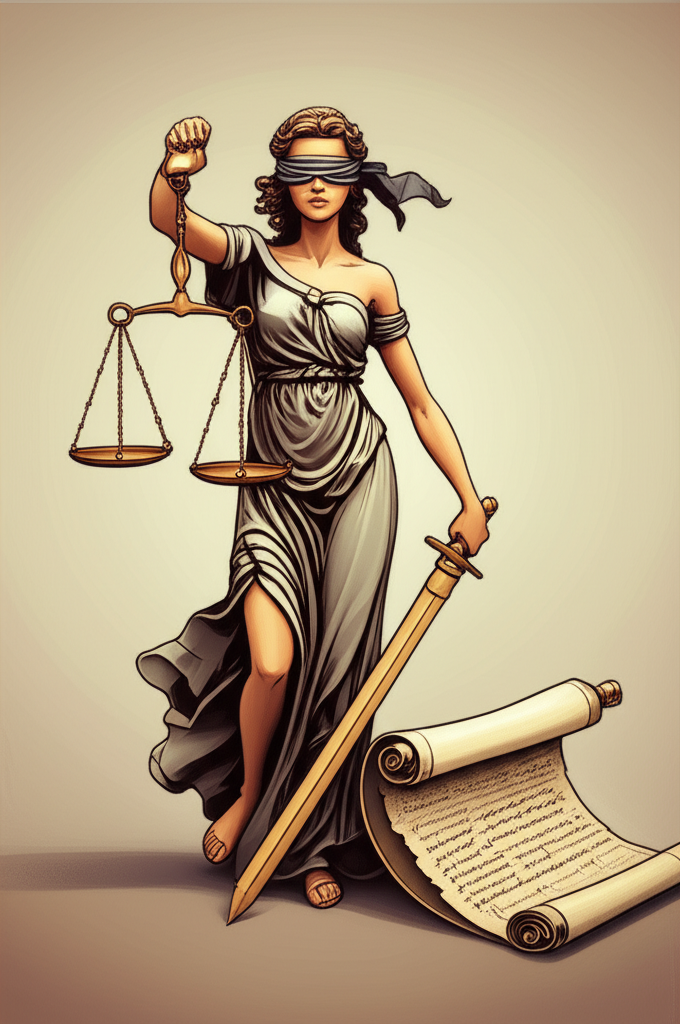
The dynamic between the Universal and Particular is not a problem to be solved once and for all, but an ongoing philosophical and practical challenge inherent to Law. A purely universal system risks being rigid and unjust in specific cases, while a purely particularistic system risks inconsistency, unpredictability, and chaos.
The continuous effort to find the right relation between these two poles is central to the pursuit of Justice. It requires constant deliberation, ethical reasoning, and a deep understanding of human nature and societal needs. The Great Books of the Western World remind us that this tension is an ancient one, and its careful navigation remains the hallmark of a wise and just legal framework.
YouTube Video Suggestions:
-
📹 Related Video: ARISTOTLE ON: The Nicomachean Ethics
Video by: The School of Life
💡 Want different videos? Search YouTube for: ""Aristotle Nicomachean Ethics Justice Equity""
2. ## 📹 Related Video: What is Philosophy?
Video by: The School of Life
💡 Want different videos? Search YouTube for: ""Philosophy of Law Universal Particular""