

Navigating the Labyrinth of Meaning: The Universal and Particular in Definition
Summary: At the heart of clear thought and effective communication lies the art of Definition. This article explores the fundamental philosophical distinction between the Universal and Particular and how their intricate relationship shapes our ability to define anything from a simple object to an abstract concept. We'll delve into how Logic guides us in bridging the gap between general categories and specific instances, revealing how our very Idea of a thing is forged in this intellectual crucible. Understanding this dynamic isn't just an academic exercise; it's essential for truly grasping the world around us.
The Enduring Challenge of Naming Things
It’s a curious human endeavor, isn't it, this relentless drive to define? From the moment we first utter a word, we're attempting to pin down a piece of reality, to give it form and meaning through language. Yet, the moment we try to articulate what something is, we stumble upon a profound philosophical challenge: how do we reconcile the general concept with the specific instance? This is the age-old tension between the Universal and Particular, a cornerstone of philosophical inquiry that has occupied thinkers from antiquity to the present day, profoundly influencing our understanding of Definition itself.
Foundations in Ancient Thought: Plato's Forms and Aristotle's Categories
Our journey into this distinction truly begins with the towering figures found within the Great Books of the Western World.
- Plato's Realm of Forms: For Plato, the Universal was paramount. He posited a realm of perfect, immutable Forms (or Ideas) – the ultimate archetypes of beauty, justice, and even 'treeness.' A particular tree in our world is merely an imperfect copy, participating in the Idea of 'tree.' The true Definition of 'tree', for Plato, would point to this perfect, universal Form.
- Aristotle's Empirical Approach: Aristotle, Plato's student, brought the discussion down to earth. While acknowledging universals (like 'humanity'), he emphasized the reality of Particulars – individual substances like Socrates or this specific horse. For Aristotle, a Definition describes what is essential to a thing, typically by specifying its genus (the broader category it belongs to) and its differentia (what distinguishes it within that category). This method inherently seeks to connect the universal (genus) with the particular's unique essence.
The wisdom gleaned from these early philosophers established a framework that continues to inform our Logic and our attempts at precise Definition.
Understanding the Universal: The Essence of "What Is"
A Universal refers to a quality, attribute, or concept that can be predicated of many individual things. Think of 'redness,' 'humanity,' 'justice,' or 'triangularity.' These are not specific red objects, individual humans, or particular acts of justice; rather, they are the shared characteristics possessed by many.
When we attempt to define a universal, we're trying to capture an essence that transcends any single instance. This is where the power of Logic comes into play, as we seek to identify the necessary and sufficient conditions that make something that thing across all its manifestations.
Grasping the Particular: The Specificity of "This One"
In contrast, a Particular is an individual, concrete entity. This specific red apple, Chloe Fitzgerald herself, or the act of a jury delivering a verdict – these are all particulars. They exist at a specific time and place and cannot be instantiated by multiple things simultaneously.
Our senses primarily apprehend particulars. We see this red apple, not 'redness' in the abstract. Yet, to understand what this red apple is, we inevitably invoke universals. It is an 'apple' (a universal category) and it is 'red' (a universal quality).
The Indispensable Interplay in Definition
The art of Definition is precisely about articulating the relationship between the Universal and Particular. A good definition doesn't just list examples (particulars), nor does it remain so abstract as to be meaningless (pure universal). Instead, it bridges the two.
Consider the classic logical structure of Definition by genus and differentia:
| Element | Description | Example: Defining "Human" |
|---|---|---|
| Genus | The broader, more general class or Universal to which the thing belongs. | Animal (a universal category) |
| Differentia | The specific quality or set of qualities that distinguishes it from other members of its genus, making it Particular within that class. | Rational (what distinguishes humans from other animals) |
| Definition | A human is a rational animal. | A human is a rational animal. |
Here, 'animal' is a universal category, and 'rational' is a distinguishing universal quality. Together, they define the universal 'human,' which is then instantiated by particular humans like Socrates or you, the reader. This process is a testament to the power of Logic in structuring our thoughts and language.
The Role of "Idea" in Bridging the Gap
Our Idea of something often serves as the mental bridge between the universal and the particular. When we form an Idea of 'chair,' we don't necessarily picture one specific chair; rather, we hold a concept that encompasses all the essential features of what makes a chair a chair. This Idea is a mental universal, allowing us to recognize and categorize countless particular chairs.
Philosophical debates, such as those between Nominalism (universals are just names), Realism (universals exist independently), and Conceptualism (universals are mental concepts), all grapple with the nature of these 'ideas' and their ontological status, highlighting the profound implications for how we construct and understand Definition.
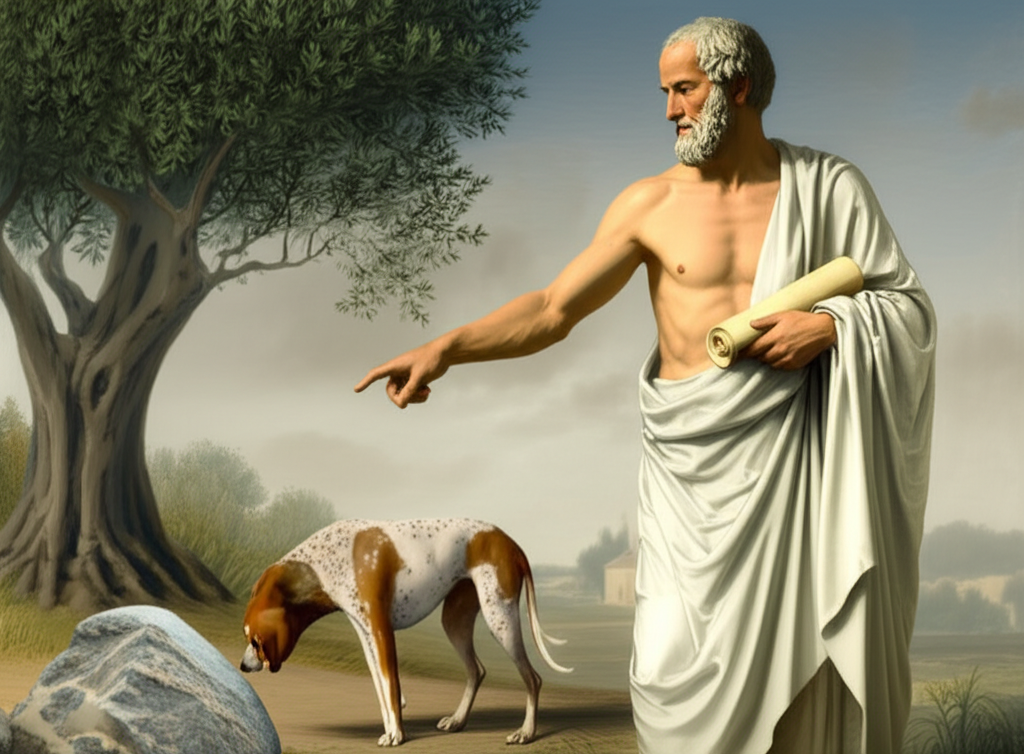 with the other, illustrating the intellectual act of categorizing and defining particulars based on universal concepts.)
Why This Distinction Matters
Understanding the Universal and Particular is not merely an academic exercise for philosophers. It underpins:
- Scientific Classification: From biology to chemistry, defining species, elements, or phenomena relies on identifying universal characteristics within particular instances.
- Legal Systems: Laws are universal principles applied to particular cases. The challenge lies in defining the universal (e.g., 'justice,' 'crime') and applying it fairly to specific circumstances.
- Ethical Reasoning: Moral principles are often universals, but their application to particular dilemmas requires careful thought and Definition.
- Everyday Communication: Misunderstandings often arise when one person refers to a particular while the other interprets it as a universal, or vice-versa. Clear Definition prevents this confusion.
The precision of our language, guided by Logic, is directly tied to our ability to deftly navigate these two poles of existence. To define is to understand, and to understand, we must grasp both the shared essence and the unique reality.
YouTube: "Universal and Particular Philosophy"
YouTube: "Aristotle's Categories and Definition"
📹 Related Video: What is Philosophy?
Video by: The School of Life
💡 Want different videos? Search YouTube for: "The Universal and Particular in Definition philosophy"