

Navigating the Labyrinth of Meaning: The Universal and Particular in Definition
Every time we attempt to define something, we embark on a journey that simultaneously embraces the vastness of categories and the specificity of individuality. This article explores the fundamental interplay between the Universal and Particular in the act of Definition, revealing how this delicate balance is crucial for sound Logic and the formation of clear Ideas. Understanding this dynamic is not merely an academic exercise; it is the very bedrock upon which coherent thought and effective communication are built.
The Architectonics of Meaning: A Core Philosophical Challenge
At the heart of philosophical inquiry, from the ancient Greeks to contemporary thought, lies the challenge of understanding how we categorize the world. How do we speak meaningfully about both "humanity" as a concept and "Socrates" as an individual? This seemingly simple question opens up a profound exploration into the nature of knowledge itself. The Great Books of the Western World are replete with discussions, from Plato's Forms to Aristotle's categories, all grappling with this very tension.
The Universal: Grasping the General Idea
When we speak of the Universal, we are referring to the general concept, the shared qualities, or the class to which something belongs. It's the Idea that encompasses many individual instances. In the context of Definition, the universal provides the broad category, the genus, that helps us place the object of our inquiry within a larger framework of understanding.
- Broad Classification: Universals allow us to group similar things together. For example, "animal" is a universal concept that includes cats, dogs, humans, and countless other living beings.
- Shared Attributes: They represent the common features or characteristics that define a group. All "trees" share certain fundamental attributes that distinguish them from "shrubs" or "flowers."
- Foundation for Logic: Without universals, our Logic would crumble. We couldn't form general statements, apply rules, or deduce conclusions if every single entity were entirely unique and unrelated to others. The ability to abstract universals from particular experiences is a cornerstone of rational thought.
Consider the Idea of "justice." While specific acts of justice may vary wildly across cultures and situations, the underlying universal principle attempts to capture an essence that transcends these individual manifestations.
The Particular: Pinpointing the Specific Instance
In contrast to the sweeping scope of the universal, the Particular refers to the individual, the specific instance, or the unique entity that possesses certain qualities. It's the concrete manifestation of a universal concept, distinguished by its unique set of attributes.
- Individual Identity: Particulars are what make one thing distinct from another, even within the same universal category. "My pet cat, Whiskers," is a particular instance of the universal "cat."
- Specific Attributes (Differentia): In Definition, the particular helps us specify what kind of thing it is within its universal category. This is often achieved through what Aristotle called the "differentia"—the distinguishing characteristic. For instance, while "human" is universally an "animal," it is the particular attribute of being "rational" that distinguishes it from other animals.
- Empirical Observation: Our experience of the world is primarily through particulars. We encounter individual trees, specific acts of kindness, and unique persons. From these particular experiences, our minds then strive to abstract universals.
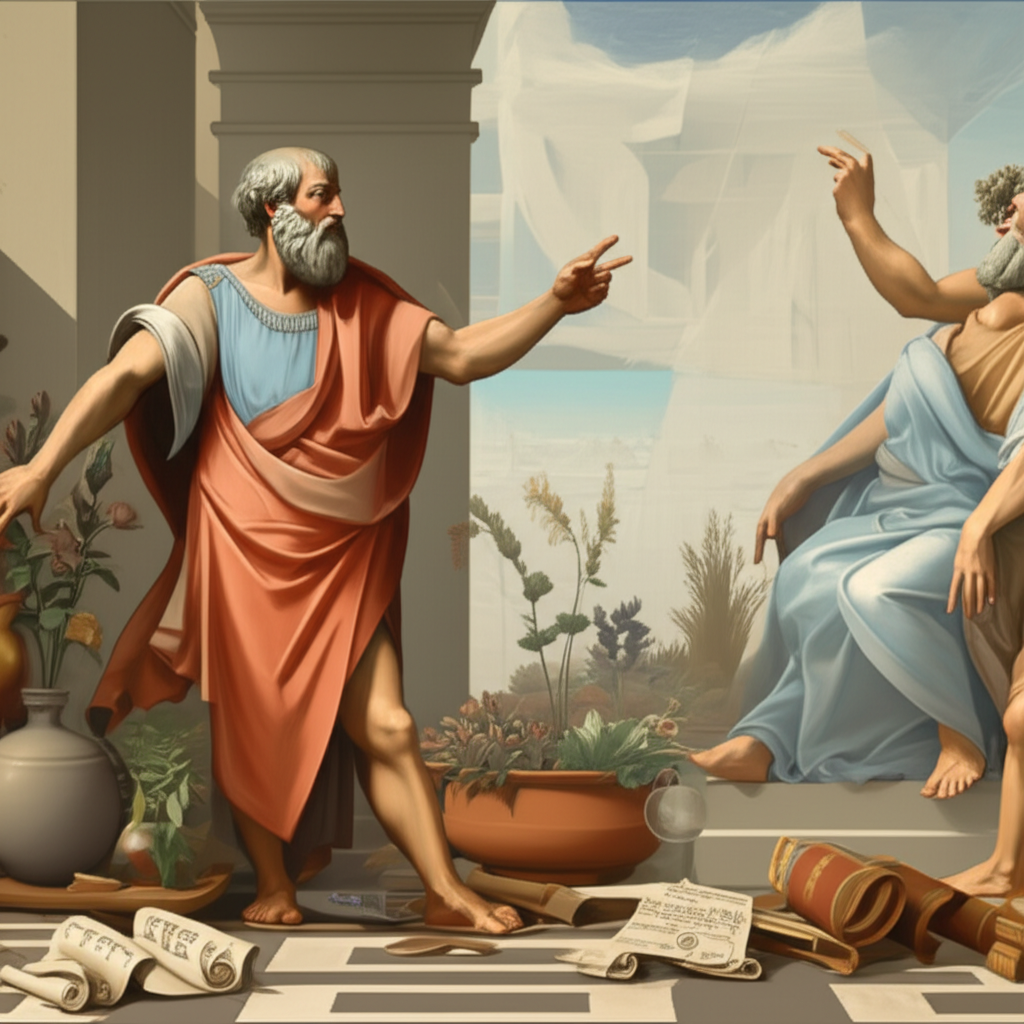
The Dance of Definition: Uniting Universal and Particular
The power of a robust Definition lies in its ability to expertly weave together the universal and the particular. A good definition typically states the genus (the universal category) and the differentia (the particular attribute that distinguishes it within that category).
Consider the classic example from Logic:
- Human: A rational (particular/differentia) animal (universal/genus).
Here, "animal" provides the broad universal classification, while "rational" specifies the particular quality that sets humans apart from all other animals.
The Components of a Sound Definition
| Component | Description | Role in Definition | Example (for "Chair") |
|---|---|---|---|
| Universal | The broader category or class (Genus) | Provides the general framework; what kind of thing it is | "Furniture" |
| Particular | The specific distinguishing characteristic (Differentia) | Narrows down the universal; what makes it unique | "Designed for a single person to sit on, with a backrest" |
| Result | Definition: A piece of furniture designed for a single person to sit on, typically with a backrest. |
This synthesis ensures that our definitions are neither too broad (like defining "human" merely as "animal") nor too narrow (like defining "human" as "Socrates"). It allows for precision and clarity in thought.
Why This Matters: Precision in Thought and Communication
Understanding the Universal and Particular in Definition is far from an abstract academic exercise. It has profound implications for how we think, communicate, and navigate the world:
- Clarity of Thought: Ambiguous definitions lead to muddled thinking. By consciously identifying the universal and particular aspects of our concepts, we refine our own internal Ideas and build a more coherent understanding of reality.
- Effective Communication: Much misunderstanding stems from people using the same words but attaching different definitions to them. By being precise about the universal and particular elements of our terms, we can communicate more effectively and avoid logical fallacies.
- Foundation for Science and Philosophy: Every scientific classification, every philosophical argument, every legal statute, relies on clear definitions that correctly balance the universal and the particular. Without this balance, empirical observation cannot be generalized, and theoretical constructs lack grounding.
- Avoiding Fallacies: Many fallacies in Logic, such as hasty generalizations or equivocation, arise from a misuse or misunderstanding of universals and particulars. A clear grasp of this distinction helps us identify and avoid such errors.
In essence, the ongoing dance between the universal and the particular is what breathes life into our concepts and allows us to move from raw experience to structured knowledge. It is the very mechanism through which our Ideas gain form and substance, enabling us to define, classify, and ultimately, comprehend the intricate tapestry of existence.
YouTube Video Suggestions:
-
📹 Related Video: ARISTOTLE ON: The Nicomachean Ethics
Video by: The School of Life
💡 Want different videos? Search YouTube for: ""Aristotle Logic Genus Differentia Definition""
2. ## 📹 Related Video: PLATO ON: The Allegory of the Cave
Video by: The School of Life
💡 Want different videos? Search YouTube for: ""Plato Theory of Forms Universal Particular Philosophy""