

The Dance of Understanding: Unpacking the Universal and Particular in Definition
In the grand tapestry of human thought, few distinctions are as fundamental yet as frequently overlooked as the interplay between the Universal and Particular when we attempt to craft a precise Definition. This article delves into how these two seemingly opposed concepts are, in fact, inextricably linked, forming the very bedrock of Logic and shaping every Idea we construct. Understanding this dynamic isn't merely an academic exercise; it's a profound key to clearer thinking and more effective communication, allowing us to grasp the essence of things while acknowledging their individual existence.
The Essence of Definition: Bridging the General and the Specific
At its heart, defining something is an act of categorization and differentiation. When we define, we attempt to capture the essential nature of a thing, distinguishing it from everything else. But what exactly are we capturing? Is it the shared characteristics that make it like other things, or the unique attributes that make it unlike anything else? The answer, as the great thinkers of the Western tradition have shown, is both.
A robust definition relies on identifying a universal—a common property or characteristic—and then specifying the particular attributes that set the defined entity apart within that universal category. Without this delicate balance, our definitions either become too broad to be useful or too narrow to be meaningful.
Unpacking the Universal: The Shared Idea
The Universal refers to that which is common to many individual things. It's the shared Idea or concept that allows us to group distinct entities under a single heading. Think of "humanity," "treedom," or "redness." No single human being is humanity itself, but they all participate in the universal concept of humanity.
- Characteristics of Universals:
- Abstract: They are mental constructs, concepts, or properties, not physical objects.
- Repeatable: They can be instantiated in multiple particulars simultaneously.
- General: They apply to a class or group rather than a single instance.
- Essential: They often represent the core nature or essence of a thing.
For instance, the universal Idea of "mammal" encompasses a vast array of creatures—whales, bats, humans, elephants—all sharing the defining characteristics of being warm-blooded, having fur/hair, and nursing their young. This universal allows us to make general statements and predictions about any member of that group, regardless of their individual specificities.
Embracing the Particular: The Individual Instance
In stark contrast, the Particular refers to a single, individual instance of a thing. It's the specific, concrete entity that exists in a unique place and time. Think of "Socrates," "that oak tree in my garden," or "the specific shade of crimson on this rose."
- Characteristics of Particulars:
- Concrete: They are often physical objects or specific events.
- Unique: Each particular is distinct, even if it shares many universal properties with others.
- Individual: They refer to a single entity, not a class.
- Accidental: While they embody universals, they also possess accidental properties (those that could be otherwise without changing their essence).
Socrates is a particular human being. While he embodies the universal Idea of "humanity," he also possesses particular attributes: his specific philosophical method, his physical appearance, his historical context. These particulars distinguish him from every other human being.
The Interplay in Logic: Genus and Differentia
The classical approach to Definition, particularly as articulated by Aristotle in the Great Books, hinges on the dynamic relationship between the universal and particular. A good definition typically employs a genus and a differentia:
| Component | Description | Example (Defining "Human") |
|---|---|---|
| Genus | The broader, more universal category to which the thing belongs. (What it is like). | "Animal" (a living, sentient organism) |
| Differentia | The specific, particular characteristic that distinguishes it within that genus. (What makes it different). | "Rational" (possessing the capacity for reason) |
Thus, the Definition of "human" becomes "a rational animal." Here, "animal" is the universal genus, encompassing many particulars, while "rational" is the particular differentia that isolates humans from all other animals. This logical structure ensures clarity and precision, preventing ambiguity and fostering understanding.
Philosophical Echoes: The Idea's Enduring Debate
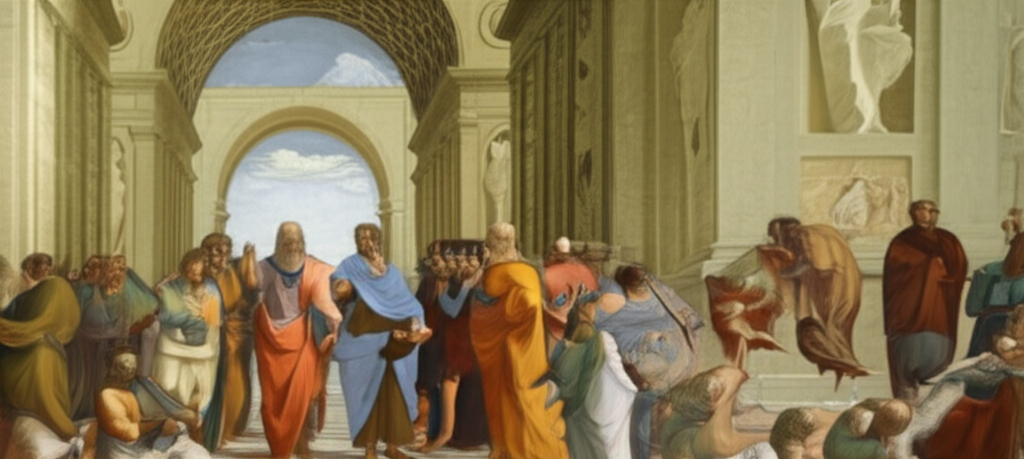
The relationship between the universal and particular has fueled some of philosophy's most enduring debates. Plato, for instance, posited that Universals (his "Forms" or "Ideas") held a more real and perfect existence than the fleeting particulars we perceive. Aristotle, while acknowledging the importance of universals for knowledge and Logic, insisted that they existed in the particulars, not in a separate realm. This fundamental disagreement, explored extensively in the Great Books, continues to influence discussions on metaphysics, epistemology, and the very nature of reality.
Understanding this tension helps us appreciate that a Definition is not just a linguistic tool, but a philosophical statement about how we perceive and organize the world. It’s an attempt to impose order on the chaos of individual experiences by discerning shared patterns and unique attributes.
Refining Our Understanding
Grasping the distinction and connection between the universal and particular is crucial for:
- Clearer Communication: It helps us avoid ambiguity by ensuring we know whether we're discussing a general concept or a specific instance.
- Sound Logic: It underpins valid arguments, allowing us to move from general premises to specific conclusions, and vice-versa.
- Critical Thinking: It enables us to analyze arguments, identify fallacies, and construct more robust Ideas.
- Conceptual Precision: It sharpens our ability to form accurate Definitions, which is the cornerstone of all intellectual inquiry.
By consciously distinguishing between the broad stroke of the universal and the fine detail of the particular, we elevate our capacity for thought, transforming vague notions into precise understandings. It's a journey from the general to the specific, and back again, illuminating the intricate structure of knowledge itself.
📹 Related Video: PLATO ON: The Allegory of the Cave
Video by: The School of Life
💡 Want different videos? Search YouTube for: ""Plato's Theory of Forms explained""
📹 Related Video: ARISTOTLE ON: The Nicomachean Ethics
Video by: The School of Life
💡 Want different videos? Search YouTube for: ""Aristotle on Universals and Particulars""