

The Dance of Essence and Instance: Navigating the Universal and Particular in Definition
Summary: Unpacking Our Understanding
At the heart of clear thought and effective communication lies the art of definition. Yet, defining anything, from a simple object to a complex philosophical concept, inevitably confronts us with the fundamental interplay of the Universal and Particular. This article explores how our very ability to define, to categorize, and to understand the world hinges on recognizing and balancing the general Idea or essence (the universal) with its specific, individual manifestations (the particular), a relationship crucial to Logic itself.
The Foundation of Understanding: The Universal and Particular
From the earliest inquiries into knowledge, philosophers have grappled with how we make sense of a world teeming with unique objects and events. How is it that we can speak of "humanity" when all we ever encounter are individual humans? How can we define "justice" when every act of justice is distinct? The answer lies in the distinction between the universal and the particular.
- The Universal: This refers to the general concept, the shared quality, the common essence that can be predicated of many individual things. It's the Idea of "dogness" that applies to every dog, regardless of breed, size, or color. It's what allows us to group disparate items under a single heading, enabling classification and abstract thought. In the tradition of the Great Books of the Western World, thinkers like Plato posited Forms as perfect, unchanging universals existing independently, while Aristotle saw universals as existing in the particulars, discoverable through observation and abstraction.
- The Particular: This refers to the individual instance, the unique object, the specific manifestation of a universal. It's Fido, the specific Golden Retriever, or this particular act of justice. Particulars are concrete, singular, and exist in a specific time and place. They are the empirical data of our experience.
Grasping the Essence: The Universal in Definition
When we attempt to define something, our primary goal is often to capture its universal aspect – its essence, its distinguishing characteristics that set it apart from other things. A good definition aims to provide the genus and differentia, identifying the broader category it belongs to and the specific qualities that make it unique within that category.
For instance, consider the Definition of "human being":
- Genus: Rational animal
- Differentia: Capable of abstract thought, moral reasoning, language.
Here, "animal" is a broader universal, and "rational" is a more specific universal that differentiates humans from other animals. This process relies heavily on Logic, specifically the principles of classification and division, allowing us to move from the concrete experience of individual humans to the abstract Idea of humanity. Without the capacity to grasp universals, every individual would be entirely unique, and shared understanding, let alone science or philosophy, would be impossible.
The Concrete Manifestation: The Particular in Definition
While universals provide the framework, particulars are the living examples that embody these universals. A definition, while universal in its scope, must ultimately be applicable to every particular instance it purports to define. If our Definition of "chair" doesn't apply to the specific, three-legged stool I'm sitting on (assuming it functions as a chair), then the definition is flawed.
The particular grounds the universal in reality. It is through repeated encounters with particulars that we refine our understanding of universals. A child learns the Idea of "bird" by observing many different birds – robins, sparrows, eagles – each a particular instance, yet all sharing the universal characteristics of flight, feathers, and beaks.
The Interplay: Defining Through Both Lenses
The challenge, and the beauty, of Definition lies in balancing the universal and the particular. A definition that is too particular becomes a mere description of an individual, failing to generalize. A definition that is too universal might be so abstract as to be meaningless or to encompass too much.
Consider the following:
| Aspect of Definition | Focus | Example (Defining "Book") | Role in Understanding |
|---|---|---|---|
| Universal | General Idea, Essence, Shared Qualities | "A set of written, printed, or blank pages fastened along one edge and encased between covers." | Enables categorization, communication, shared understanding. |
| Particular | Specific Instance, Individual Manifestation | "This copy of Aristotle's Metaphysics, bound in leather, with marginalia." | Grounds the definition in reality, provides concrete examples. |
Our ability to define relies on our mental faculty to abstract universals from particulars and, conversely, to recognize particulars as instantiations of universals. This dynamic movement is a core tenet of Logic and epistemology, shaping how we form concepts and build knowledge. The "problem of universals," debated since antiquity, highlights the enduring philosophical challenge of understanding the precise nature of this relationship – whether universals exist independently, in the mind, or only in particulars.
The Enduring Significance
Understanding the Universal and Particular in Definition is not merely an academic exercise. It profoundly impacts how we think, debate, and navigate the world. It’s the difference between describing a specific tree and defining what a "tree" is. It allows us to articulate complex Ideas, to engage in meaningful discourse, and to build coherent systems of thought. From the rigorous classifications of science to the nuanced arguments of philosophy, the interplay of the universal and particular remains an indispensable tool for clarity and comprehension.
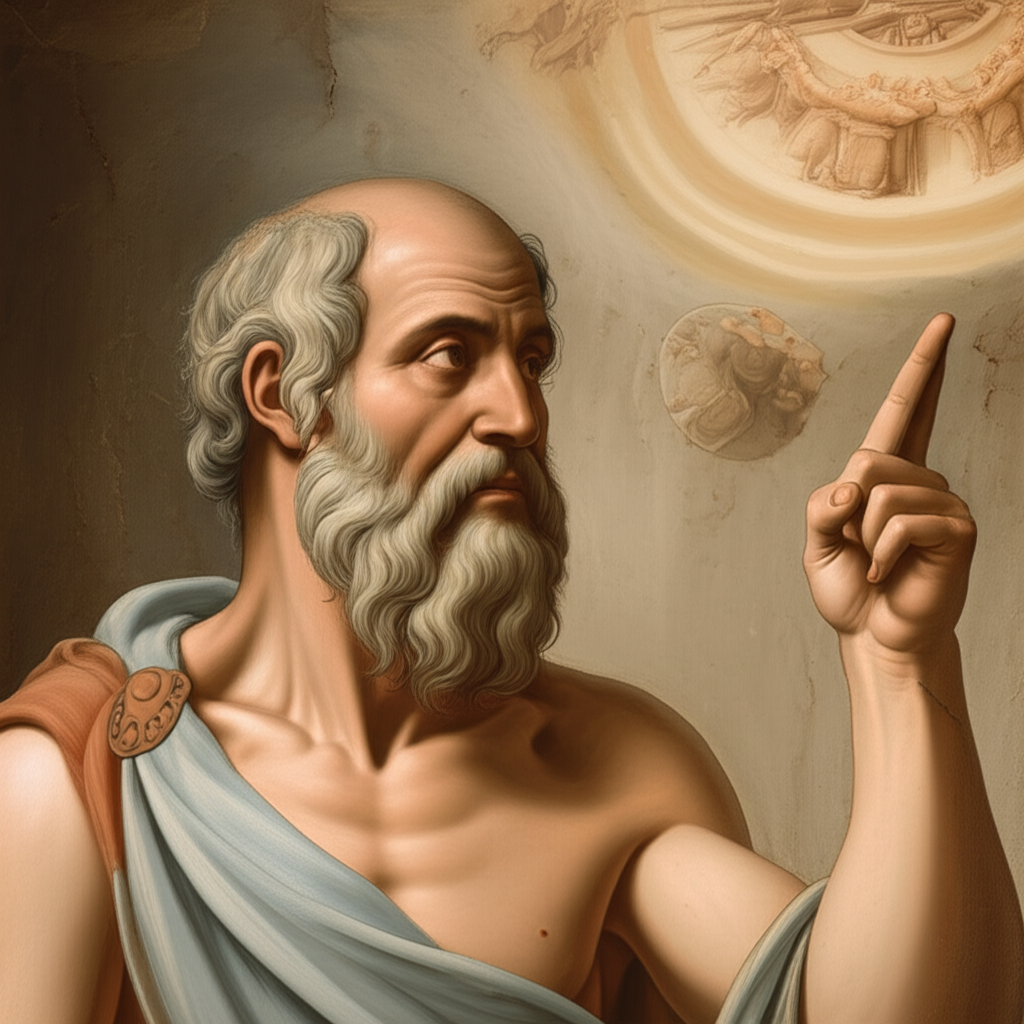 , while Aristotle points downwards, indicating his emphasis on observing particulars in the empirical world. The two figures stand in a thoughtful pose, symbolizing their distinct yet complementary approaches to understanding reality.)
📹 Related Video: PLATO ON: The Allegory of the Cave
Video by: The School of Life
💡 Want different videos? Search YouTube for: ""Plato's Theory of Forms Explained""
📹 Related Video: ARISTOTLE ON: The Nicomachean Ethics
Video by: The School of Life
💡 Want different videos? Search YouTube for: ""Aristotle's Metaphysics: Substance and Universals""