

The Unseen Chains: How Custom and Convention Can Stifle the Human Spirit
In the grand tapestry of human existence, we often speak of tyranny in terms of despotic rulers, oppressive regimes, or the iron fist of an authoritarian state. Yet, there exists a more insidious, pervasive form of tyranny that operates not through overt force, but through the subtle, often unexamined, pressures of custom and convention. This article explores how these entrenched norms, though seemingly innocuous, can subtly erode individual liberty and dictate the very fabric of our thoughts and actions, often without our conscious awareness. Drawing upon the profound insights of the Great Books of the Western World, we shall uncover the philosophical underpinnings of this quiet oppression and the enduring call for intellectual courage in its face.
The Subtle Grip: Defining the Tyranny of Custom
When we consider tyranny, our minds typically conjure images of political oppression, where power is wielded unjustly, and individual freedoms are curtailed by decree. However, the tyranny of custom and convention operates on a different, more fundamental level. It is the unwritten law that governs social behavior, the inherited wisdom, the unquestioned traditions that, over time, solidify into a powerful, often invisible, force dictating what is acceptable, desirable, and even thinkable.
This form of tyranny is particularly dangerous because it often masquerades as benign tradition, common sense, or even morality. It is the societal inertia that resists change, that punishes deviation, and that subtly molds individuals into conformity, often before they even have the chance to fully articulate their own desires or beliefs. The danger lies not in custom itself – for many customs serve vital social functions – but in the unquestioning adherence to it, which can stifle innovation, critical thought, and, ultimately, genuine liberty.
Echoes from the Ancients: Challenging the Conventional Wisdom
The notion of challenging established norms is far from new; it is a recurring theme throughout the history of Western thought. The philosophers of the Great Books have long wrestled with the tension between individual autonomy and societal expectations.
-
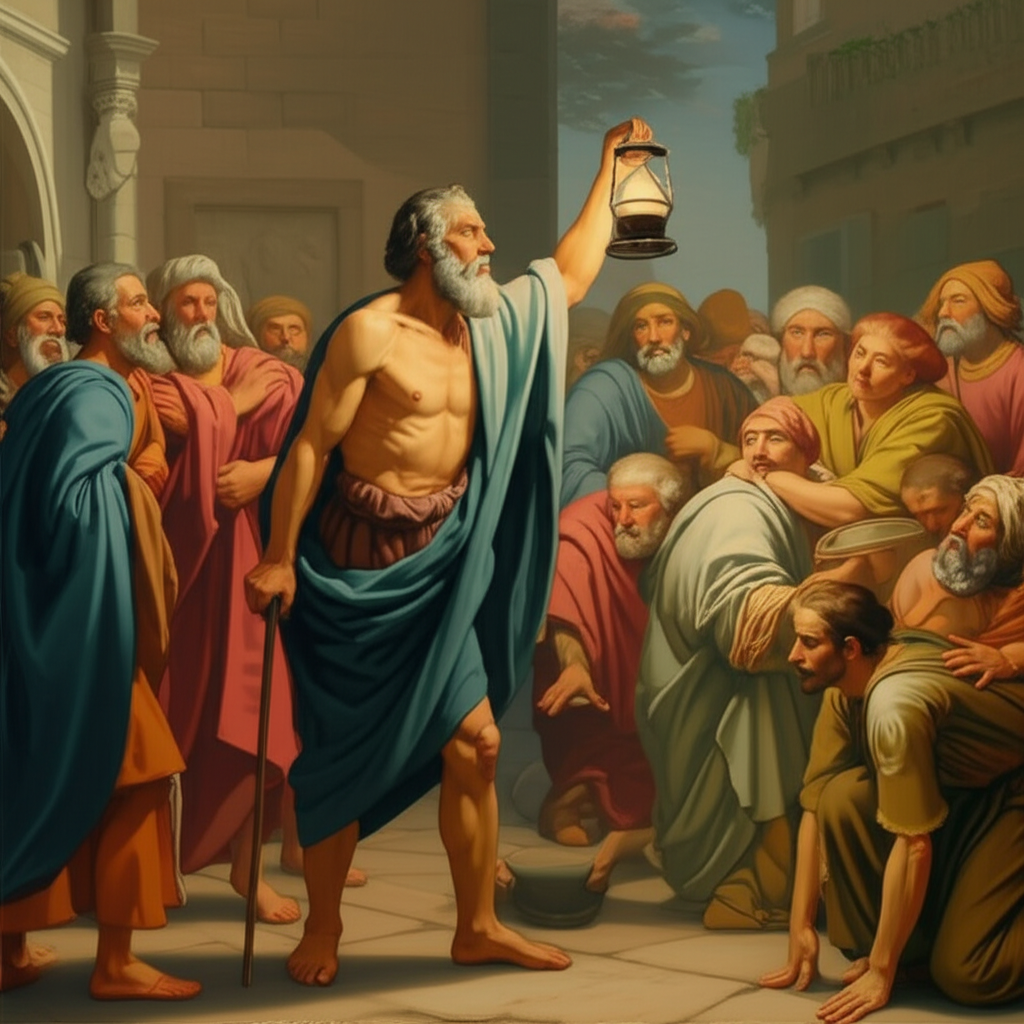
Socrates and Plato: Perhaps no figure embodies the challenge to conventional wisdom more profoundly than Socrates. His relentless questioning of Athenian citizens, as depicted in Plato's Apology and Crito, exposed the shallowness of many widely held beliefs and the dangers of an "unexamined life." Socrates chose death over abandoning his philosophical mission, a powerful testament to the tyranny of a society unwilling to tolerate dissent from its cherished customs. Plato’s Republic further explores the ideal state, critically examining existing societal structures and proposing radical alternatives, highlighting the potential for custom and convention to hinder justice and truth.
-
Aristotle: While Aristotle recognized the crucial role of habituation and custom in the formation of virtue (as discussed in Nicomachean Ethics), he also understood that the polis must be open to improvement and rational discourse. He distinguished between mere habit and reasoned action, suggesting that while custom provides a foundation, it should not preclude critical reflection or the pursuit of a higher good.
-
The Enlightenment Thinkers: Later, thinkers like John Locke and Jean-Jacques Rousseau grappled with the origins of society and the concept of the social contract. They questioned the legitimacy of inherited power and customs that did not serve the collective good or protect individual rights. John Stuart Mill, in his seminal work On Liberty, stands as a powerful advocate against the tyranny of the majority, arguing that society's pressure to conform, even without formal law, can be more stifling than governmental oppression. Mill championed the individual's right to eccentricity and experimentation, viewing diversity of thought and action as essential for human progress and true liberty.
The Mechanics of Conformity: How Custom Becomes Law
The insidious nature of the tyranny of custom and convention lies in its ability to operate without explicit legislation. It often manifests through:
- Social Pressure and Ostracism: The fear of being an outcast, of being ridiculed or marginalized, is a potent force. Individuals often conform to avoid social penalties, even if they privately disagree with the prevailing norms.
- Unquestioned Authority: Traditions passed down through generations often carry an inherent authority, making it difficult for individuals to challenge them without appearing disrespectful or rebellious.
- Normalization: Over time, certain behaviors, beliefs, and ways of thinking become so entrenched that they are perceived as "natural" or "the way things are," making any alternative seem radical or wrong.
- Invisible Barriers to Innovation: New ideas, different ways of life, or alternative perspectives can be stifled before they even gain traction, simply because they deviate from the established customs.
This process effectively creates an unwritten law that governs behavior, often more rigidly than formal statutes, precisely because its enforcement mechanisms are diffuse and deeply ingrained in the social fabric.
Reclaiming Liberty: The Path Forward
Breaking free from the tyranny of custom and convention is not about rejecting all traditions outright, but about cultivating a critical awareness and exercising intellectual courage.
Here are key steps towards reclaiming individual liberty from this subtle oppression:
- Critical Examination: Question everything. Why do we do things this way? Is this belief truly sound, or is it merely inherited? What are the alternatives?
- Cultivating Dissent: Embrace intellectual diversity. Recognize that different perspectives are not threats, but opportunities for growth and deeper understanding.
- Embracing Individuality: Value and protect the right to be different, to pursue unconventional paths, and to express unique ideas. Mill's defense of individuality is crucial here.
- Historical Awareness: Understand the origins of our customs. Many traditions arose from specific historical contexts and may no longer be relevant or beneficial.
- Moral Courage: It takes courage to stand apart, to articulate a dissenting view, and to live authentically in the face of societal pressure.
Conclusion: The Ongoing Struggle for Self-Determination
The tyranny of custom and convention remains one of the most persistent challenges to genuine liberty. It is a quiet force, often unnoticed, yet capable of shaping our lives as profoundly as any overt law. The insights from the Great Books of the Western World consistently remind us that true freedom requires more than just the absence of political oppression; it demands an ongoing commitment to critical thought, a willingness to question the inherited wisdom, and the courage to live an examined life. Only by consciously engaging with, rather than passively accepting, the customs and conventions that surround us can we truly assert our individual liberty and forge a path towards a more thoughtful and authentic existence.
YouTube Video Suggestions:
-
📹 Related Video: KANT ON: What is Enlightenment?
Video by: The School of Life
💡 Want different videos? Search YouTube for: "John Stuart Mill On Liberty Summary"
-
📹 Related Video: SOCRATES ON: The Unexamined Life
Video by: The School of Life
💡 Want different videos? Search YouTube for: "Socrates The Unexamined Life"