

The Theory of Evolution and Progress: A Philosophical Interrogation
The concepts of Evolution and Progress are often conflated, yet they represent distinct philosophical and scientific ideas. While evolution describes the observable, mechanistic process of change in living organisms over generations, driven by natural selection and genetic variation, progress is a normative concept, implying movement towards a "better" or more advanced state. This article delves into the intricate relationship between these two powerful ideas, exploring how Science's understanding of evolutionary change challenges and redefines our notions of human Progress, drawing on insights that echo through the "Great Books of the Western World."
The Shifting Sands of Change: From Stasis to Dynamic Systems
For much of intellectual history, particularly before the scientific revolutions of the past few centuries, the natural world was often viewed through a lens of permanence or cyclical repetition. Philosophers from Plato to Aristotle contemplated the essence of things, often seeking immutable forms or a teleological purpose inherent in nature. Change, while acknowledged, was frequently seen as a deviation from an ideal state or a movement towards a preordained end.
The advent of modern Science, however, particularly in biology, irrevocably altered this perspective. The meticulous observations of naturalists and the groundbreaking work of Charles Darwin introduced a radical new understanding of change: not as a deviation or a fixed path, but as a fundamental, ongoing process shaping all life.
Evolution: A Force of Unintended Change
At its core, the theory of Evolution is a scientific explanation for the diversity of life on Earth. It posits that species undergo gradual change over vast stretches of time, primarily through the mechanism of natural selection. This process is characterized by:
- Variation: Individuals within a species exhibit differences.
- Inheritance: Some of these variations are heritable.
- Selection: Individuals with advantageous variations are more likely to survive and reproduce in a given environment.
- Time: Over many generations, these advantageous traits become more common, leading to significant transformations and the emergence of new species.
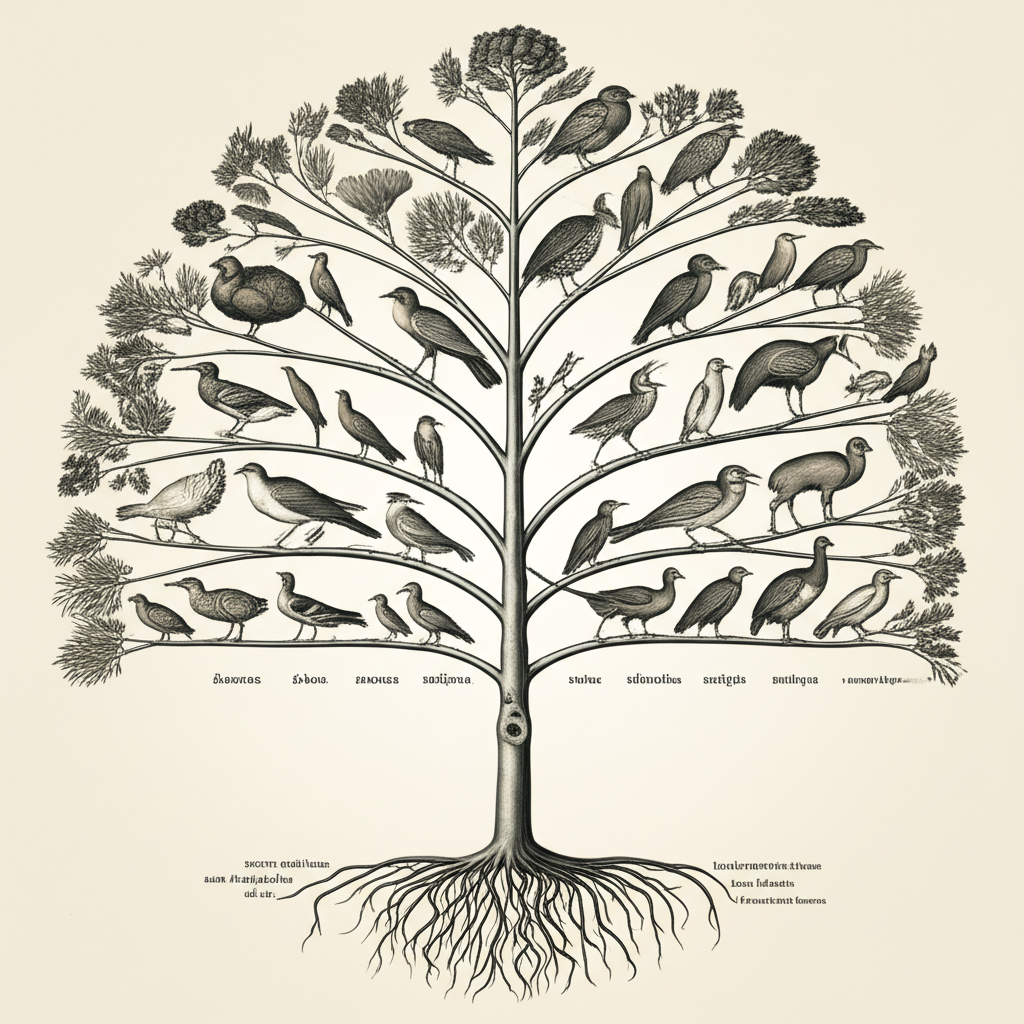
It is crucial to understand that biological Evolution is a blind, non-teleological process. It does not have a goal, nor does it strive for Progress in any moral or predetermined sense. It simply describes how populations adapt to their environments. An organism that is "fit" is simply one that is well-suited to its current conditions, not one that is inherently "better" or more advanced in an absolute sense. A bacterium is just as "evolved" as a human, simply adapted to a different niche.
The Elusive Promise of Progress
In contrast to the descriptive nature of Evolution, Progress is a deeply normative concept. It implies not just change, but change for the better. But what constitutes "better"? This is where philosophy truly enters the fray. Historically, notions of Progress have been tied to various ideals:
- Moral Progress: Humanity becoming more ethical, just, and compassionate.
- Technological Progress: The development of tools and systems that improve living conditions or extend capabilities.
- Intellectual Progress: The accumulation of knowledge, refinement of reason, and deeper understanding of the world.
- Social Progress: The advancement of societal structures towards greater equality, freedom, and well-being.
The Enlightenment era, in particular, was characterized by a profound belief in the possibility and inevitability of human Progress, fueled by reason and Science. Thinkers like Condorcet envisioned a future of endless improvement, where humanity would continually perfect itself.
The fundamental challenge arises when we juxtapose this human-centric ideal of Progress with the amoral, undirected change of Evolution. Can a process without foresight or purpose genuinely lead to what we perceive as progress?
Bridging the Divide: Is Human Progress an Evolutionary Outcome?
While biological Evolution does not aim for Progress, it has undeniably produced species, including Homo sapiens, with capacities that enable complex forms of change and, arguably, Progress. Our large brains, capacity for abstract thought, language, and social cooperation are all products of evolutionary processes. These traits have allowed us to:
- Develop Culture: Transmit knowledge and innovations across generations, leading to cumulative technological and social change.
- Manipulate Environments: Rather than solely adapting biologically, we adapt our environments to suit our needs, a unique form of change.
- Formulate Ethics: Our social instincts, refined through evolution, underpin many of our moral codes, leading to discussions of moral Progress.
This brings us to the concept of cultural evolution, which operates on different timescales and mechanisms than biological evolution. Cultural evolution, driven by ideas and innovations, can be seen as a form of rapid, directed change that builds upon our biological heritage. However, even here, the question persists: does all cultural change constitute Progress? History is replete with examples of technological advancements leading to unforeseen ethical dilemmas or destructive outcomes.
Evolution vs. Progress: A Comparative Glance
| Feature | Evolution | Progress |
|---|---|---|
| Nature | Descriptive, scientific, mechanistic | Normative, evaluative, philosophical |
| Direction | Non-teleological, undirected change | Directed towards a "better" state or goal |
| Criterion | Adaptation to environment, survival | Human values, ethics, ideals, well-being |
| Mechanism | Natural selection, genetic drift | Human agency, reason, innovation, social reform |
| Goal | None inherent; simply continued existence | Improvement, betterment, flourishing |
📹 Related Video: PLATO ON: The Allegory of the Cave
Video by: The School of Life
💡 Want different videos? Search YouTube for: ""Philosophical Debates on Evolution and Human Purpose""
The Philosophical Implications of Evolutionary Change
The theory of Evolution has profound implications for philosophy, reshaping our understanding of humanity's place in the cosmos and challenging long-held beliefs.
- Challenge to Teleology: If life is a product of blind change, does that negate any inherent purpose or design in the universe? This question has reverberated through philosophy since Darwin.
- Ethics and Morality: Does our evolutionary past inform our moral present? Evolutionary psychology suggests that certain moral intuitions (e.g., altruism, fairness) may have evolutionary roots. However, the "naturalistic fallacy" warns against deriving "ought" from "is"—just because something evolved doesn't make it morally good.
- Human Exceptionalism: While Evolution places humans firmly within the animal kingdom, our unique capacities for abstract thought and self-reflection compel us to ask if we are merely another species, or if our ability to contemplate Progress sets us apart.
- The Nature of Knowledge: Science itself, as an evolving system of inquiry, demonstrates a form of intellectual Progress in its ability to refine understanding and make more accurate predictions about the world.
📹 Related Video: What is Philosophy?
Video by: The School of Life
💡 Want different videos? Search YouTube for: ""Is Moral Progress Real? Philosophy Discussion""
Conclusion: Navigating the Evolving Landscape
The relationship between the theory of Evolution and the concept of Progress is one of enduring philosophical tension and fascinating interplay. Evolution offers a powerful scientific explanation for the change and diversity of life, showing us a world in constant flux, driven by impersonal forces. Progress, on the other hand, remains a distinctly human aspiration, a judgment we impose upon change, reflecting our values, hopes, and ideals for a better future.
While Evolution doesn't guarantee progress, it has endowed us with the very faculties that allow us to conceive of and strive for it. The ongoing challenge for philosophy is to understand how these two profound forces—one describing the is of natural change, the other defining the ought of human aspiration—coexist and inform each other in our journey through an ever-evolving world.