

The Shifting Sands of Being: Evolution, Progress, and the Human Story
The concepts of Evolution and Progress are fundamental to understanding both the natural world and the human experience, yet their relationship is often misunderstood. While Science offers a powerful framework for describing the relentless Change inherent in biological Evolution, the notion of Progress introduces a layer of philosophical judgment, demanding that we consider not just what is but what ought to be. This article delves into the intricate dance between these two ideas, exploring their definitions, their historical interplay, and the profound implications they hold for our understanding of human destiny.
Evolution: A Scientific Lens on Relentless Change
At its core, the theory of Evolution, as articulated by Charles Darwin and subsequently refined, describes the process by which life forms Change over successive generations through natural selection. It is a cornerstone of modern Science, explaining the diversity of species and their adaptation to environments.
- Key Principles of Biological Evolution:
- Variation: Individuals within a species exhibit variations in their traits.
- Inheritance: Many of these variations are heritable.
- Selection: In a given environment, some variations provide a survival or reproductive advantage.
- Time: Over vast periods, these advantageous traits become more common in the population, leading to the Evolution of new species or significant Change within existing ones.
It is crucial to understand that biological Evolution is a descriptive process; it details how life changes, not necessarily why it changes for the better in a moral or qualitative sense. An organism that is "fit" is simply one that is well-adapted to its current environment, capable of passing on its genes. This adaptation does not inherently imply an ascent towards a higher form or a moral improvement. The history of life, as revealed by Science, is one of constant flux, extinction, and adaptation to Change.
Progress: The Human Aspiration for Betterment
In stark contrast to the descriptive nature of Evolution, Progress is a normative concept, deeply rooted in philosophical and ethical considerations. It implies a movement towards a more desirable, advanced, or improved state. When we speak of Progress, we are inherently making a value judgment, defining what constitutes "better."
The idea of Progress has a rich history within the Great Books of the Western World. From the Enlightenment thinkers who championed reason and scientific advancement as paths to human betterment, to earlier concepts of teleology (e.g., Aristotle's idea of things moving towards their natural end), humanity has long grappled with the direction and purpose of Change.
Dimensions of Progress
| Type of Progress | Description | Philosophical Questions Raised |
|---|---|---|
| Technological | Advancement in tools, machines, and methods to control the environment and improve efficiency. | Does technological advancement always lead to human flourishing? What are the ethical limits of technological Change? |
| Moral/Ethical | Development of more just, compassionate, or equitable societal norms and individual behaviors. | Is there an objective standard for moral Progress? Are our moral intuitions evolving, or are we discovering universal truths? |
| Social/Political | Improvement in governance, human rights, equality, and societal structures. | Do certain political systems inherently lead to greater Progress? How do we balance individual liberty with collective advancement? |
| Intellectual | Expansion of knowledge, understanding, and critical thinking abilities across individuals and cultures. | Is the accumulation of knowledge always Progress? Can intellectual Progress be divorced from moral considerations? |
Unlike Evolution, which operates without a conscious goal, Progress is often driven by human agency, ideals, and the deliberate pursuit of specific outcomes. It assumes a directionality and a standard against which Change can be measured.
The Intertwined Destinies: Where Evolution Meets Progress
The interaction between Evolution and Progress is complex and often fraught with philosophical challenges. While Evolution describes the biological Change that has shaped us, Progress speaks to the aspirations and values we impose upon that Change.
One of the most significant misinterpretations arose with "Social Darwinism," which erroneously applied the principles of biological natural selection to human societies. This flawed ideology suggested that societal inequalities were a natural outcome of the "survival of the fittest," implying that certain groups were inherently more "evolved" or "progressive." This conflation of biological Evolution with moral Progress was widely criticized for its lack of scientific basis and its harmful social implications, highlighting the critical distinction between descriptive Science and normative philosophy.
The Human Dilemma: Biological Roots and Cultural Ascent
As a species, humans are products of Evolution. Our brains, our capacity for language, our social instincts – all have evolutionary origins. Yet, it is these very evolved capacities that allow us to conceive of Progress, to build complex cultures, ethical systems, and to actively shape our environment and even our own future.
- Can Evolution lead to Progress? Biologically, Evolution has led to greater complexity and adaptability, but not necessarily "betterment" in a human-centric moral sense. The Evolution of a predator is "successful" from its species' perspective, but not "progressive" in a universal moral framework.
- The Role of Culture: Human Progress is largely a phenomenon of cultural Evolution, where ideas, technologies, and social structures Change and adapt. This cultural Change can be much faster and more directed than biological Evolution.
- Defining "Better": The greatest challenge lies in defining what constitutes "better." Is it greater longevity, enhanced intelligence, increased happiness, or a more just society? Our answers to these questions are not dictated by Science but by our philosophical frameworks and shared values, many of which have been debated for centuries in the Great Books.
Navigating the Philosophical Labyrinth of Change
Understanding the distinction and interplay between Evolution and Progress is vital for a robust philosophical perspective. We live in a world of constant Change, driven by both natural forces and human endeavor.
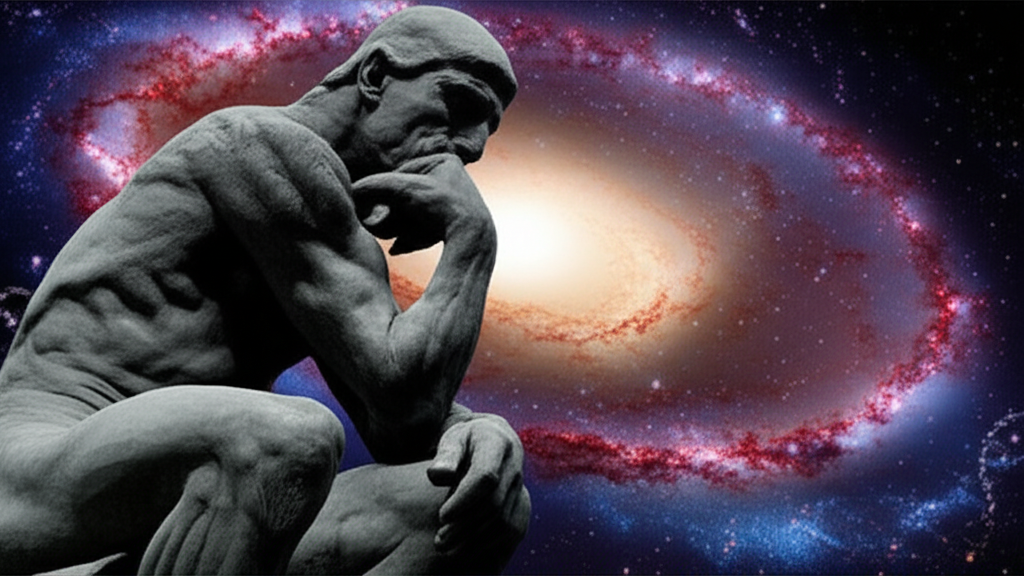
The lessons from the Great Books of the Western World remind us that questions of Change, purpose, and human flourishing are perennial. While Science provides invaluable insights into the mechanisms of Evolution, it is philosophy that helps us interpret its meaning, evaluate our trajectory, and define our aspirations for Progress. The journey of humanity is not just an evolutionary path but a conscious, often contentious, pursuit of a better future, shaped by our evolving understanding of ourselves and the world.
Further Exploration
- YouTube: "The Philosophy of Progress"
- YouTube: "Evolution and Ethics: Is Morality Evolving?"
📹 Related Video: What is Philosophy?
Video by: The School of Life
💡 Want different videos? Search YouTube for: "The Theory of Evolution and Progress philosophy"