

The Theological Problem of Fate and Free Will: A Dance Between Divine Decree and Human Choice
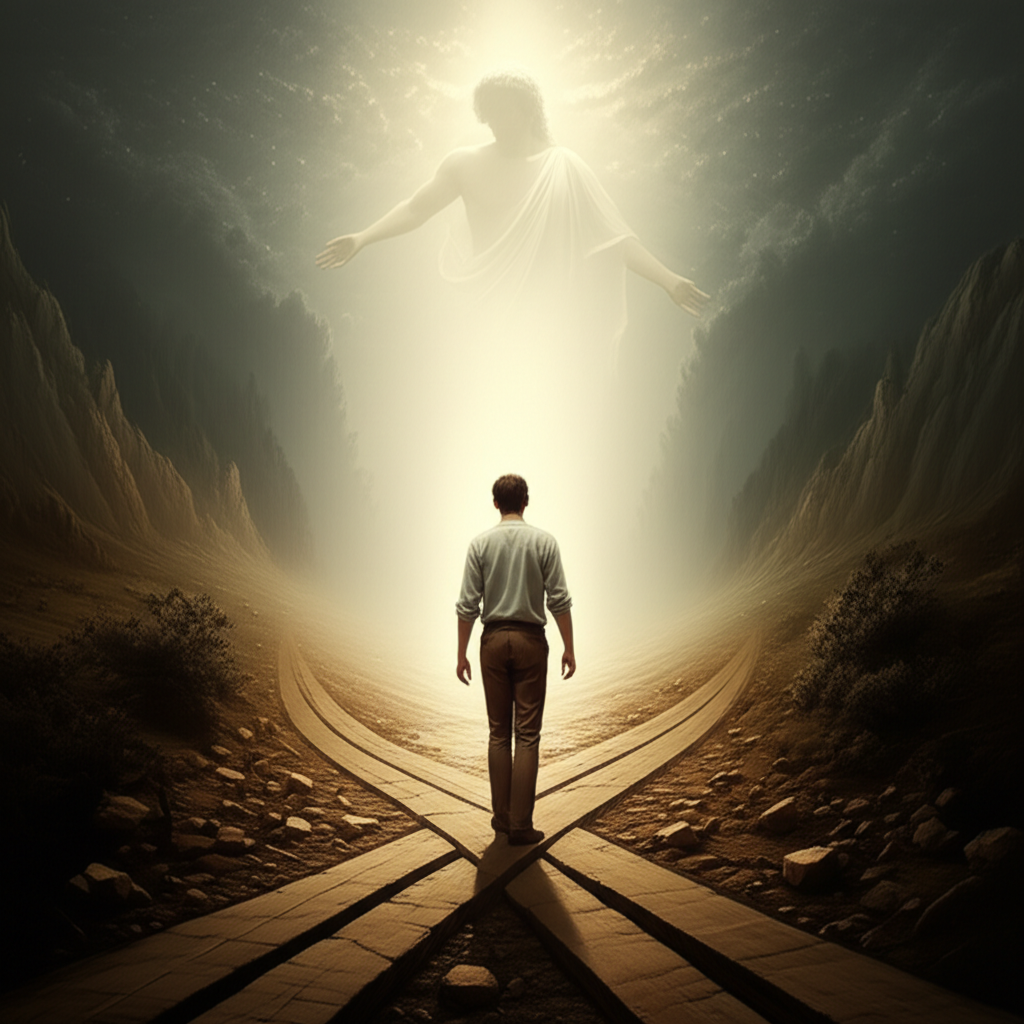
The question of how divine Theology reconciles an omniscient God's plan with genuine human free will is one of philosophy's most enduring and perplexing challenges. It asks whether our choices are truly our own, or if they are merely unfolding according to a predetermined fate or divine will. This article delves into the historical and conceptual tensions inherent in this problem, exploring how thinkers throughout the ages, particularly within the tradition of the Great Books of the Western World, have grappled with the interplay of necessity and contingency in our existence.
Unpacking the Paradox: When God Knows All
At its heart, the theological problem of fate and free will boils down to a fundamental tension: If God is all-knowing (omniscient) and all-powerful (omnipotent), and if He has a divine plan for creation, how can human beings genuinely possess free will? If God already knows every choice we will make, does that not mean our choices are already determined, thus negating our freedom? This isn't just an abstract intellectual puzzle; it touches upon our deepest understanding of moral responsibility, divine justice, and the very meaning of human existence.
Historical Echoes: From Ancient Destiny to Christian Providence
Before the Christian era, concepts of fate were often tied to cosmic forces, an inexorable destiny woven by deities or an impersonal force. Think of the Fates in Greek mythology, or the Stoic notion of a rational, deterministic universe. However, with the advent of monotheistic Theology, particularly Christianity, the problem takes on a new dimension. It's no longer just about an impersonal destiny, but about the will of a personal, loving, yet sovereign God.
- Pagan Fate: Often seen as external, impersonal, and unchangeable. Humans were subject to it.
- Christian Providence: God's active involvement in the world, guiding events towards a divine purpose. This raises the stakes for human freedom.
Theologians in Turmoil: Augustine, Boethius, and Aquinas
The giants of Christian thought devoted considerable energy to this conundrum, recognizing its profound implications for sin, salvation, and divine justice. Their insights, foundational to Western philosophy, illustrate the complexity of reconciling divine attributes with human experience.
Augustine's Anguish: Grace, Predestination, and the Fallen Will
For St. Augustine, the problem was acute. Having grappled with Manichaeism's dualistic determinism, he vehemently defended free will against the idea that evil originated outside human choice. Yet, his later reflections, particularly in response to Pelagianism, emphasized the absolute necessity of divine grace for salvation, leading him to develop a robust doctrine of predestination.
Augustine argued that while humans possess free will, it is a fallen will, tainted by original sin and incapable of choosing good without God's restorative grace. God's foreknowledge, for Augustine, doesn't cause our choices; rather, God simply knows what we will freely choose. However, the exact mechanism of this reconciliation, especially concerning who receives grace, remained a profound mystery, often leaning towards divine election.
Boethius's Consolation: Eternity and Timeless Knowledge
Anicius Manlius Severinus Boethius, writing from prison, offered a brilliant distinction in The Consolation of Philosophy. He argued that the problem arises from mistakenly applying temporal concepts to God. God, being eternal, exists outside of time. His knowledge isn't "foreknowledge" in the sense of looking ahead in time, but rather a timeless, immediate apprehension of all events, past, present, and future, as if they are simultaneously happening.
Boethius's Key Distinction:
| Concept | Human Perspective (Temporal) | Divine Perspective (Eternal) |
|---|---|---|
| Knowledge | Foreknowledge (knowing before) | Timeless apprehension (knowing all at once) |
| Causation | What is known must happen (necessity) | Knowing something doesn't cause it to happen (contingency) |
| Free Will | Undermined by foreknowledge | Preserved because divine knowledge doesn't impose necessity |
For Boethius, God's knowledge doesn't impose necessity on our actions. We remain free to choose, and God simply knows what those free choices will be from His eternal vantage point.
Aquinas's Synthesis: Primary and Secondary Causation
Thomas Aquinas, drawing heavily from Aristotle and Augustine, provided a sophisticated scholastic framework. He distinguished between God's primary causality (the ultimate source of all being and action) and secondary causality (the actions of creatures, including human free will). God, in His providence, moves all things according to their nature. For rational beings, this means moving them according to their free will.
Aquinas argued that God's knowledge and will are the cause of all things, but this doesn't diminish human freedom. Rather, God's creative act gives us free will. He knows our choices because He is the ultimate cause of our being and our capacity to choose, but He doesn't force those choices. Our actions are truly our own, even as they are ultimately dependent on God. The concept of contingency is crucial here: while God knows all, many events are contingent upon human choices, which God nevertheless perfectly comprehends.
The Enduring Tension: Necessity and Contingency
The debate often hinges on the definitions of necessity and contingency.
- Necessity: That which must be; it cannot be otherwise. If our actions are necessitated by God's plan, where is freedom?
- Contingency: That which may or may not be; it could be otherwise. For free will to exist, our choices must be contingent.
The theological challenge is to show how God's omniscient will can coexist with human contingency. Is God's knowledge of future free choices itself a form of necessity that binds those choices? Or, as Boethius suggests, is God's knowledge simply a perfect, eternal observation of our contingent choices?
Modern Reflections and Continued Debates
Even today, philosophers and theologians continue to explore these nuances. Some embrace forms of theological compatibilism, arguing that free will and determinism (divine or otherwise) are not mutually exclusive. Others champion libertarian free will, seeking to safeguard genuine choice even in the face of divine omniscience, often by emphasizing God's self-limitation or the mysterious nature of divine knowledge.
The problem forces us to confront the limits of human reason when contemplating the infinite. It's a reminder that some of the most profound truths may exist beyond our full comprehension, demanding faith and intellectual humility.
Conclusion: A Mystery at the Heart of Being
The theological problem of fate and free will is not easily resolved, nor is it meant to be. It is a profound philosophical and theological inquiry that forces us to examine our understanding of God, humanity, and the very nature of reality. From Augustine's struggle with grace to Boethius's eternal perspective and Aquinas's intricate synthesis, the journey through the Great Books of the Western World reveals a persistent effort to reconcile divine Theology with human agency. The tension between necessity and contingency, divine will and individual choice, remains a vibrant area of thought, challenging us to ponder the deepest questions of our existence and our relationship with the divine.
YouTube Video Suggestions:
-
📹 Related Video: What is Philosophy?
Video by: The School of Life
💡 Want different videos? Search YouTube for: ""Boethius Consolation of Philosophy Free Will God's Foreknowledge Explained""
2. ## 📹 Related Video: What is Philosophy?
Video by: The School of Life
💡 Want different videos? Search YouTube for: ""Augustine on Free Will and Evil - Philosophy and Theology""