

The Grand Paradox: Navigating the Theological Labyrinth of Fate and Free Will
The relationship between divine foreknowledge, omnipotence, and human free will stands as one of Theology's most enduring and perplexing problems. It's a head-scratcher that has occupied the greatest minds throughout history, from ancient philosophers to medieval theologians, and continues to spark debate today. At its heart lies a profound tension: if a supreme being knows all future events—or even actively ordains them—how can we, as individuals, truly possess the freedom to choose our actions, and thus be morally accountable for them? This article delves into this intricate dance between Fate and Will, exploring the philosophical concepts of Necessity and Contingency that underpin this timeless dilemma.
The Core Conundrum: Divine Knowledge Meets Human Choice
Imagine a universe where every single event, every decision you will ever make, is already known, perhaps even predetermined, by an all-powerful, all-knowing God. This is the theological premise that sets the stage for our problem. If God knows what I will choose for breakfast tomorrow, did I truly choose it, or was my choice merely an unfolding of a pre-written script?
This isn't just an abstract intellectual exercise; it has profound implications for our understanding of morality, justice, and the very nature of divine love and judgment. If our actions are necessitated, then how can God justly reward virtue or punish vice? The very foundation of ethical responsibility seems to crumble under the weight of an iron-clad Fate.
A Historical Glimpse: Voices from the Great Books
This intricate problem isn't new. Philosophers and theologians for millennia have wrestled with it.
- Ancient Greece: Even before the Abrahamic traditions, thinkers grappled with forms of fatalism. The Stoics, for instance, believed in a cosmic Necessity that governed all events, though they still emphasized human agency within that determined framework.
- St. Augustine of Hippo: A pivotal figure, Augustine extensively explored divine grace, predestination, and free will, particularly in his debates with the Pelagians. He affirmed God's absolute sovereignty and foreknowledge, yet maintained human responsibility, suggesting that God foresees our free choices without coercing them.
- Boethius: In his profound work, The Consolation of Philosophy, Boethius offers a compelling argument. He distinguishes between God's eternal present (a timeless "now") and our temporal experience. From God's perspective, all time is simultaneously present, so divine foreknowledge isn't about God causing our future choices, but rather seeing them as eternally present. This is a crucial distinction between Necessity of consequence (if God knows X will happen, then X must happen) and Necessity of simple occurrence (X will happen because it is freely chosen).
- St. Thomas Aquinas: Building on Aristotelian thought, Aquinas delved into the nature of divine causation and human Will. He argued that God is the primary cause of all things, but this doesn't negate secondary causes, including human free choice. God moves the Will to act, but does so in a way that respects its nature as a free agent.
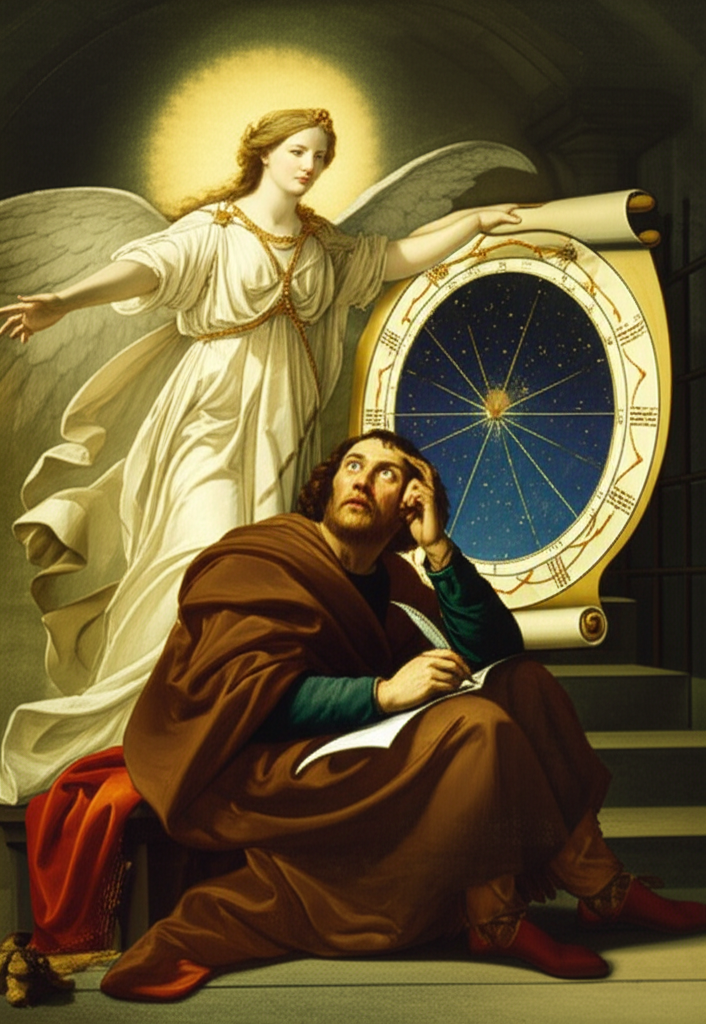
Deconstructing the Terms: Theology, Fate, Will, Necessity, and Contingency
To truly grasp this problem, let's break down the key concepts:
- Theology: The study of God and religious belief. In this context, it specifically refers to the understanding of God's attributes (omnipotence, omniscience, omnipresence) and their implications for human existence.
- Fate: The idea that all events are predetermined and unavoidable, often by a divine power or an impersonal cosmic force. It suggests an unalterable sequence of events.
- Free Will: The capacity of agents to make choices that are genuinely their own, not solely determined by prior causes or divine decree. It implies genuine alternatives and moral responsibility.
- Necessity: Something that must be; it cannot be otherwise. In this debate, it refers to events that are causally determined or logically inevitable, often due to divine decree or foreknowledge.
- Contingency: Something that might or might not be; it is not necessary. It refers to events or choices that are genuinely open, depending on human Will or chance, without being pre-determined.
The Uncomfortable Bedfellows: How Can They Coexist?
The core challenge lies in reconciling these seemingly contradictory ideas. How can an event be both Divinely necessitated (known or willed by God) and humanly contingent (freely chosen)?
Philosophers and theologians have proposed several avenues for reconciliation, often categorized as:
- Compatibilism: This view argues that free will and determinism (in this case, divine determinism or foreknowledge) are not mutually exclusive. Our actions can be free even if they are necessitated by prior causes, as long as they originate from our own desires and intentions, without external coercion. God's knowledge doesn't cause our actions, but rather perceives them as they truly are – freely chosen.
- Incompatibilism: This perspective holds that free will and determinism are fundamentally at odds. If one is true, the other cannot be. Incompatibilists often fall into two camps:
- Libertarianism: Emphasizes genuine free will, even at the expense of absolute divine foreknowledge or meticulous providence. God might limit His knowledge or allow for true contingency.
- Hard Determinism (or Theological Determinism): Prioritizes divine sovereignty and foreknowledge to the point where human free will is considered an illusion, or at best, a limited capacity within a divinely ordained plan.
A Spectrum of Solutions:
Here's a simplified look at the major attempts to bridge the gap:
- God's Timelessness (Boethius): God exists outside of time, experiencing all moments simultaneously. His foreknowledge isn't before our choice, but with it in an eternal present. This means God sees what we will freely choose, rather than making us choose it.
- Middle Knowledge (Molinism): Developed by Luis de Molina, this theory suggests God possesses "middle knowledge"—knowing not only what will happen (His free knowledge) and what could happen (His natural knowledge), but also what any free creature would do in any given set of circumstances (His middle knowledge). This allows God to create a world where His purposes are met through the free choices of individuals.
- God's Self-Limitation (Open Theism): A more contemporary view, suggesting that God, in His love and desire for genuine relationship, has voluntarily limited His knowledge of future free choices, allowing for true contingency and a more dynamic interaction with humanity.
The Enduring Significance
The theological problem of Fate and Free Will is more than an abstract puzzle; it touches upon the very essence of human experience. It shapes our understanding of:
- Moral Responsibility: Can we truly be praised or blamed if our actions are not our own?
- Prayer: Does prayer change anything if everything is already decided?
- Divine Justice and Love: How can a loving God allow suffering or condemn individuals if they couldn't have chosen otherwise?
- The Meaning of Life: Does our struggle, our growth, our striving for virtue, hold genuine meaning if the outcome is predetermined?
While a definitive, universally accepted answer remains elusive, the ongoing exploration of this problem enriches our Theology and deepens our philosophical understanding of ourselves, our universe, and the divine. It forces us to confront the limits of our comprehension and to appreciate the profound mysteries inherent in existence.
YouTube Video Suggestions:
-
📹 Related Video: What is Philosophy?
Video by: The School of Life
💡 Want different videos? Search YouTube for: ""Boethius Free Will and Foreknowledge Explained""
-
📹 Related Video: KANT ON: What is Enlightenment?
Video by: The School of Life
💡 Want different videos? Search YouTube for: ""Compatibilism vs Libertarianism Theological Debate""