

The Theological Problem of Evil: Confronting the Reality of Sin
The existence of suffering and moral depravity in a world supposedly overseen by an all-powerful, all-knowing, and all-good God presents one of philosophy's most enduring and vexing challenges. This "problem of evil" bifurcates into two primary forms: natural evil, encompassing natural disasters, disease, and undeserved suffering, and moral evil, which stems directly from human actions—what theology often defines as Sin. This pillar page delves specifically into the Theological Problem of Evil as it relates to Sin, exploring how the concept of human transgression complicates our understanding of divine justice, free will, and the very nature of Good and Evil. We shall navigate the intellectual landscape carved by centuries of profound thought, drawing heavily from the foundational texts found within the Great Books of the Western World, seeking not definitive answers, but a deeper appreciation for the profound questions at hand.
Unpacking the Problem: Sin in the Divine Equation
At its core, the Theological Problem of Evil concerning Sin can be articulated as a logical inconsistency:
- God is omnipotent (all-powerful).
- God is omnibenevolent (all-good).
- God is omniscient (all-knowing).
- Sin (moral evil) exists.
If God is all-powerful, He could prevent Sin. If He is all-good, He would want to prevent Sin. If He is all-knowing, He would know how to prevent Sin. Yet, Sin persists. How then can we reconcile these attributes of God with the undeniable reality of human moral failure and the suffering it engenders? This is not merely an academic exercise; it touches the very bedrock of faith, ethics, and human experience.
The Nature of Sin: A Theological Dissection
Before we can address the problem, we must understand what theology means by Sin. It is far more than mere wrongdoing; it is often understood as a transgression against divine law, a rupture in the relationship between humanity and God.
- Definition: Sin is typically defined as a willful act or omission that violates God's will or moral law. It implies culpability and often carries spiritual consequences.
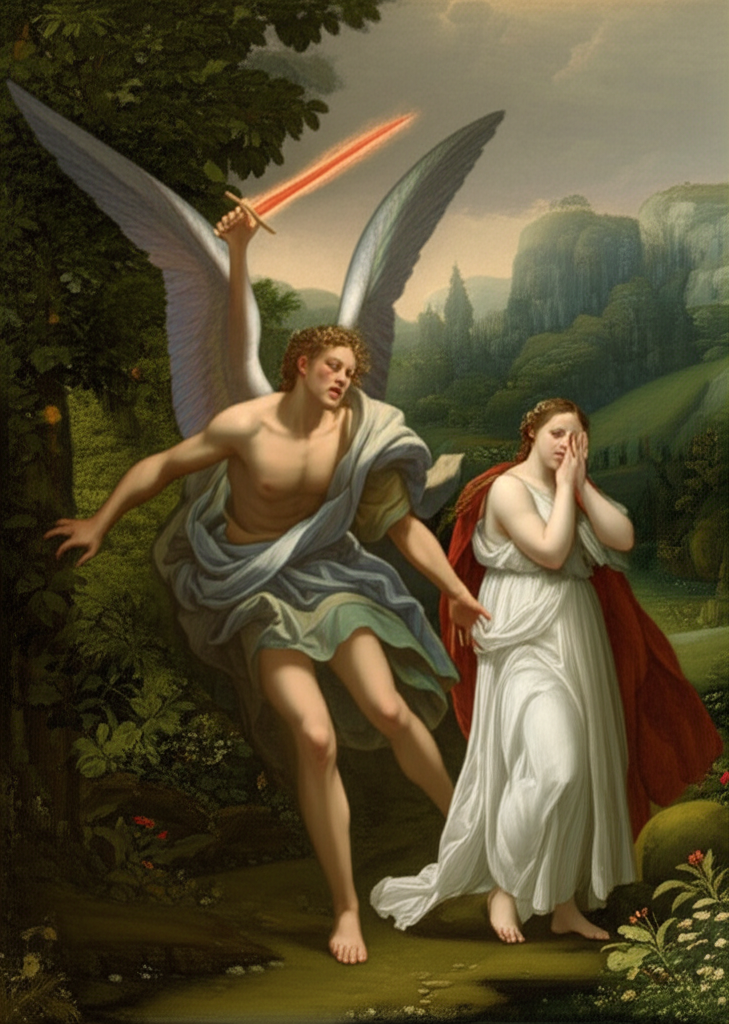
- Origin: In Abrahamic traditions, Sin finds its archetypal origin in the story of Adam and Eve's disobedience in the Garden of Eden, leading to the concept of original sin—an inherited tendency towards transgression that affects all humanity. This foundational narrative, found in the Great Books of the Western World, sets the stage for much Western theology on human nature and redemption.
- Types of Sin: Theology often distinguishes between mortal sin (severing one's relationship with God) and venial sin (less serious transgressions that weaken, but do not destroy, that relationship).
The concept of Sin is inextricably linked to human freedom. Without the capacity to choose otherwise, the act of transgression loses its moral weight. This brings us to the crucial role of free will in the theological problem.
God, Free Will, and the Permissibility of Evil
The most common theological response to the problem of Sin is the Free Will Defense. This argument posits that God, in His infinite wisdom and benevolence, granted humanity genuine freedom—the capacity to choose between Good and Evil.
- The Free Will Defense:
- Premise: A world with free moral agents, even if it entails the risk of Sin, is superior to a world where beings are merely automatons incapable of moral choice.
- Argument: For God to create truly free beings, He must allow them the genuine possibility of choosing Sin. To coercively prevent all Sin would negate that freedom, making moral responsibility meaningless.
- Conclusion: Therefore, God permits Sin not because He desires it, but as a necessary consequence of bestowing the invaluable gift of free will.
This defense, championed by figures like Augustine in his Confessions and City of God, shifts the blame for Sin from God to humanity. Sin is not a creation of God, but a privation of Good, a turning away from the divine will by free creatures. Augustine famously argued that evil is not a substance, but the absence or corruption of Good, much as darkness is the absence of light.
However, the Free Will Defense is not without its critics. Questions arise:
- Could an omnipotent God not create beings who freely choose Good consistently?
- Does the magnitude of human Sin and suffering truly justify the gift of free will?
- What about the problem of God's foreknowledge? If God knows beforehand that humans will Sin, does this negate their freedom or implicate God in their choices?
Theodicy: Justifying God in the Face of Sin
The branch of theology and philosophy that attempts to reconcile the existence of evil with the attributes of God is known as Theodicy. Many different theodicies have been proposed over the centuries, each offering a distinct perspective on how God can be both good and powerful while Sin persists.
Here are some prominent theological approaches to the problem of Sin:
| Theodicy Type | Core Argument Regarding Sin of the Western World*, and particularly in the works of Augustine and Thomas Aquinas, the problem of Sin is rigorously explored.
- Augustinian Theodicy: As mentioned, Augustine viewed evil as a privation of Good, not a positive entity. Sin arises from the misdirection of free will, turning away from the immutable Good of God towards lesser, mutable goods. The fall of Adam introduced original sin, corrupting human nature and making Sin almost inevitable without divine grace. This doesn't make God the author of Sin; rather, it underscores human responsibility.
- Irenaean Theodicy (Soul-Making): While less focused purely on Sin as a transgression, the Irenaean perspective (often associated with John Hick in modern times, but rooted in early Christian thought) views the world, with its challenges and opportunities for moral choice (including the choice to Sin or not), as a "soul-making" environment. God allows suffering and the struggle against Sin to enable humanity to develop virtues like courage, compassion, and perseverance, thereby growing into His likeness. In this view, Sin (and its consequences) becomes a catalyst for moral and spiritual development.
- Thomistic Perspective (Thomas Aquinas): In his Summa Theologica, Aquinas meticulously examines the nature of Sin, free will, and God's causality. He affirms human freedom, arguing that while God knows all things, His knowledge does not necessitate human choices. Sin is still a defect, a deviation from the rational order established by God. Aquinas also delves into the hierarchy of being, suggesting that the existence of diverse creatures, some capable of Sin, contributes to the overall perfection of the universe, even if Sin itself is an imperfection.
The Enduring Challenge: Wrestling with Sin and God
The Theological Problem of Evil regarding Sin is not a puzzle with a single, universally accepted solution. Instead, it represents a profound and ongoing dialogue within theology and philosophy.
- Modern Reinterpretations: Contemporary thinkers grapple with the implications of Sin in a world increasingly shaped by scientific understanding and secular ethics. Questions arise about the culpability of those who lack full moral agency, the systemic nature of evil, and the role of psychological factors in human wrongdoing.
- The Problem of Suffering: The innocent suffering caused by the Sins of others remains a particularly poignant aspect of the problem. How can an all-good God allow such extensive, often seemingly pointless, pain to result from human choices?
- The Mystery of Grace: For many theological traditions, the answer ultimately lies not in a complete rational explanation of Sin's existence, but in the mystery of divine grace, redemption, and the promise of ultimate restoration. The cross, in Christian theology, stands as God's ultimate response to Sin and suffering, not by explaining it away, but by entering into it.
The journey through the Great Books of the Western World reveals that grappling with Sin is not about dismantling faith, but about deepening understanding. It forces us to confront the complexities of human nature, the limits of our comprehension, and the profound questions that lie at the intersection of faith and reason. While a definitive, universally satisfying answer to why an omnipotent, omnibenevolent God permits Sin may elude us, the intellectual and spiritual wrestling with this problem enriches our appreciation for the human condition and the enduring quest for meaning.
YouTube Video Suggestions:
-
📹 Related Video: PLATO ON: The Allegory of the Cave
Video by: The School of Life
💡 Want different videos? Search YouTube for: "Augustine problem of evil free will defense"
2. ## 📹 Related Video: ARISTOTLE ON: The Nicomachean Ethics
Video by: The School of Life
💡 Want different videos? Search YouTube for: "Theodicy explained moral evil natural evil"