

The Theological Problem of Evil (Sin): An Examination of Divine Justice and Human Transgression
The existence of evil in a world ostensibly created and sustained by an all-powerful, all-knowing, and all-good God presents one of the most enduring and profound challenges to religious faith and philosophical inquiry. This is The Theological Problem of Evil, and it intensifies when we narrow our focus to moral evil, specifically sin. If God is omnipotent (all-powerful) and omnibenevolent (all-good), why does evil exist? More poignantly, if humanity is created in God's image, why do we choose to commit acts of sin? This pillar page delves into the historical and philosophical attempts to reconcile these seemingly contradictory truths, exploring the nature of sin, the attributes of God, and the various theological frameworks developed to grapple with the profound tension between divine perfection and human imperfection, the reality of good and evil.
What is "The Theological Problem of Evil (Sin)"?
At its core, the Theological Problem of Evil is an intellectual and emotional challenge to belief in the traditional concept of God. It questions how a deity possessing perfect power, perfect knowledge, and perfect goodness could permit the widespread suffering and moral transgression evident in the world. When we specifically address sin, we focus on the moral dimension of evil—actions, thoughts, or omissions that violate divine law or moral principles, often understood as an offense against God.
Defining Evil and Sin: Distinctions and Intersections
It is crucial to distinguish between different forms of evil:
- Natural Evil: Suffering caused by natural phenomena (e.g., earthquakes, disease, famine). This type of evil raises questions about God's design of the natural world.
- Moral Evil: Suffering or wrongdoing caused by the free actions of moral agents (e.g., murder, cruelty, deception). Sin falls squarely into this category, representing a deliberate turning away from God or goodness.
While both forms challenge divine attributes, sin specifically implicates human agency and responsibility, making the theological problem even more complex. If God created humanity, why did He create beings capable of such profound evil?
The Attributes of God and the Inconsistency
The problem gains its sharpness from the classical understanding of God within monotheistic traditions, particularly Christianity, Judaism, and Islam. These traditions generally affirm that God is:
- Omnipotent: All-powerful, capable of doing anything logically possible.
- Omnibenevolent: All-good, perfectly loving, desiring the well-being of creation.
- Omniscient: All-knowing, aware of past, present, and future.
The inconsistency arises:
- If God is omnibenevolent, He would desire to prevent evil and sin.
- If God is omnipotent, He would be able to prevent evil and sin.
- Evil and sin undeniably exist.
- Therefore, either God is not omnibenevolent, or not omnipotent, or not both. This logical conundrum forms the bedrock of the Theological Problem of Evil.
Historical Perspectives on Sin and Evil
The struggle with good and evil and humanity's propensity for wrongdoing is not unique to modern thought. Ancient civilizations and foundational religious texts have grappled with these concepts for millennia.
Ancient Roots: Early Conceptions of Transgression
Before the full articulation of Christian theology, various cultures explored the nature of transgression. Greek philosophy, for instance, spoke of hamartia—a "missing the mark" or tragic flaw, often leading to downfall, though not always imbued with the same moral or divine offense as later concepts of sin. Zoroastrianism, with its dualistic cosmology of opposing forces (Ahura Mazda and Angra Mainyu), offered a framework where evil was an independent, powerful force, rather than something permitted by an ultimate Good God.
Abrahamic Traditions: The Fall and Original Sin
The Abrahamic traditions provide the most direct lineage to the theological problem of sin.
- The Genesis Narrative: The story of Adam and Eve's disobedience in the Garden of Eden (Genesis 3) introduces the concept of the Fall—a pivotal moment where humanity's relationship with God is fractured by an act of sin. This act brought suffering, death, and an inherent inclination towards evil into the human condition.
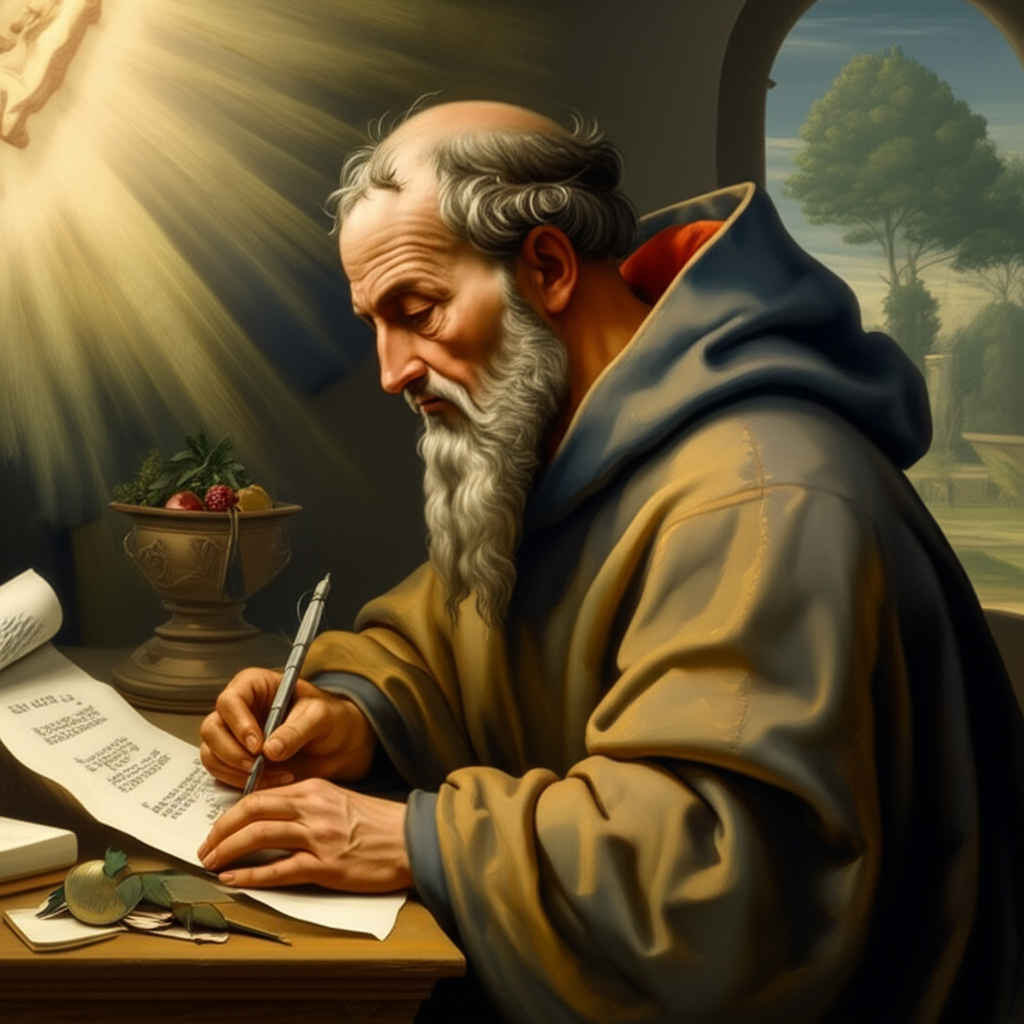
- Augustine of Hippo and Original Sin: Perhaps the most influential articulation came from Saint Augustine (354–430 AD) in works like Confessions and City of God. Augustine argued that Adam's sin was not merely an individual transgression but a cosmic event that corrupted human nature itself. This "Original Sin" is transmitted to all subsequent generations, rendering humanity inherently flawed and predisposed to sin. For Augustine, evil is not a substance but a privation of good—a turning away from God, who is the ultimate Good. This concept was foundational for Western theology.
Key Thinkers and Texts from the Great Books
The "Great Books of the Western World" offer profound insights into these historical developments:
- Plato's Republic: Explores justice, the nature of good, and the corrupting influence of evil on the soul, albeit from a philosophical rather than strictly theological perspective.
- Augustine's Confessions and City of God: Essential for understanding the doctrine of Original Sin, the nature of evil as a privation, and the role of free will in human sin.
- Thomas Aquinas's Summa Theologica: Systematizes theology, addressing the problem of evil by arguing that God permits evil for the sake of a greater good, and that evil is a defect rather than a positive entity.
- John Milton's Paradise Lost: A literary masterpiece that reimagines the biblical story of the Fall, exploring the motivations behind sin and the consequences of disobedience to God.
Key Theological Approaches to the Problem
The attempts to reconcile God's nature with the reality of sin and evil have led to various theological frameworks, known as theodicies.
Augustinian Theology: Sin as a Privation
Augustine's view posits that evil is not a created entity but a lack or absence of good, much like darkness is the absence of light. Sin, therefore, is a defect of the will, a turning away from the higher good (God) towards a lesser good. The existence of sin is attributed to the misuse of free will, bestowed by God upon His creatures, which then resulted in the inherited condition of Original Sin.
Thomistic Theology: God Permits Evil for Greater Good
Thomas Aquinas, building on Augustine, further refined the argument. He asserted that God is the ultimate Good and cannot be the direct cause of evil. Instead, God permits evil to exist, not because He desires it, but because He can bring a greater good out of it. This perspective often emphasizes the intricate order of creation, where even imperfections serve a higher purpose within God's providential plan. For Aquinas, sin is a disorder, a failure to act according to right reason and divine law.
Pelagianism and the Debate over Free Will
A significant historical counterpoint to Augustine was Pelagianism, which argued that humans are born morally neutral and possess complete free will to choose good or evil. Pelagius denied Original Sin, asserting that sin is solely a matter of individual choice, not inherited corruption. This debate highlights the central tension between divine grace and human autonomy in the context of sin.
The Role of Free Will
The concept of free will is paramount in most theological solutions to the problem of moral evil and sin.
The Free Will Defense
The most prevalent theodicy is the Free Will Defense. It argues that God, in His infinite wisdom and love, desired to create beings capable of genuine love and moral choice. For such beings to truly love and choose good, they must also have the freedom to choose evil (to sin). If God had created a world where evil was impossible, creatures would be mere automata, incapable of authentic moral action or relationship. Thus, God permits sin as a necessary byproduct of the greater good of genuine free will.
Compatibilism vs. Incompatibilism
This defense, however, raises further philosophical questions about the nature of freedom itself:
- Incompatibilism: Argues that free will and determinism (including divine foreknowledge or predestination) are mutually exclusive. If God knows all future events, including our sins, are we truly free?
- Compatibilism: Seeks to reconcile free will with determinism, suggesting that an action can be both determined (e.g., by God's knowledge or providence) and free, as long as it originates from the agent's internal desires and intentions.
These discussions are critical for understanding how theology attempts to preserve God's sovereignty and omniscience while upholding human moral responsibility for sin.
Addressing the Problem: Theodicies and Their Limitations
Beyond Augustine and Aquinas, other theological attempts have been made to address the problem of evil and sin.
Irenaean Theodicy: Soul-Making
Developed later, particularly by John Hick in the 20th century, the Irenaean theodicy (named after Irenaeus of Lyons) proposes that the world, with all its challenges and opportunities for evil, is a "soul-making" environment. Evil and suffering are not merely regrettable consequences of free will but are divinely permitted—even necessary—catalysts for human moral and spiritual development. Through overcoming adversity and making moral choices in the face of temptation (i.e., resisting sin), humanity can grow into the likeness of God. This view sees evil as instrumental to a greater good of character formation.
Other Theodicies and the Limits of Human Understanding
- Skeptical Theism: Argues that human beings are not in a position to understand God's reasons for permitting evil. Our finite minds cannot grasp the vastness of divine wisdom or the complex web of good that God might be bringing about through seemingly evil events.
- Mystery: Some approaches simply acknowledge the limits of human reason and accept the problem of evil and sin as a profound mystery that faith must embrace, even if it cannot fully explain.
The following table summarizes the primary theological approaches to understanding sin and evil:
| Theodicy/Approach | Primary Explanation for Evil/Sin | Role of God | Role of Human Free Will | Key Strengths | Key Criticisms |
|---|---|---|---|---|---|
| Augustinian | Evil as a privation of Good; result of Adam's Original Sin | Permits evil through creation of free beings; brings good from evil. | Misuse of free will by Adam led to universal corruption. | Preserves God's omnibenevolence; emphasizes human responsibility. | Implies inherited guilt; struggles with the justice of universal condemnation. |
| Thomistic | Evil as a defect; God permits evil for a greater good. | Permits evil as part of a greater providential plan for the cosmos. | Individual choices are responsible for sin, though God allows them. | Systematically integrates God's attributes with the reality of evil. | Can seem to make God complicit in evil's existence. |
| Free Will Defense | Evil is the necessary consequence of granting genuine free will. | Values free love and moral choice over a world devoid of evil. | Essential for moral agency; sin is a direct result of its misuse. | Directly addresses moral evil; upholds human dignity and responsibility. | Why couldn't God create free beings who always choose good? |
| Irenaean (Soul-Making) | Evil and suffering are instrumental for moral and spiritual development. | Designs a world where challenges lead to character building and perfection. | Choices in the face of evil are crucial for growth towards God's likeness. | Offers a purpose for suffering; emphasizes human potential for growth. | Justifies severe suffering; implies God uses suffering as a means to an end. |
Contemporary Relevance and Ongoing Debates
The Theological Problem of Evil (Sin) is not confined to ancient texts or medieval debates. It remains a vibrant and often painful point of contention in modern philosophy and theology.
Modern Interpretations of Sin
In a world increasingly influenced by psychology, sociology, and existential thought, the concept of sin itself has undergone re-evaluation:
- Psychological Interpretations: View sin less as a divine offense and more as a manifestation of psychological brokenness, trauma, or developmental issues.
- Sociological Interpretations: Focus on sin as a product of societal structures, injustice, and systemic evil rather than purely individual transgression.
- Existential Interpretations: See sin as a failure to embrace authentic existence, a flight from freedom and responsibility, or an act of bad faith.
While these interpretations offer valuable insights, they often move away from the traditional theological understanding of sin as an offense against God.
The Problem of Evil in a Secular Age
Even in an increasingly secular age, the problem of evil persists. While the absence of God might seem to dissolve the theological problem, it often leaves a void concerning the ultimate meaning of good and evil, suffering, and moral accountability. Without a divine framework, the origin and purpose of evil become purely human constructs, raising new questions about objective morality and the ultimate significance of human sin.
Conclusion: The Enduring Enigma
The Theological Problem of Evil (Sin) remains one of the most intellectually stimulating and existentially challenging questions for anyone contemplating the nature of God, humanity, and the universe. From Augustine's struggle with Original Sin to Aquinas's systematic defenses, and the modern re-evaluations of evil, the tension between divine omnibenevolence and human transgression continues to fuel profound inquiry. While no single theodicy has universally satisfied all critics, the ongoing engagement with this problem reveals the depth of human longing for meaning, justice, and reconciliation in a world often overshadowed by suffering and sin. The quest to understand how good and evil coexist with an all-good God is not merely an academic exercise but a foundational aspect of faith, philosophy, and the human condition itself.
📹 Related Video: What is Philosophy?
Video by: The School of Life
💡 Want different videos? Search YouTube for: ""The Problem of Evil Philosophy Debate""
📹 Related Video: PLATO ON: The Allegory of the Cave
Video by: The School of Life
💡 Want different videos? Search YouTube for: ""Augustine on Evil and Free Will""