

The Theological Debate on God's Cause
The question of God's cause lies at the very heart of both theology and metaphysics, probing the ultimate origins of existence itself. This pillar page delves into the profound philosophical and theological discussions surrounding whether God requires a cause, exploring classical arguments for a First Cause, the conceptual challenges of infinite regress, and the nuanced understanding of God as a self-existent Principle or uncaused being. Drawing on centuries of intellectual inquiry, we examine how thinkers from Aristotle to Aquinas and beyond have grappled with this foundational query, shaping our understanding of divine nature and cosmic order.
The Quest for Ultimate Origins – Defining "Cause" in Theology
To inquire into "God's Cause" is to venture into the deepest philosophical waters. At its core, the debate hinges on the concept of causality itself. In philosophy, a cause is that which produces an effect. Aristotle famously identified four types of causes:
- Material Cause: That out of which something is made (e.g., bronze of a statue).
- Formal Cause: The form or essence of a thing (e.g., the shape of the statue).
- Efficient Cause: That which brings something into being or initiates change (e.g., the sculptor).
- Final Cause: The purpose or end for which something exists (e.g., the statue's aesthetic pleasure).
When we discuss "God's Cause" in theology, we are primarily concerned with the efficient cause – what brought God into existence? – and the final cause – God's ultimate purpose. However, the very premise often leads to a paradox: if everything requires an efficient cause, does God, the supposed ultimate origin, also require one? This fundamental query challenges our understanding of creation, existence, and the divine Principle that underpins reality.
Classical Arguments for a First Cause
Throughout history, philosophers and theologians have presented compelling arguments for the necessity of a First Cause—a being that initiates all other existence without being initiated itself. These arguments often serve as foundational proofs for God's existence.
1. Aristotle's Unmoved Mover
In his Metaphysics, Aristotle posited the existence of an "Unmoved Mover." Observing the continuous motion and change in the universe, Aristotle reasoned that every motion must have a mover. This chain of movers cannot extend infinitely, otherwise, there would be no initial mover to set the chain in motion. Therefore, there must be a primary, eternal, and immaterial Mover that itself is not moved by anything else. For Aristotle, this Unmoved Mover acts primarily as a final cause – drawing all things towards itself as an object of desire and perfection, rather than actively pushing or creating in the Judeo-Christian sense. It is the ultimate Principle of motion and change.
2. Aquinas's Cosmological Argument (The Five Ways)
St. Thomas Aquinas, deeply influenced by Aristotle, articulated five ways to prove God's existence in his Summa Theologica. The first three are variations of the cosmological argument, directly addressing the concept of a First Cause:
- The First Way: From Motion: Everything in motion is moved by something else. This chain of movers cannot go on infinitely, so there must be a First Mover, unmoved by anything else – and this we call God.
- The Second Way: From Efficient Cause: Every effect has an efficient cause. No efficient cause can be its own efficient cause. An infinite regress of efficient causes is impossible, so there must be a First Efficient Cause – and this we call God.
- The Third Way: From Contingency: Things exist that are contingent (they can either exist or not exist). If everything were contingent, at some point, nothing would have existed, and thus nothing would exist now. Therefore, there must be a necessary being whose existence is not contingent – and this we call God.
3. The Kalam Cosmological Argument
A more recent formulation, rooted in medieval Islamic theology and championed by contemporary philosophers, the Kalam Cosmological Argument asserts:
- Whatever begins to exist has a cause.
- The universe began to exist.
- Therefore, the universe has a cause.
This cause, by definition, must be outside the universe, uncaused, timeless, and immensely powerful – characteristics often attributed to God.
The Paradox of God's Own Cause – The Causa Sui Dilemma
The most persistent challenge to the First Cause argument is the question: "If everything has a cause, what caused God?" This is often dubbed the causa sui dilemma, meaning "cause of itself." If God is the ultimate Principle, the uncaused Cause, then God must be an exception to the very rule that everything has a cause.
Theological responses to this paradox often hinge on a crucial distinction:
- God as a Necessary Being: Unlike contingent beings (like humans or planets, which could either exist or not exist), God is understood as a necessary being. His existence is not dependent on anything else; it is inherent to His nature. To ask "What caused God?" is akin to asking "What caused existence itself?" – a category error, as God is existence or the ground of all existence.
- God's Aseity: This concept, derived from the Latin a se ("from himself"), denotes God's self-existence. God does not receive existence from another; He possesses it inherently and eternally. He is the ultimate, uncreated Principle.
- God Beyond Temporal Causality: Many theological traditions hold that God is outside of time. If God is eternal and timeless, then the concept of a "beginning" or a "cause" in a temporal sequence does not apply to Him. He is not before the universe in time, but transcendent to it, the eternal ground of its being.
Theological Attributes and the Nature of Divine Causality
Understanding God as the uncaused Cause necessitates a deeper look into His theological attributes, which define His unique relationship to existence.
- Eternality and Timelessness: As mentioned, God's existence is often conceived as eternal, meaning without beginning or end. For many, this implies timelessness – God is not bound by the linear progression of time that governs the created order. Therefore, the very question of "what caused God" becomes moot within a temporal framework that doesn't apply to Him.
- Omnipotence and Omniscience: These attributes reinforce God's role as the ultimate Principle. An omnipotent being needs no external cause for its existence, as it possesses all power inherently. An omniscient being comprehends all reality, including its own nature as the uncaused origin.
- Creator Ex Nihilo: The Judeo-Christian tradition emphasizes God's creation ex nihilo (out of nothing). This signifies that God is not simply ordering pre-existing matter but bringing existence into being from non-existence. This act of creation further solidifies God's status as the ultimate efficient Cause for everything else, without Himself requiring one.
Great Books and Great Minds on God's Cause
The debate surrounding God's cause has been a cornerstone of Western philosophy and theology, explored by some of the greatest minds whose works are preserved in the Great Books of the Western World collection:
| Thinker | Key Work(s) (from Great Books) | Contribution to the Debate Theological Debate on God's Cause
Introduction
The question of God's cause lies at the very heart of both theology and metaphysics, probing the ultimate origins of existence. This pillar page delves into the profound philosophical and theological discussions surrounding whether God requires a cause, exploring classical arguments for a First Cause, the conceptual challenges of infinite regress, and the nuanced understanding of God as a self-existent Principle or uncaused being. Drawing on centuries of intellectual inquiry, we examine how thinkers from Aristotle to Aquinas and beyond have grappled with this foundational query, shaping our understanding of divine nature and cosmic order.
The Quest for Ultimate Origins – Defining "Cause" in Theology
To inquire into "God's Cause" is to venture into the deepest philosophical waters. At its core, the debate hinges on the concept of causality itself. In philosophy, a cause is that which produces an effect. Aristotle famously identified four types of causes:
- Material Cause: That out of which something is made (e.g., bronze of a statue).
- Formal Cause: The form or essence of a thing (e.g., the shape of the statue).
- Efficient Cause: That which brings something into being or initiates change (e.g., the sculptor).
- Final Cause: The purpose or end for which something exists (e.g., the statue's aesthetic pleasure).
When we discuss "God's Cause" in theology, we are primarily concerned with the efficient cause – what brought God into existence? – and the final cause – God's ultimate purpose. However, the very premise often leads to a paradox: if everything requires an efficient cause, does God, the supposed ultimate origin, also require one? This fundamental query challenges our understanding of creation, existence, and the divine Principle that underpins reality.
Classical Arguments for a First Cause
Throughout history, philosophers and theologians have presented compelling arguments for the necessity of a First Cause—a being that initiates all other existence without being initiated itself. These arguments often serve as foundational proofs for God's existence.
1. Aristotle's Unmoved Mover
In his Metaphysics, Aristotle posited the existence of an "Unmoved Mover." Observing the continuous motion and change in the universe, Aristotle reasoned that every motion must have a mover. This chain of movers cannot extend infinitely, otherwise, there would be no initial mover to set the chain in motion. Therefore, there must be a primary, eternal, and immaterial Mover that itself is not moved by anything else. For Aristotle, this Unmoved Mover acts primarily as a final cause – drawing all things towards itself as an object of desire and perfection, rather than actively pushing or creating in the Judeo-Christian sense. It is the ultimate Principle of motion and change.
2. Aquinas's Cosmological Argument (The Five Ways)
St. Thomas Aquinas, deeply influenced by Aristotle, articulated five ways to prove God's existence in his Summa Theologica. The first three are variations of the cosmological argument, directly addressing the concept of a First Cause:
- The First Way: From Motion: Everything in motion is moved by something else. This chain of movers cannot go on infinitely, so there must be a First Mover, unmoved by anything else – and this we call God.
- The Second Way: From Efficient Cause: Every effect has an efficient cause. No efficient cause can be its own efficient cause. An infinite regress of efficient causes is impossible, so there must be a First Efficient Cause – and this we call God.
- The Third Way: From Contingency: Things exist that are contingent (they can either exist or not exist). If everything were contingent, at some point, nothing would have existed, and thus nothing would exist now. Therefore, there must be a necessary being whose existence is not contingent – and this we call God.
3. The Kalam Cosmological Argument
A more recent formulation, rooted in medieval Islamic theology and championed by contemporary philosophers, the Kalam Cosmological Argument asserts:
- Whatever begins to exist has a cause.
- The universe began to exist.
- Therefore, the universe has a cause.
This cause, by definition, must be outside the universe, uncaused, timeless, and immensely powerful – characteristics often attributed to God.
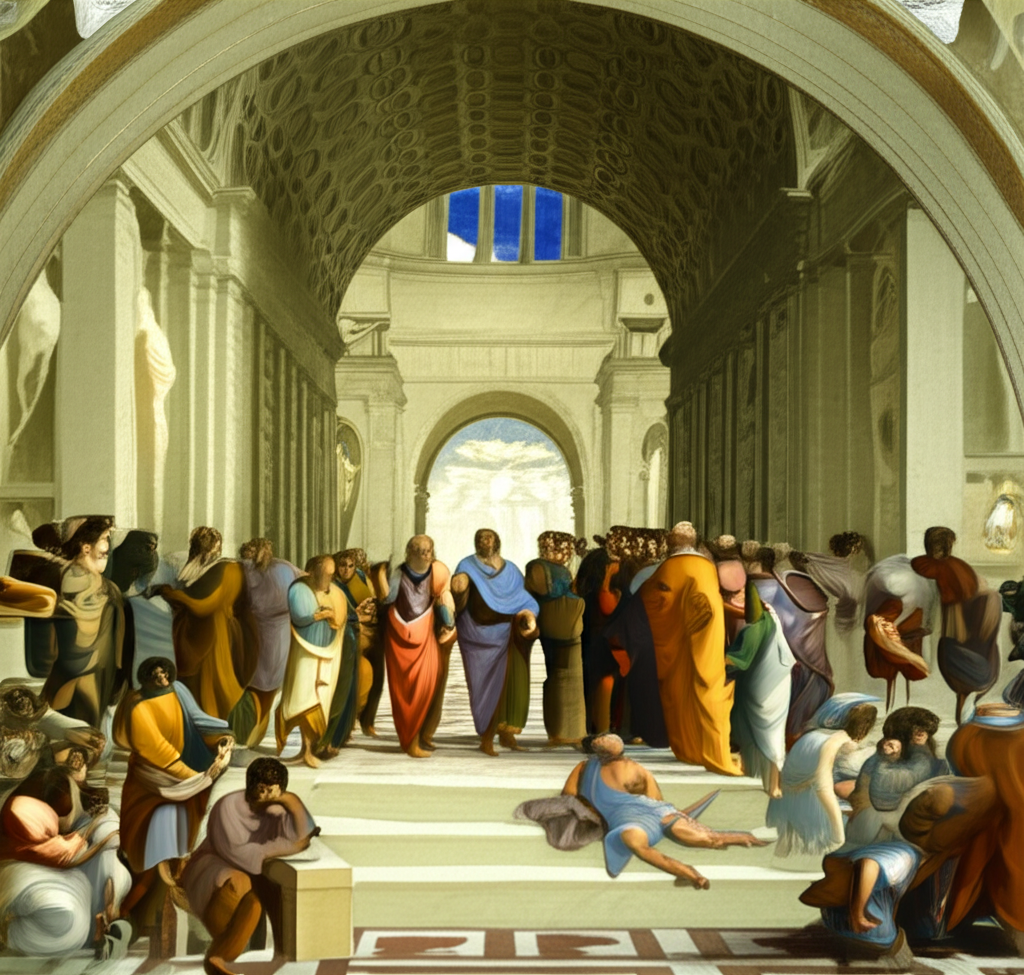
(Image: A classical oil painting depicting Plato and Aristotle engaged in discussion, perhaps in a grand architectural setting. Plato points upwards, symbolizing his theory of Forms and ideal realms, while Aristotle gestures forward, representing his focus on empirical observation and the natural world. The image subtly conveys the historical roots of metaphysical inquiry into ultimate causes, bridging ancient philosophy with theological questions.)
The Paradox of God's Own Cause – The Causa Sui Dilemma
The most persistent challenge to the First Cause argument is the question: "If everything has a cause, what caused God?" This is often dubbed the causa sui dilemma, meaning "cause of itself." If God is the ultimate Principle, the uncaused Cause, then God must be an exception to the very rule that everything has a cause.
Theological responses to this paradox often hinge on a crucial distinction:
- God as a Necessary Being: Unlike contingent beings (like humans or planets, which could either exist or not exist), God is understood as a necessary being. His existence is not dependent on anything else; it is inherent to His nature. To ask "What caused God?" is akin to asking "What caused existence itself?" – a category error, as God is existence or the ground of all existence.
- God's Aseity: This concept, derived from the Latin a se ("from himself"), denotes God's self-existence. God does not receive existence from another; He possesses it inherently and eternally. He is the ultimate, uncreated Principle.
- God Beyond Temporal Causality: Many theological traditions hold that God is outside of time. If God is eternal and timeless, then the concept of a "beginning" or a "cause" in a temporal sequence does not apply to Him. He is not before the universe in time, but transcendent to it, the eternal ground of its being.
Theological Attributes and the Nature of Divine Causality
Understanding God as the uncaused Cause necessitates a deeper look into His theological attributes, which define His unique relationship to existence.
- Eternality and Timelessness: As mentioned, God's existence is often conceived as eternal, meaning without beginning or end. For many, this implies timelessness – God is not bound by the linear progression of time that governs the created order. Therefore, the very question of "what caused God" becomes moot within a temporal framework that
📹 Related Video: What is Philosophy?
Video by: The School of Life
💡 Want different videos? Search YouTube for: "The Theological Debate on God's Cause philosophy"