

The theological concepts of sin and punishment form a foundational pillar in Western thought, deeply influencing our understanding of morality, justice, and humanity's relationship with the divine. Far from being mere abstract ideas, these concepts grapple with profound questions about human nature, free will, divine omnipotence, and the very structure of cosmic Justice. This article delves into the intricate definitions of sin as a transgression against divine law and the multifaceted nature of its theological consequences, drawing insights from the rich tapestry of philosophical and theological discourse found within the Great Books of the Western World.
Understanding Sin: Transgression and Alienation
At its core, Theology defines Sin not merely as a moral failing or a legal infraction, but as an act of rebellion or disobedience against God's will and divine order. It represents a rupture in the relationship between humanity and the Creator, leading to spiritual alienation.
Key Facets of Theological Sin:
- Disobedience to Divine Law: Many traditions view sin as a conscious breaking of God's commandments, whether revealed through scripture or discernable through natural law. This is a central theme in biblical narratives, from Adam and Eve's transgression to the giving of the Mosaic Law.
- Privatio Boni (Privation of Good): Saint Augustine, a towering figure in the Great Books, articulated sin not as a substance or a positive evil, but as a lack or privation of good. It's the absence of what should be present, a turning away from the higher good (God) towards lesser goods.
- Original Sin: A cornerstone of Christian theology, original sin refers to the inherited sinful state of humanity resulting from the Fall of Adam and Eve. It signifies a predisposition towards sin, affecting human nature and intellect.
- Actual Sin: These are the specific, individual acts of wrongdoing committed by a person, further categorized by their gravity.
| Type of Sin | Description | Example (Theological Context) |
|---|---|---|
| Original Sin | The inherited state of human nature marred by the Fall, leading to a propensity to sin. | Adam and Eve's disobedience in Eden, affecting all subsequent humanity. |
| Actual Sin | Individual, voluntary acts of transgression against divine law. | Lying, stealing, committing adultery, pride, envy. |
| Mortal Sin | A grave offense against God, committed with full knowledge and deliberate consent, leading to loss of grace. | Murder, apostasy (renouncing one's faith), grave sacrilege. |
| Venial Sin | A lesser offense that weakens one's relationship with God but does not sever it entirely. | Petty jealousy, minor dishonesty, impatience without serious harm. |
The Nature of Divine Punishment
The concept of Punishment in Theology is inextricably linked to sin and divine Justice. It is not merely a human construct of retribution but carries profound spiritual and existential weight. Divine punishment can manifest in various forms, both in this life and the afterlife, and its purposes are often debated by theologians and philosophers.
Purposes of Theological Punishment:
- Retributive Justice: This is the most straightforward understanding, where punishment is a just consequence for wrongdoing, restoring a moral balance. The "eye for an eye" principle, though often tempered, reflects this ancient understanding of divine order.
- Deterrence: Punishment serves as a warning, discouraging both the individual and others from committing similar sins. The stories of divine judgment in scripture often carry a strong deterrent message.
- Correction/Rehabilitation: In some theological frameworks, punishment is seen as a means to purify the soul, lead to repentance, and ultimately guide the sinner back to God. Purgatory in Catholic theology is a prime example of this corrective aspect.
- Manifestation of Divine Sovereignty and Justice: God's willingness to punish sin underscores His ultimate authority and His unwavering commitment to righteousness. It demonstrates that the moral order is not arbitrary but divinely established and upheld.
The vivid descriptions of hell in Dante Alighieri's Inferno, a cornerstone of the Great Books, serve as a powerful literary exploration of retributive Punishment, where each sin is met with a fitting, symbolic torment. Yet, even within such stark depictions, the underlying principle is often one of divine Justice—a cosmic order where actions have inescapable consequences.
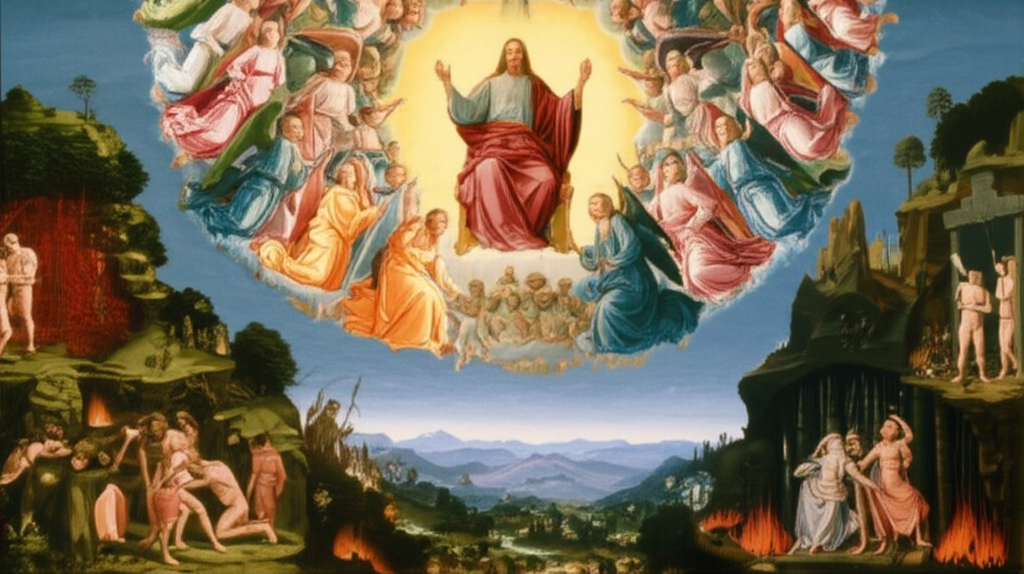
Justice: Divine vs. Human
The theological concept of Justice differs significantly from its purely human, legal counterpart. While human justice aims for fairness within a societal framework, divine Justice operates on an absolute, perfect scale, reflecting God's own perfect nature.
- Perfect and Infallible: Divine justice is not subject to human error, bias, or incomplete information. It is omniscient and perfectly equitable.
- Mercy and Grace: A crucial distinction is the interplay of divine Justice with divine Mercy. While Justice demands recompense for sin, Theology often posits that God's Mercy offers a path to forgiveness and redemption, famously exemplified in Christian thought through the sacrifice of Christ. This tension between justice and mercy is a recurring theme in philosophical and theological debates.
- Ultimate Accountability: Divine Justice ensures ultimate accountability for all actions, extending beyond earthly life into eternal consequences. This belief underpins many theological systems' views on the afterlife.
The exploration of Sin, Punishment, and Justice within Theology provides a profound framework for understanding humanity's place in the cosmos and its relationship with the divine. These concepts, debated and refined by thinkers throughout history, continue to shape moral philosophy and spiritual understanding, reminding us of the intricate link between our actions and their ultimate consequences.
📹 Related Video: What is Philosophy?
Video by: The School of Life
💡 Want different videos? Search YouTube for: ""Augustine on Evil and Free Will | Philosophy of Religion""
📹 Related Video: PLATO ON: The Allegory of the Cave
Video by: The School of Life
💡 Want different videos? Search YouTube for: ""Aquinas and the Nature of God's Justice""