

The Weight of Wrongdoing: Unpacking Sin, Punishment, and Divine Justice
The concepts of sin and punishment lie at the very heart of theology, forming a foundational framework for understanding moral order, human responsibility, and the nature of the divine. Far from being mere archaic notions, they represent humanity's enduring struggle with transgression, consequence, and the profound aspiration for justice. This article delves into how theological traditions, particularly those prominent in the Great Books of the Western World, define sin, articulate the necessity and forms of punishment, and ultimately grapple with the intricate balance of divine justice and mercy.
What is Sin, Really? A Theological Perspective
At its core, sin is understood as a transgression against divine law or a separation from God. It's not merely a mistake or an error, but an act or state that carries significant moral and spiritual weight. Different theological traditions offer nuanced definitions, but common threads emerge:
- Disobedience: A conscious act of rebellion against God's commands, as seen in the Genesis narrative of Adam and Eve.
- Missing the Mark: From the Greek hamartia, implying a failure to achieve the divine standard or purpose for humanity.
- Separation: Sin creates a chasm between humanity and the divine, disrupting the intended relationship and harmony.
- Corruption: It can also be viewed as an inherent flaw or brokenness within human nature, often referred to as "original sin" in Christian theology, influencing all subsequent actions.
Theological texts, from the Hebrew Bible to the New Testament, and later interpretations by figures like Augustine and Aquinas, meticulously document the nature and consequences of sin, framing it as the ultimate disruptor of both individual and cosmic order.
The Inevitability of Consequence: Divine Punishment
If sin is the transgression, punishment is the theological response, an assertion of divine authority and a manifestation of divine justice. Theological frameworks posit that punishment is not arbitrary but serves multiple purposes:
- Retribution: To ensure that moral wrongs are addressed and that the inherent order of the universe is upheld. This is often seen as a fundamental aspect of divine justice.
- Deterrence: To discourage future wrongdoing, both for the individual and for the broader community.
- Correction/Rehabilitation: In some traditions, punishment is viewed as a means to bring about repentance and lead the sinner back to righteousness.
- Vindication of God's Holiness: To demonstrate God's absolute opposition to evil and His unwavering commitment to righteousness.
Punishments can range from temporal consequences in this life (e.g., suffering, hardship, expulsion from paradise) to eternal consequences in the afterlife (e.g., eternal separation from God, hell). The vivid descriptions of divine judgment and eternal damnation found in works like Dante Alighieri's Inferno serve as powerful literary and theological explorations of these concepts.
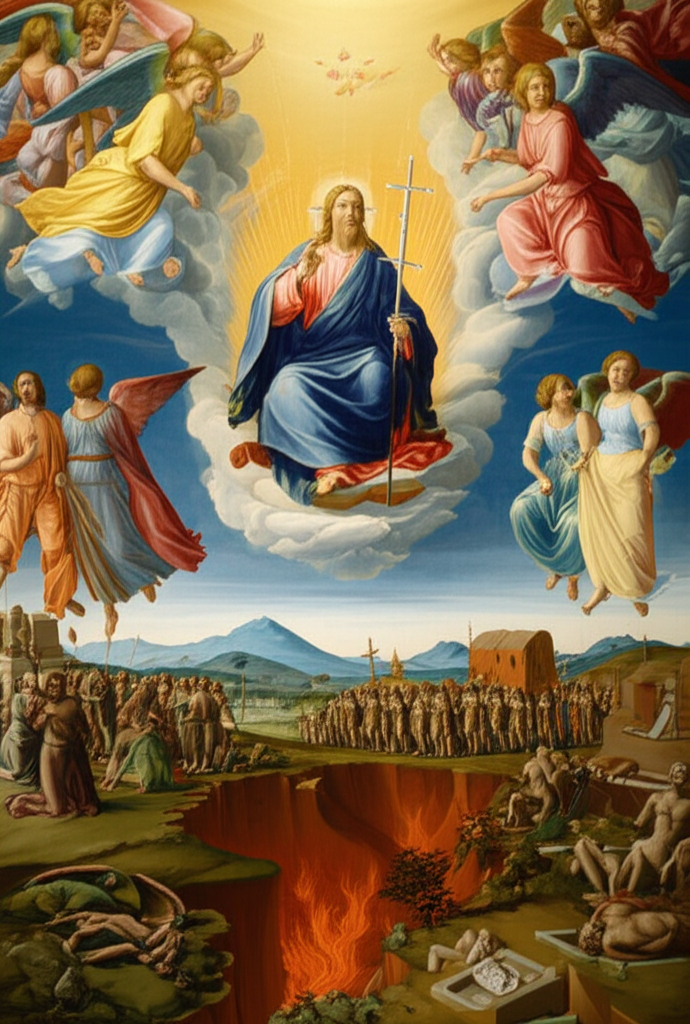
Beyond Retribution: Justice, Mercy, and the Path to Atonement
Theological discussions around punishment are rarely solely about retribution. They almost invariably intersect with the concept of divine justice and, crucially, divine mercy. How can an infinitely just God also be an infinitely merciful one, especially when humanity is inherently prone to sin?
This paradox has fueled centuries of philosophical and theological inquiry. Many traditions introduce mechanisms for atonement, redemption, or forgiveness, seeking to reconcile the demands of justice with the hope of salvation.
- Sacrifice: In many ancient traditions, sacrifices were offered to atone for sin, symbolizing a vicarious payment or an act of appeasement.
- Repentance: A sincere turning away from sin and toward God, often accompanied by acts of penance.
- Divine Grace: In Christian theology, the concept of grace plays a pivotal role, suggesting that salvation is not solely earned through human effort but is a gift from God, made possible through the sacrifice of Christ. This allows for justice to be satisfied while offering mercy.
The intricate dance between divine law, human failing, and the potential for redemption forms a compelling narrative that continues to shape moral thought and spiritual practice. Understanding these theological concepts requires acknowledging the profound human need to make sense of suffering, responsibility, and the ultimate destination of the soul in the face of an all-powerful, all-knowing, and perfectly just deity.
YouTube Video Suggestions:
-
📹 Related Video: What is Philosophy?
Video by: The School of Life
💡 Want different videos? Search YouTube for: ""Augustine City of God sin punishment philosophy""
2. ## 📹 Related Video: ARISTOTLE ON: The Nicomachean Ethics
Video by: The School of Life
💡 Want different videos? Search YouTube for: ""Aquinas Summa Theologica justice mercy explained""