

The Eternal Echo: Unpacking the Theological Argument for Immortality
The question of what lies beyond this earthly existence has haunted humanity since time immemorial, shaping our beliefs, our ethics, and our very understanding of purpose. Central to this profound inquiry is the Theological Argument for Immortality, a conviction deeply embedded in the fabric of countless religions and philosophical traditions. This argument posits that our individual existence does not terminate with the death of the body, but rather continues in some form, often through the survival of an immaterial soul. Rooted in divine revelation, reason, and the inherent nature of justice, this perspective offers a compelling vision of an enduring self, transcending the temporal limits of the physical world. For many, it provides not just comfort, but a fundamental framework for meaning.
The Divine Source: God, Creation, and Enduring Life
At the heart of the theological argument lies the concept of a divine creator—a God (or gods) who is the ultimate source of all being. From this premise, several lines of reasoning emerge regarding Immortality:
- God as the Giver of Life: If life is a divine gift, then its ultimate cessation without purpose seems to contradict the nature of a benevolent and omnipotent creator. Theology often teaches that God's creations, especially intelligent beings, are endowed with a spark of the divine, suggesting an inherent capacity for eternal existence.
- Divine Providence and Justice: Many theological systems argue that perfect justice is not fully realized in this life. The virtuous often suffer, and the wicked prosper. For divine justice to be truly universal and absolute, there must be a realm beyond the earthly where accounts are settled, and ultimate rewards or punishments are meted out. This necessitates an immortal existence for each individual soul.
- The Divine Image: In Abrahamic traditions, humanity is said to be created "in the image of God." This likeness is often interpreted as referring to our rationality, free will, and our capacity for love and moral judgment—faculties that seem to transcend mere material existence and hint at a divine, enduring nature.
The Indestructible Soul: An Immaterial Essence
A cornerstone of the Theological Argument for Immortality is the concept of the soul as a distinct, immaterial entity separate from the physical body. This notion has deep roots in ancient philosophy and religion, finding sophisticated articulation in works that form part of the Great Books of the Western World.
- Platonic Dualism: Plato, in dialogues like the Phaedo, famously argued for the pre-existence and post-existence of the soul. For Plato, the soul is simple, uncompounded, and therefore indestructible, in contrast to the complex and perishable body. It is the seat of reason and true knowledge, capable of apprehending eternal Forms.
- Augustinian Perspective: St. Augustine, deeply influenced by Platonism, integrated this idea into Christian Theology. He saw the soul as an immaterial substance, created directly by God, and imbued with an innate longing for its Creator. Its immortality is not merely a philosophical deduction but a theological truth, essential for the soul's ultimate union with God.
- Thomistic Synthesis: St. Thomas Aquinas, while emphasizing the soul as the "form of the body," also argued for its independent subsistence and Immortality. He reasoned that the soul's intellectual faculties (reason and will) operate independently of bodily organs in certain respects, demonstrating its immaterial nature. Since what is immaterial cannot be corrupted or divided, the soul must be immortal.
Key Tenets of the Theological Argument for Immortality
| Tenet | Description | Philosophical/Theological Link |
|---|---|---|
| Divine Creation | Life and the soul are gifts from a benevolent God, implying an intended purpose beyond temporal existence. | Genesis, Plato's Demiurge, Aquinas's First Cause |
| Immaterial Soul | The soul is a non-physical entity, distinct from the body, and not subject to physical decay or dissolution. | Plato's Phaedo, Augustine's Confessions, Aquinas's Summa Theologica |
| Divine Justice | An afterlife is necessary to ensure ultimate justice, where virtue is rewarded and wrongdoing is accounted for, fulfilling God's perfect moral order. | Old Testament Prophets, New Testament teachings, Islamic eschatology |
| Purpose & Meaning | Immortality provides ultimate meaning to human struggles, aspirations, and moral choices, preventing life from being a mere fleeting absurdity. | Viktor Frankl's search for meaning, existential theological arguments |
| Divine Revelation | Sacred texts and religious traditions often explicitly reveal the existence of an afterlife, providing authoritative witness to the soul's endurance. | Bible, Quran, Bhagavad Gita, various sacred scriptures from diverse religions |
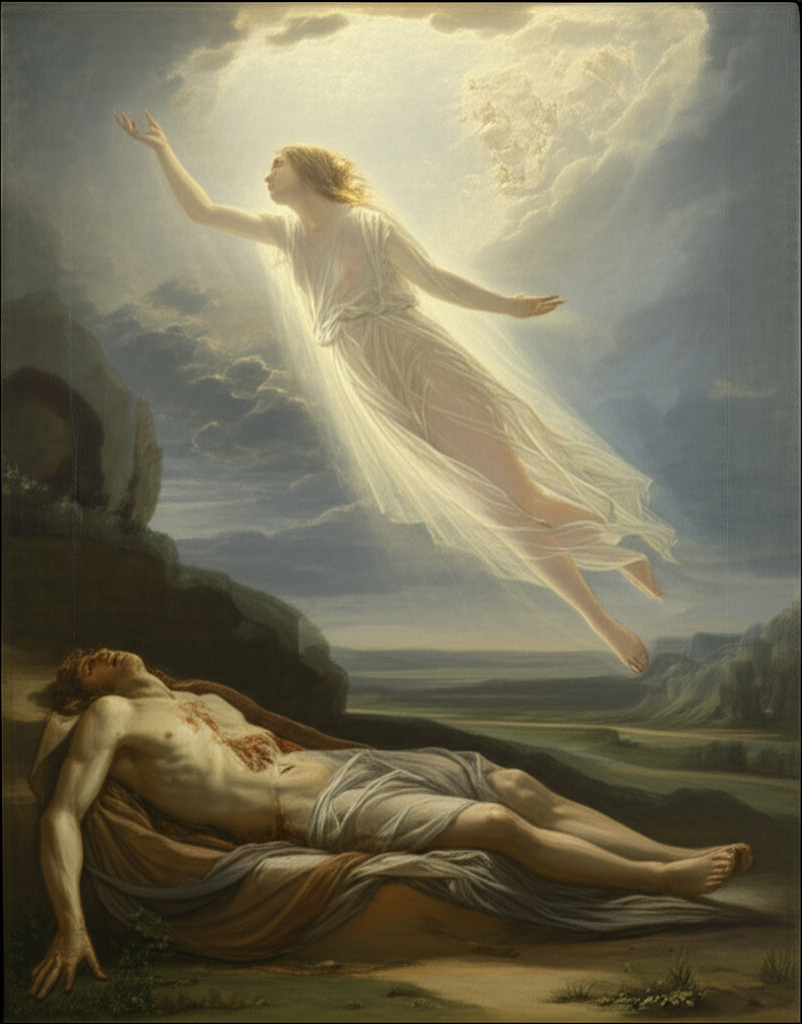
The Enduring Appeal of the Argument
The Theological Argument for Immortality is not merely an abstract philosophical exercise; it is a foundational belief that underpins many aspects of human culture and individual experience. It offers hope in the face of death, provides a moral compass by suggesting accountability beyond this life, and imbues human relationships and efforts with eternal significance. For those who embrace it, the prospect of Immortality transforms the fleeting moments of our earthly journey into a preparation for an enduring destiny, guided by the principles of Theology and the eternal nature of the soul.
YouTube: "Plato Phaedo Immortality of the Soul Explained"
YouTube: "Aquinas Soul and Immortality Philosophy"
📹 Related Video: What is Philosophy?
Video by: The School of Life
💡 Want different videos? Search YouTube for: "The Theological Argument for Immortality philosophy"