

The Enduring Quest: Unpacking the Theological Argument for Immortality
The question of what lies beyond our mortal coil has captivated thinkers for millennia, giving rise to profound philosophical and theological inquiries. At the heart of many spiritual traditions lies the theological argument for immortality, a compelling framework that posits the continuation of the Soul beyond physical death, often into an Eternity of divine judgment or communion. This perspective is not merely a comforting thought but a deeply reasoned position rooted in the nature of God, the human Soul, and the very purpose of existence. It suggests that our lives here on Earth are but a prelude, an essential chapter in a much grander, eternal narrative.
The Divine Foundations of Eternal Life
At its core, the theological argument for Immortality rests on specific tenets concerning the divine. These are often interwoven with beliefs about God's nature, justice, and relationship with humanity.
God's Justice and Goodness
Many theological systems argue that a perfectly just and good God would not allow the rampant injustices of the world to go unaddressed. If virtue often goes unrewarded and vice unpunished in this life, then a divine being committed to ultimate justice must provide an afterlife where such imbalances are rectified. This conviction fueled thinkers from Plato, whose Phaedo explores the soul's destiny, to Christian theologians like Augustine and Aquinas, who saw divine justice as a cornerstone of the afterlife. The idea is that true justice extends beyond the grave, ensuring that every Soul receives its due.
The Nature of the Human Soul
A pivotal element of the theological argument is the belief in the immaterial and indivisible nature of the Soul. Unlike the body, which is composed of parts and subject to decay, the Soul is often conceived as a simple, spiritual essence.
Key Characteristics of the Theologically Immortal Soul:
- Immateriality: The Soul is not physical; it does not occupy space or have mass.
- Simplicity: It is not composed of parts and therefore cannot be broken down or cease to exist through decomposition.
- Rationality: The Soul is the seat of intellect, will, and consciousness, capabilities often considered beyond purely material explanation.
- Divine Origin: Often believed to be directly created or breathed into existence by God, sharing in a divine spark.
This understanding, deeply explored by figures in the Great Books of the Western World such as Plato and further developed by scholastic philosophers like Thomas Aquinas, suggests that since the Soul is not subject to physical laws of decay, its existence is not tied to the body's mortality.
Divine Revelation and Sacred Texts
For many faiths, the strongest argument for Immortality comes directly from divine revelation, as recorded in sacred texts and religious traditions. Scriptures across various religions—from the Bible and the Quran to the Vedas and the Upanishads—speak extensively of an afterlife, resurrection, eternal judgment, and the ultimate destiny of the Soul. These texts serve not merely as philosophical treatises but as direct pronouncements from the divine, offering a roadmap to Eternity.
Historical Perspectives from the Great Books
The concept of the immortal Soul has been a recurring theme throughout Western thought, foundational to many philosophical and theological systems.
Plato's Enduring Legacy
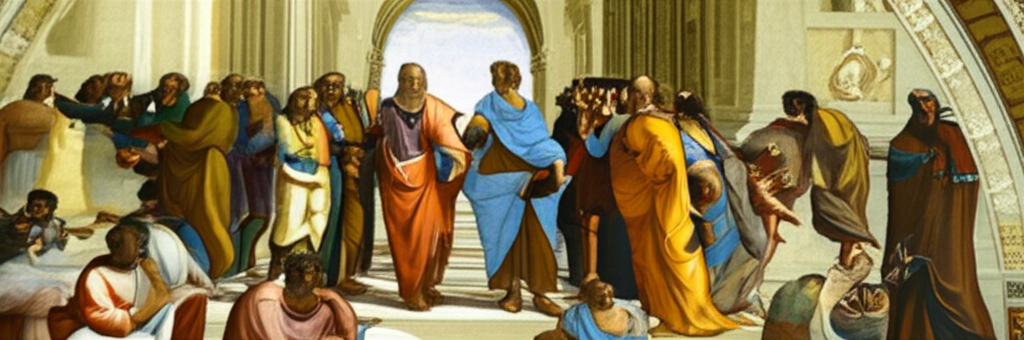
In dialogues such as the Phaedo, Plato presents several arguments for the Immortality of the Soul. He suggests that the Soul is akin to the eternal Forms, that knowledge is a form of recollection from a prior existence, and that the Soul, as the principle of life, cannot admit death. For Plato, the Soul is inherently superior to the body, capable of apprehending eternal truths, and thus destined for a reality beyond the physical.
Augustine and the Christian Synthesis
St. Augustine, heavily influenced by Platonic thought, integrated these philosophical insights into a robust Christian Theology. For Augustine, the Immortality of the Soul was not just a philosophical conclusion but a revealed truth, central to the doctrine of salvation and the promise of eternal life with God. The Soul's yearning for God, he argued, points to its eternal nature and ultimate destiny.
Aquinas and the Rational Soul
Thomas Aquinas, in his Summa Theologica, provided a rigorous philosophical defense of the Soul's incorruptibility. He argued that the rational Soul, by its very nature, operates independently of matter in its acts of understanding and willing. Since it can exist and operate without the body, it is not dependent on the body for its existence and thus cannot perish with it. The natural desire for perfect happiness, which cannot be fulfilled in this life, also points to an eternal fulfillment in God, reinforcing the Soul's journey towards Eternity.
The Enduring Appeal of Eternal Life
The theological argument for immortality offers more than just a theoretical possibility; it provides a framework for meaning, morality, and hope. It suggests that our actions here have eternal consequences, lending profound significance to human life. For countless individuals, the belief in an immortal Soul and the promise of Eternity offers comfort in the face of death, a sense of purpose in suffering, and a vision of ultimate justice and communion with the divine. It is a testament to humanity's deep-seated yearning for something beyond the finite, a quest for meaning that transcends the temporal.
YouTube Video Suggestions:
-
📹 Related Video: PLATO ON: The Allegory of the Cave
Video by: The School of Life
💡 Want different videos? Search YouTube for: "Plato Phaedo Soul Immortality Explained"
2. ## 📹 Related Video: PLATO ON: The Allegory of the Cave
Video by: The School of Life
💡 Want different videos? Search YouTube for: "Thomas Aquinas Soul Immortality God"