

Navigating the Labyrinth of Identity: The Interplay of the Same and Other
Identity, at its core, is a profound philosophical challenge. It's not merely about recognizing something, but understanding what makes it that particular thing, distinct from everything else, and how it persists through time and change. This article delves into the fundamental concepts of the Same and Other as the twin pillars upon which our understanding of identity rests. We'll explore how these seemingly opposing ideas are, in fact, inextricably linked, forming a complex relation that underpins our very definition of existence and is essential to logic itself. From ancient Greek inquiries into being and becoming to modern discussions of personal persistence, the interplay between what is constant and what is distinct reveals the intricate nature of identity.
The Enduring Question: What Does it Mean to Be the Same?
To declare something "the same" is to make a powerful statement about its essence or continuity. But what exactly constitutes this sameness? Philosophers have grappled with this question for millennia, leading to crucial distinctions.
- Numerical Identity: This refers to being one and the very same individual thing. If A is numerically identical to B, then A is B. There is only one entity being considered. For instance, the morning star is numerically identical to the evening star – they are both the planet Venus.
- Qualitative Identity: This, in contrast, means sharing identical properties or qualities. Two mass-produced chairs might be qualitatively identical, appearing exactly alike, yet they are two distinct chairs, thus numerically different.
The logic of sameness often begins with the Law of Identity, first articulated by Aristotle, stating simply that A is A. While seemingly trivial, this principle asserts that every entity is identical to itself and distinct from all others. It is the foundational axiom for any coherent thought about being. However, the application of this law becomes complex when we consider change over time. Is a person at 80 the same as they were at 8? In what sense? This is where the concept of relation becomes paramount.
Varieties of Sameness
| Type of Sameness | Description | Example |
|---|---|---|
| Strict Identity | Numerical identity; one and the same entity. | My current self is strictly identical to my self five minutes ago. |
| Generic Identity | Belonging to the same kind or species. | All human beings are generically identical as members of Homo sapiens. |
| Specific Identity | Sharing all essential properties relevant to a particular context, though numerically distinct. | Two identical copies of the same book edition. |
| Relative Identity | Identity in relation to a specific criterion or sortal term. | A lump of clay might be the same "clay" but not the same "statue" after reshaping. |
The Indispensable Other: Defining Through Distinction
While sameness provides a sense of unity and persistence, the concept of "the Other" is equally vital for understanding identity. We define what something is largely by what it is not. Without the capacity to distinguish, to perceive difference, the idea of sameness would lose its meaning.
Consider a world where everything was absolutely qualitatively identical. In such a world, the very notion of a distinct individual, let alone its identity, would collapse. It is through the relation of difference, through the recognition of "the Other," that boundaries are drawn, categories are formed, and individual identities emerge.
Plato, in his Sophist, explored the communion of Forms, suggesting that "being" must necessarily interweave with "non-being" (or "otherness") to allow for predication and the definition of things. For example, to say "this is a cat" implies that it is not a dog, not a tree, not a rock. The "otherness" of non-cats helps delineate the identity of a cat.
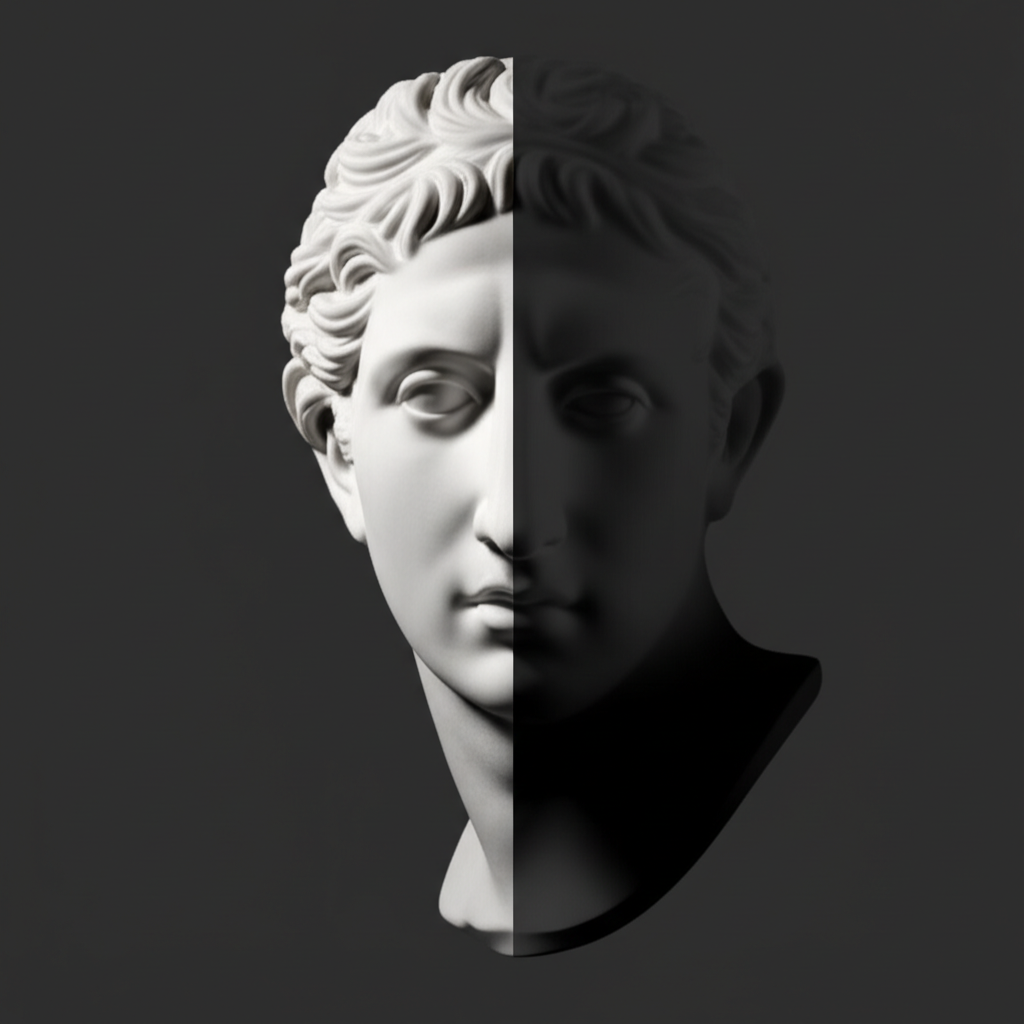
Identity as a Dynamic Relation: Persistence Through Change
The most challenging aspect of identity arises when we consider change. How can something remain the same when its properties are constantly shifting? This paradox has been a cornerstone of philosophical inquiry, from Heraclitus's famous assertion that "you cannot step into the same river twice" to the Ship of Theseus thought experiment.
John Locke, a prominent figure in the Great Books tradition, famously tackled personal identity, suggesting it rests not on a continuous substance but on the continuity of consciousness and memory. For Locke, what makes a person the same person over time is the ability to remember past experiences, creating a relation between past and present selves. This moves the definition of identity from a static essence to a dynamic, experiential connection.
Conversely, philosophers like Leibniz, with his Principle of the Identity of Indiscernibles, argued that if two things share all the same properties, they must be numerically identical. This principle underscores the profound connection between qualitative sameness and numerical sameness, emphasizing that any difference, however minute, signifies "the Other."
Philosophical Echoes from the Great Books
The tension between the Same and Other, and their role in identity, resonates throughout the history of philosophy:
- Plato: Explored the relation between the unchanging Forms (the ultimate "Same") and the ever-changing phenomenal world (the realm of "Otherness" and multiplicity). The definition of any particular thing in the world is derived from its participation in a Form.
- Aristotle: Focused on substance as the underlying "Same" that persists through accidental changes. A man remains the same man even as he ages and changes his appearance, because his substantial form (his essence) remains. His detailed logic of categories helps to define what something is and how it relates to other things.
- Locke: Shifted the focus of personal identity from substance to consciousness, emphasizing memory as the crucial relation that constitutes the same person over time.
- Hume: Radicalized the problem, suggesting that identity is not something we perceive but rather a mental construct, a "fiction" we impose on a succession of distinct perceptions. The logic of his argument challenged the very notion of a persistent "self."
Conclusion: The Intertwined Nature of Identity
The philosophical journey through "The Same and Other in Identity" reveals that these are not merely contrasting terms but interdependent concepts vital for any coherent definition of being. Identity is fundamentally a relation – a relation of an entity to itself over time (sameness) and a relation of that entity to everything else (otherness). The logic of identity, from Aristotle's law to Leibniz's principle, continuously grapples with how to reconcile persistence with change, and individuality with distinction. To truly understand what something is, we must simultaneously grasp what makes it constant and what sets it apart. This intricate dance between the Same and the Other is not just an academic exercise; it underpins our understanding of ourselves, our world, and the very fabric of reality.
YouTube Video Suggestions:
-
📹 Related Video: What is Philosophy?
Video by: The School of Life
💡 Want different videos? Search YouTube for: ""The Ship of Theseus Identity Philosophy Explained""
-
📹 Related Video: PLATO ON: The Allegory of the Cave
Video by: The School of Life
💡 Want different videos? Search YouTube for: ""John Locke Personal Identity Summary""