

The Unseen Architect: How Will Shapes Our Moral Duty
The intricate dance between our inner intentions and our outward actions has long captivated philosophers. At the heart of this dance lies the will – that mysterious faculty through which we choose, decide, and ultimately, act. This article explores the profound role of the will in moral action, particularly as it pertains to duty, examining how our capacity for choice fundamentally shapes our understanding of Good and Evil and our very moral landscape. From ancient wisdom to modern ethical frameworks, the will emerges not merely as an instrument, but as the very architect of our moral lives.
The Will: More Than Mere Desire
Before we delve into its moral implications, it’s crucial to understand what we mean by the will. It is not simply a fleeting wish or an unthinking impulse. Rather, the will is often understood as the rational faculty that directs our actions towards chosen ends. It's the power of self-determination, the ability to assent to a course of action, or to resist one. Without this capacity, moral action, and indeed moral responsibility, would be fundamentally undermined.
Ancient Echoes: Reason, Choice, and Virtue
Philosophers from the Great Books of the Western World have grappled with the will for millennia:
- Plato, in works like The Republic, posited a tripartite soul where reason (the charioteer) must control the spirited and appetitive parts. While not explicitly using the term "will" in the modern sense, his emphasis on reason's guiding role in achieving a virtuous life lays foundational groundwork for understanding self-governance. A well-ordered soul, guided by reason, naturally tends towards the Good.
- Aristotle, in Nicomachean Ethics, delves deeply into prohairesis – deliberate choice. For Aristotle, virtue is not merely a state but a disposition to choose the mean. Our choices, born of deliberation and shaped by our character, are central to moral action. The will, in this sense, is the faculty that translates our reasoned deliberation into virtuous action, making us responsible for our character and our deeds.
The Medieval Conscience: Free Will and Divine Command
The advent of Christian theology introduced new dimensions to the concept of the will, particularly concerning free will and its relation to divine authority and Good and Evil:
- St. Augustine, in Confessions and On Free Choice of the Will, passionately argued for the existence of free will, even in the face of original sin and divine grace. He saw the will as the source of both virtue and vice; it is through our free choice that we turn towards God (the ultimate Good) or away from Him (towards Evil). The role of the will here is paramount, as it determines our spiritual destiny.
- St. Thomas Aquinas, synthesizing Aristotelian philosophy with Christian doctrine in Summa Theologica, further refined this view. He argued that the intellect presents the Good to the will, and the will then chooses. While the intellect apprehends the end, it is the will that moves us towards it. This interaction underscores the will's active role in moral pursuit and adherence to divine law, which he saw as the ultimate duty.
Kant's Revolutionary Insight: The Good Will and Duty
Perhaps no philosopher placed the will more squarely at the center of moral action than Immanuel Kant. For Kant, in works like Groundwork of the Metaphysics of Morals, the will is not merely a means to an end, but the very source of moral worth.
- The Good Will: Kant famously declares that nothing can be conceived as Good without qualification "except a good will." This is a will that acts purely out of reverence for the moral law, not out of inclination, fear, or desire for reward. The moral worth of an action lies not in its consequences, but in the maxim (the principle) that guides the will.
- Duty as the Expression of Good Will: For Kant, acting morally means acting from duty, not merely in accordance with duty. If I help someone because I feel sympathy, my action is commendable but lacks true moral worth in Kant's strict sense. However, if I help them because I recognize it as my duty, regardless of my feelings, then my will is truly good. This emphasizes the internal, self-legislating role of the will.
- The Categorical Imperative: The good will operates according to the Categorical Imperative – universal moral laws that apply to all rational beings. It's the will's capacity to formulate and act upon these universal principles that defines its moral role.
Here are some key characteristics of Kant's Good Will:
- Autonomous: It is self-legislating, acting according to principles it gives itself, not external commands or desires.
- Rational: It acts according to universalizable maxims, treating humanity always as an end, never merely as a means.
- Pure: Its motivation is solely respect for the moral law, not inclination or consequence.
- Unconditionally Good: Its goodness is inherent and does not depend on its effects or success.
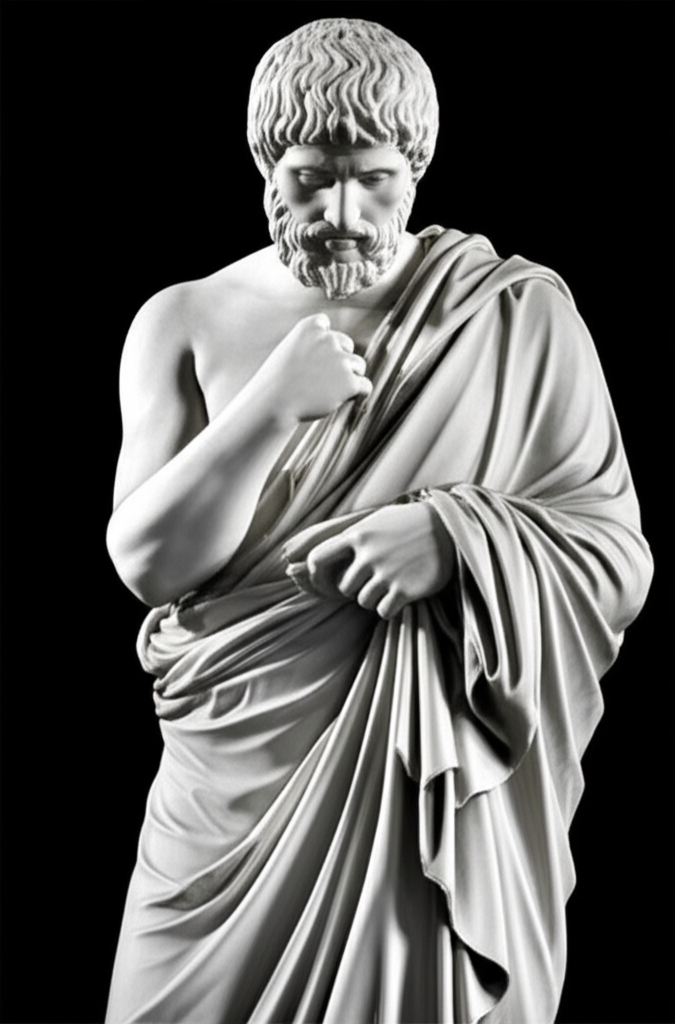
Navigating Good and Evil: The Will's Moral Compass
The will, then, acts as our moral compass, determining the direction we take when confronted with choices between Good and Evil. It is through the will that we:
- Formulate Intentions: Before an action, there is an intention. The will shapes this intention, imbuing it with moral quality. A malicious intention, even if leading to a benign outcome, is still an expression of an evil will.
- Exercise Self-Control: The will allows us to override immediate desires or inclinations that conflict with our duty. It's the force that enables us to resist temptation and choose the harder, but morally right, path.
- Take Responsibility: Because we possess a will capable of choice, we are held accountable for our actions. This capacity for choice is the bedrock of moral responsibility and the distinction between accidental harm and intentional evil.
The Enduring Challenge: Willpower, Freedom, and Moral Agency
The role of the will in moral action is not without its complexities. The perennial philosophical debate between free will and determinism directly impacts how we understand the will's capacity. If all our actions are predetermined, can our will truly be "good" or "evil"? Most ethical systems, particularly those emphasizing duty, implicitly or explicitly assume a degree of free will, arguing that our capacity for self-determination is what makes moral action meaningful.
Furthermore, the strength of one's will – often referred to as willpower – plays a crucial role in the consistent performance of duty. It's not enough to know what is right; one must have the will to execute it, especially when faced with adversity or personal cost.
Conclusion
From the ancient Greek emphasis on reasoned choice to Kant's profound assertion of the unconditionally good will, the role of the will in moral action and duty remains central to philosophical inquiry. It is the faculty that elevates human behavior beyond mere instinct, allowing us to deliberate, choose, and act according to principles we deem right. Our capacity for will makes us moral agents, capable of distinguishing between Good and Evil, and responsible for shaping not only our own character but also the moral fabric of the world around us. In understanding the will, we begin to understand what it truly means to be human and to live a life of principle.
📹 Related Video: KANT ON: What is Enlightenment?
Video by: The School of Life
💡 Want different videos? Search YouTube for: ""Kant's Moral Philosophy: Duty and the Categorical Imperative Explained""
📹 Related Video: What is Philosophy?
Video by: The School of Life
💡 Want different videos? Search YouTube for: ""Free Will vs. Determinism: Crash Course Philosophy""