

The Eloquent Architect: The Role of Rhetoric in Political Change
The role of rhetoric in driving political change is not merely incidental but foundational, acting as the very engine that articulates, mobilizes, and shapes the trajectory of government and society. From the ancient Athenian agora to modern digital forums, rhetoric serves as the indispensable art of persuasion, enabling leaders and movements to define reality, inspire collective action, and ultimately, transform the established order. It is through the masterful deployment of language, argument, and emotional appeal that citizens are galvanized, policies are debated and adopted, and the very fabric of political life is rewoven. Understanding rhetoric's profound influence is key to comprehending how societies evolve, resist, or embrace new directions.
Defining Rhetoric: More Than Just Persuasion
When we speak of rhetoric, we are often tempted to reduce it to mere sophistry or manipulative speech. However, as philosophers from Aristotle to Cicero have articulated within the Great Books of the Western World, rhetoric is far more complex. It is the art of discovering the available means of persuasion in any given case, encompassing logic (logos), emotion (pathos), and the speaker's credibility (ethos). In the context of political change, rhetoric is the strategic deployment of these elements to:
- Articulate Grievances: Giving voice and structure to widespread discontent.
- Propose Alternatives: Presenting new visions for government and society.
- Mobilize Support: Convincing diverse groups to unite for a common cause.
- Legitimize Actions: Justifying revolutionary or reformist movements.
Without effective rhetoric, even the most profound ideas for change can remain unheard, and the most urgent calls for action can dissipate into silence.
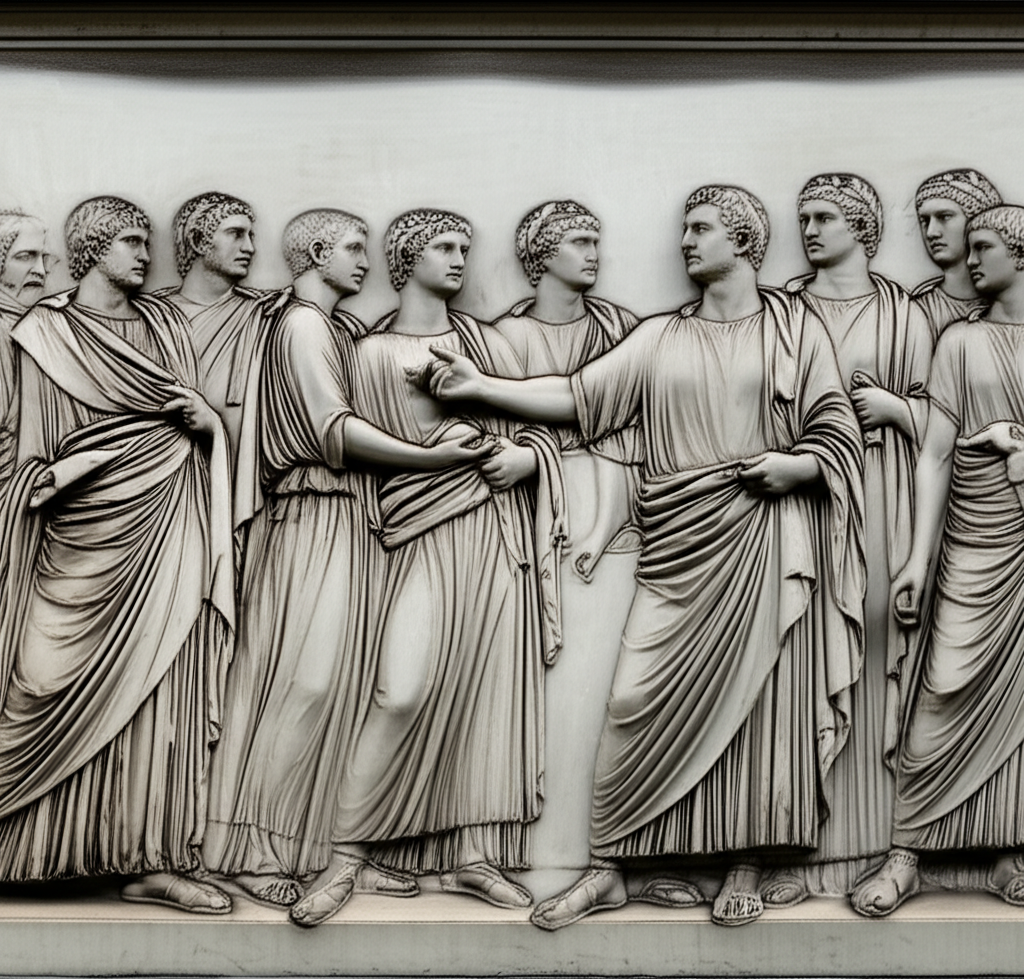
Historical Echoes: Rhetoric in the Shaping of Governments
The history of political thought, as chronicled in the Great Books, is replete with examples of rhetoric's pivotal role in initiating or resisting change.
Ancient Foundations: Plato, Aristotle, and the Polis
Plato, in works like Gorgias, critically examined rhetoric, often viewing it with suspicion as a tool for manipulating rather than enlightening. He worried about its potential to sway the masses away from truth and toward demagoguery, leading to an unjust government. Yet, even his critiques underscore rhetoric's immense power.
Aristotle, in his seminal Rhetoric, offered a more pragmatic and systematic analysis. He viewed rhetoric as a neutral tool, capable of being used for good or ill, and essential for citizens participating in the polis. For him, effective political rhetoric was about understanding audiences, crafting compelling arguments, and establishing credibility – all crucial for proposing new laws, debating policies, and driving public opinion towards change.
Roman Oratory: Cicero and the Republic
Cicero, the preeminent Roman orator, exemplified the power of rhetoric in maintaining or challenging the government. His speeches against Catiline, for instance, were masterclasses in using ethos, pathos, and logos to expose a conspiracy and rally support for the Republic, effectively averting a coup and preserving the existing order. Conversely, his Philippics against Mark Antony demonstrated rhetoric's capacity to vehemently oppose emerging power structures and advocate for a return to republican ideals, even in the face of overwhelming odds. His life's work underscored the role of the eloquent citizen in shaping political destiny.
Rhetoric as a Catalyst for Political Change
The mechanism by which rhetoric instigates change is multifaceted:
| Aspect of Rhetoric | Mechanism of Change | Example (Great Books Context) |
|---|---|---|
| Persuasion | Shifting public opinion and beliefs. | Socrates' philosophical dialogues aiming to reorient citizens towards virtue. |
| Mobilization | Inspiring collective action and organization. | Revolutionary pamphlets like Thomas Paine's Common Sense (though not strictly "Great Books," it embodies the principle). |
| Legitimation | Granting authority or moral standing to new ideas/movements. | Arguments for natural rights and consent of the governed by Locke in Two Treatises of Government. |
| Framing | Redefining issues and problems, shaping perception. | Machiavelli's re-framing of political virtue in The Prince as efficacy rather than traditional morality. |
| Identity Formation | Creating a shared sense of purpose and belonging. | Nationalist rhetoric in Rousseau's The Social Contract fostering a collective will. |
Shaping Public Opinion and Policy
Political change often begins with a shift in public consciousness. Rhetoric plays a critical role here by:
- Naming and Defining Problems: Articulating a problem in a way that resonates with the public, making it seem urgent and solvable.
- Constructing Solutions: Presenting viable alternatives and persuading the populace that these solutions are superior.
- Building Consensus: Forging agreement among disparate groups through shared values and common goals.
Consider the arguments for democracy over monarchy, or for individual rights over absolute government. These transformations were not solely the result of brute force but were meticulously crafted through persuasive arguments that challenged existing narratives and offered compelling new visions.
Challenging and Legitimizing Government Authority
Rhetoric is a double-edged sword for government. It can be used by those in power to maintain control, justify policies, and legitimize their authority. Conversely, it is the primary weapon of dissent and resistance. Movements for social justice, civil rights, or independence invariably rely on powerful rhetorical appeals to:
- Expose Injustice: Highlight the moral failings of the current government.
- Demand Accountability: Call leaders to task for their actions or inactions.
- Advocate for New Rights: Articulate previously unrecognized claims and entitlements.
The change from one form of government to another, or significant shifts within an existing system, are rarely bloodless affairs alone; they are almost always preceded and accompanied by intense rhetorical battles for the hearts and minds of the people.
The Ethical Dimension of Political Rhetoric
The power of rhetoric necessitates an engagement with its ethical implications. As explored by thinkers throughout the Great Books, the line between persuasion and manipulation is often blurred.
- The Demagogue's Danger: Unscrupulous rhetoric can exploit ignorance, prejudice, and fear, leading to oppressive regimes or societal breakdown. This was a concern for Plato and remains a perennial challenge for democratic government.
- The Statesman's Responsibility: The ideal orator, exemplified by Cicero, uses rhetoric not for personal gain but for the common good, upholding truth and justice. This ethical responsibility is paramount when wielding the power to influence change.
- Machiavelli's Pragmatism: While not strictly an ethical treatise in the traditional sense, The Prince implicitly discusses the rhetoric required for a ruler to maintain power, often suggesting that appearances and strategic speech are more important than moral rectitude in the pursuit of political stability. This raises profound questions about the ethics of rhetoric in the pursuit of political ends.
Conclusion: The Enduring Power of the Word
The role of rhetoric in political change is an enduring theme in philosophy and history. From the foundational texts of Western thought to the contemporary political landscape, the ability to articulate, persuade, and inspire remains critical. Whether challenging the status quo, consolidating power, or advocating for a new vision of government, rhetoric is the essential tool that translates ideas into action, shaping the course of human societies. To understand political dynamics is, in large part, to understand the art and impact of rhetoric.
📹 Related Video: ARISTOTLE ON: The Nicomachean Ethics
Video by: The School of Life
💡 Want different videos? Search YouTube for: ""Aristotle Rhetoric explained philosophy""
📹 Related Video: PLATO ON: The Allegory of the Cave
Video by: The School of Life
💡 Want different videos? Search YouTube for: ""Cicero's Oratory and Roman Politics""