

The Art of Persuasion: Unpacking the Role of Rhetoric in Opinion Formation
In the grand theatre of human discourse, few forces wield as much influence over our perceptions and beliefs as rhetoric. Far from being a mere ornament of speech, rhetoric serves a fundamental and often decisive role in the formation of individual and collective opinion. From the ancient agora to the digital forum, the art of persuasion has been both celebrated as an indispensable tool for civic engagement and condemned as a manipulative force, distorting truth for personal gain. Understanding its mechanisms, therefore, is not merely an academic exercise but a critical step for every discerning citizen in navigating the complex landscape of ideas.
The Enduring Legacy: Rhetoric from Antiquity to Modernity
The systematic study of rhetoric originated with the ancient Greeks, who recognized its profound power in a burgeoning democratic society. Figures like the Sophists, Plato, and Aristotle grappled with its nature, purpose, and ethical implications, laying the groundwork for millennia of intellectual inquiry.
- Plato's Skepticism: In dialogues such as Gorgias and Phaedrus, Plato often viewed rhetoric with suspicion. For him, rhetoric divorced from dialectic – the rigorous pursuit of truth through reasoned argument – was mere flattery, a "knack" for pleasing an audience rather than enlightening it. He worried that skilled orators could sway the uninformed masses, leading them away from justice and genuine understanding, thus corrupting the very fabric of the polis. His concern was not with the power of rhetoric, but with its potential to be wielded irresponsibly, prioritizing persuasion over truth.
- Aristotle's Pragmatism: In contrast, Aristotle, in his seminal work Rhetoric, offered a more systematic and practical analysis. He defined rhetoric not as an end in itself, but as "the faculty of observing in any given case the available means of persuasion." For Aristotle, rhetoric was an art, a tool, neither inherently good nor evil, but powerful in its application. He meticulously categorized its components, providing a framework that remains remarkably relevant today.
The Pillars of Persuasion: Ethos, Pathos, and Logos
Aristotle's enduring contribution was his identification of the three primary modes of persuasion, which collectively shape opinion. These appeals are not isolated techniques but often work in concert, weaving a compelling narrative that resonates with an audience.
- Ethos (Credibility): This appeal relies on the character, authority, and trustworthiness of the speaker or writer. Before an audience can accept an argument, they must first trust the source. A speaker's perceived expertise, integrity, and good will significantly influence how their message is received. A philosopher revered for their lifelong dedication to truth, for instance, commands a different level of attention than a novice.
- Pathos (Emotion): This appeal targets the audience's emotions, values, and sympathies. By evoking feelings such as fear, joy, anger, or compassion, a rhetor can create a powerful connection that bypasses purely rational considerations. While often criticized for its manipulative potential, pathos, when used responsibly, can humanize an issue and motivate an audience towards action or empathy.
- Logos (Logic): This appeal focuses on the logical structure and factual basis of an argument. It involves the presentation of evidence, reasoning, data, and clear argumentation. A strong logos appeal aims to convince the audience through the sheer force of its rational coherence and empirical support.
Table: The Aristotelian Appeals and Their Impact on Opinion
| Appeal | Description | Impact on Opinion |
|---|---|---|
| Ethos | Speaker's credibility, character, authority | Builds trust, respect, and willingness to consider the argument. |
| Pathos | Emotional connection, values, empathy | Generates engagement, sympathy, and emotional resonance, influencing acceptance. |
| Logos | Logical reasoning, evidence, factual support | Provides rational justification, convinces through intellect and verifiable claims. |
Rhetoric in the Public Sphere: Shaping the Citizen's Mind
The role of rhetoric extends far beyond academic analysis; it is the very engine of public discourse. In a democratic society, the formation of public opinion is a dynamic process, constantly shaped by persuasive appeals from political leaders, media figures, activists, and even fellow citizens.
Consider the deliberations of a legislative body, the impassioned arguments during a political campaign, or the nuanced debates within a community. In each instance, rhetoric is employed to advocate for policies, sway voters, or foster collective action. The ability to articulate a vision, to frame an issue in a compelling manner, and to connect with the values of an audience is paramount for anyone seeking to influence the direction of society.
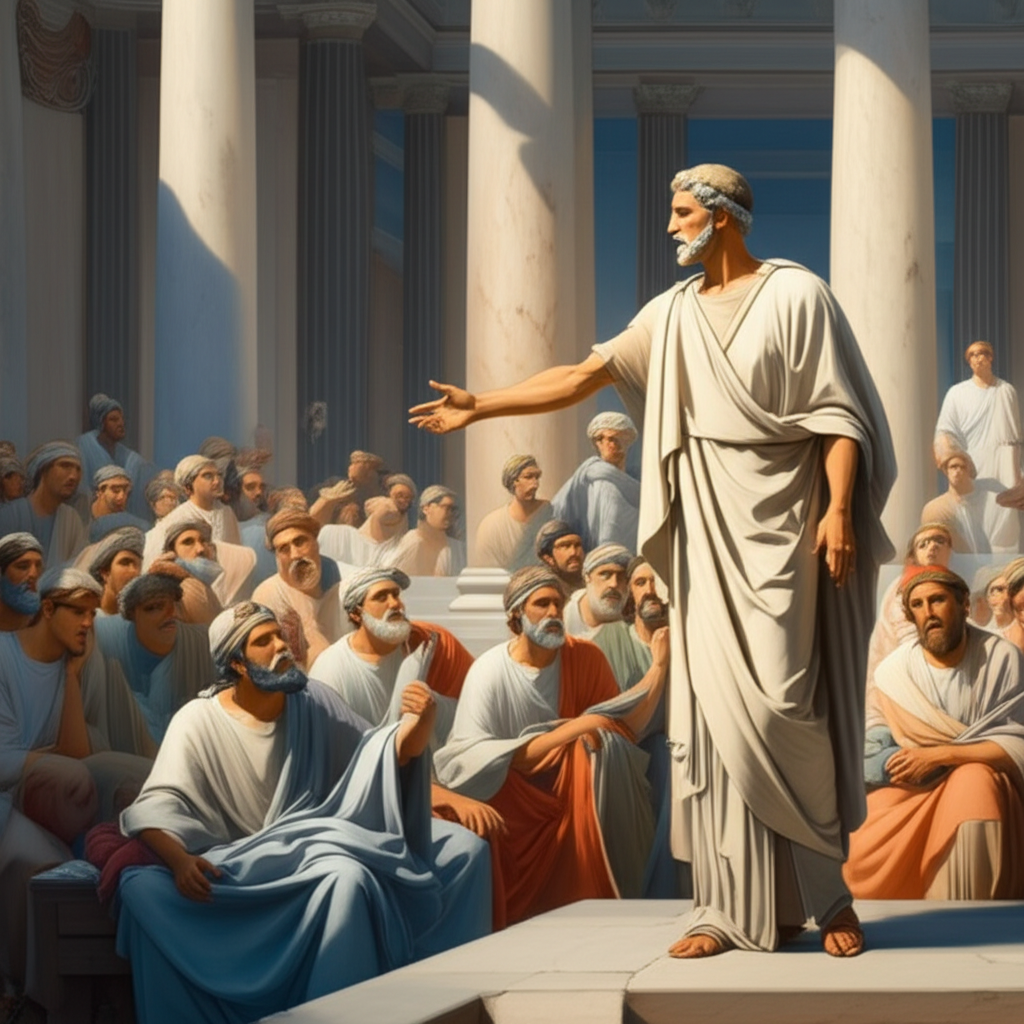
However, this power carries immense responsibility. The line between persuasion and manipulation can be thin. Unscrupulous use of rhetoric can exploit biases, spread misinformation, and incite division, leading to ill-informed decisions or societal discord. This underscores the crucial role of critical thinking for the citizen. To discern truth from sophistry, one must not only understand what is being said but how it is being said, scrutinizing the underlying appeals and intentions.
The Ethical Imperative: Truth, Persuasion, and the Responsible Citizen
The enduring tension between rhetoric and truth, first articulated by Plato, remains a central philosophical concern. Is the ultimate goal of rhetoric to reveal truth, or merely to achieve assent, regardless of veracity? Aristotle suggested that rhetoric, when used responsibly, could help truth prevail, as truth is inherently more persuasive than falsehood when presented skillfully. Yet, he also acknowledged its potential for abuse.
For the modern citizen, engaging with the constant stream of persuasive messages requires a conscious effort to cultivate intellectual virtues. This involves:
- Active Listening: Beyond merely hearing words, understanding the speaker's purpose, their appeals, and their underlying assumptions.
- Critical Evaluation: Questioning the evidence, identifying logical fallacies, and recognizing emotional manipulation.
- Seeking Diverse Perspectives: Exposing oneself to a variety of arguments to avoid echo chambers and develop a more nuanced opinion.
Ultimately, the role of rhetoric in opinion formation is undeniable and multifaceted. It is a powerful instrument that can elevate discourse, inspire action, and foster understanding, or conversely, obfuscate, mislead, and divide. The responsibility lies not only with the rhetor to use their craft ethically but equally with every citizen to engage with persuasive appeals thoughtfully, critically, and with an unwavering commitment to the pursuit of reasoned truth.
YouTube Video Suggestions:
-
📹 Related Video: ARISTOTLE ON: The Nicomachean Ethics
Video by: The School of Life
💡 Want different videos? Search YouTube for: "Aristotle Rhetoric Ethos Pathos Logos Explained"
-
📹 Related Video: PLATO ON: The Allegory of the Cave
Video by: The School of Life
💡 Want different videos? Search YouTube for: "Plato Gorgias Rhetoric vs Philosophy"