

The Indispensable Compass: Prudence as the Architect of Temperance
Summary: In the grand tapestry of human virtues, temperance often appears as the quiet, unassuming thread, but its strength and beauty are profoundly dependent on the guiding hand of prudence. This article explores how prudence, often understood as practical wisdom, is not merely an accessory to temperance but its essential precondition, enabling the virtuous individual to navigate the complex landscape of desires and pleasures, thereby avoiding the pitfalls of both excess and deficiency. Without the insightful discernment of prudence, temperance risks becoming either rigid asceticism or reckless indulgence, undermining the very essence of a well-ordered life.
Unveiling the Cardinal Virtues: A Symbiotic Relationship
The ancient philosophers, whose wisdom resonates through the Great Books of the Western World, consistently identified a set of cardinal virtues as foundational to human flourishing. Among these, Prudence (or Phronesis) and Temperance (or Sophrosyne) stand in a particularly intimate relationship. While temperance concerns the moderation of desires and appetites, prudence is the intellectual virtue that guides moral action, discerning the right means to achieve good ends. It is the practical wisdom that informs how one should be temperate, ensuring that moderation is applied intelligently and appropriately, rather than blindly or arbitrarily.
Prudence: The Eye of the Soul, Guiding Action
Prudence is more than mere cautiousness; it is the intellectual virtue that perfects practical reason. As Aristotle articulates in his Nicomachean Ethics, prudence is "a true and reasoned state of capacity to act with regard to the things that are good or bad for man." It is the ability to deliberate well about what is good, not in a universal, abstract sense, but in the concrete particularities of life.
Consider the following aspects of prudence:
- Deliberation (Euboulia): The capacity to think well and consider various courses of action.
- Judgment (Synesis and Gnome): The ability to make sound decisions based on understanding and empathy for specific situations.
- Memory (Memoria): Learning from past experiences.
- Foresight (Providentia): Anticipating future consequences.
- Circumspection (Circumspectio): Attending to all relevant circumstances.
Without this multifaceted wisdom, any attempt at virtue can fall short. Prudence is the navigational chart that allows us to steer clear of vice and towards virtue.
Temperance: The Harmonious Self
Temperance, derived from the Latin temperare meaning "to moderate" or "to mix in due proportion," is the virtue that regulates our desires for pleasure, especially those associated with touch and taste. Plato, in his Republic, speaks of temperance as a kind of harmony or agreement within the soul, where the rational part rightly governs the appetitive part. It is not the absence of desire, but the ordering of desire according to reason.
The domain of temperance includes:
- Food and Drink: Moderating consumption to maintain health and avoid gluttony or drunkenness.
- Sexual Pleasure: Regulating desires for intimacy within appropriate bounds.
- Material Possessions: Avoiding avarice and excessive attachment to worldly goods.
- Emotional Regulation: Controlling anger, fear, and other passions to prevent them from overwhelming reason.
The goal of temperance is not repression, but liberation – freedom from the tyranny of unbridled appetites, allowing the individual to pursue higher goods.
The Indispensable Interplay: Prudence as the Architect of Temperance
The true genius of the classical understanding lies in the recognition that these virtues are not isolated islands but interconnected continents. Temperance, without prudence, is blind. Prudence, without temperance, is impotent.
- Discerning the Mean: Aristotle famously posited that virtue lies in a mean between two extremes of vice – excess and deficiency. Prudence is the faculty that identifies this mean in any given situation. For example, temperance in eating isn't simply eating "less"; it's eating the right amount for one's body, health, and circumstances. Prudence determines what that "right amount" is.
- Contextual Application: What is temperate for one person or situation may be intemperate for another. Prudence considers the specific context – time, place, person, motive – to guide temperate behavior. A celebratory feast demands a different measure of temperance than a period of fasting or recovery.
- Avoiding Pseudo-Temperance: Without prudence, one might fall into a vice of deficiency, such as insensibility or excessive asceticism, mistaking it for temperance. A person might deny all pleasure, not out of rational choice, but out of fear or a misunderstanding of what constitutes the good life. Prudence ensures that temperance serves life, not diminishes it.
- Guiding Against Intemperance: Prudence helps us foresee the negative consequences of excessive indulgence, strengthening our resolve to act temperately. It provides the rational arguments and insights needed to resist immediate gratification for long-term well-being.
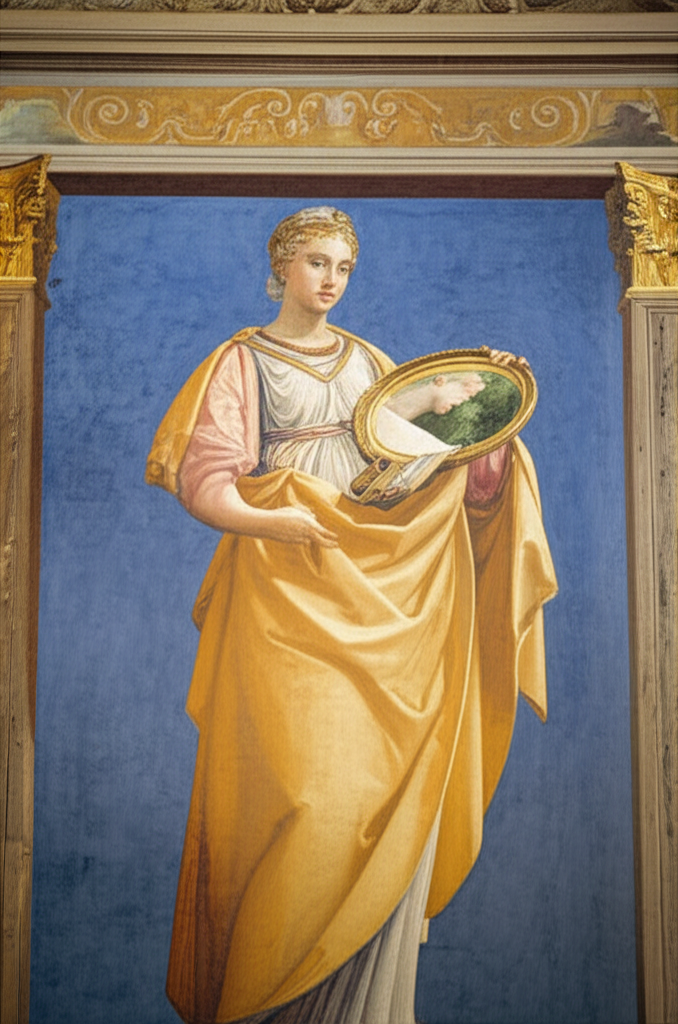 and a serpent (representing wisdom), gently guiding another figure, personifying Temperance, who is pouring water into a jug of wine, symbolizing moderation and the mixing of elements in due proportion.)
Navigating Virtue and Vice with Prudence
The path to virtue is fraught with the dangers of vice. For temperance, the two opposing vices are:
| Vice of Deficiency | Virtue of the Mean | Vice of Excess |
|---|---|---|
| Insensibility/Apathy | Temperance | Intemperance/Licentiousness |
| Lack of desire for pleasure; indifference to good things. | Proper ordering of desires for pleasure; moderation. | Unrestrained pursuit of pleasure; slavery to appetite. |
Prudence acts as the internal compass, constantly recalibrating our direction. It analyzes the situation, consults past experiences, and forecasts outcomes, thereby illuminating the correct path of temperance. It prevents temperance from becoming either a rigid, joyless denial of life's good or a reckless plunge into self-destructive indulgence. It grounds temperance in a holistic understanding of human flourishing.
The Enduring Relevance of Prudence and Temperance
In our modern world, characterized by instant gratification and endless consumer choices, the virtues of prudence and temperance are more critical than ever. From managing digital consumption to making ethical financial decisions, from fostering healthy relationships to preserving our environment, the need for wisdom to guide our desires is paramount. A prudent individual understands the long-term implications of their choices, while a temperate individual possesses the self-control to act on that understanding. Together, they form the bedrock of a responsible and flourishing existence.
Conclusion: Prudence is not merely a companion to temperance; it is the very intellect that gives temperance its form, its direction, and its meaning. It is the practical wisdom that allows us to correctly identify the good, discern the appropriate means to achieve it, and thereby live a life of true moderation and balance. To cultivate temperance is to first cultivate prudence, for it is only with the clear vision of the mind that the appetites of the body can be truly harmonized and directed towards genuine human flourishing.
YouTube: "Aristotle Nicomachean Ethics Prudence Temperance"
YouTube: "Plato Republic Sophrosyne Wisdom Moderation"
📹 Related Video: What is Philosophy?
Video by: The School of Life
💡 Want different videos? Search YouTube for: "The Role of Prudence in Temperance philosophy"