

The Indispensable Compass: The Role of Prudence in Government
In the intricate dance of governance, where every decision ripples through the lives of millions, one virtue stands paramount as the guiding star for effective and just leadership: prudence. Far from mere caution or timid hesitation, prudence, as understood by the great thinkers of the Western tradition, is practical wisdom—the intellectual virtue that enables leaders to deliberate well about what is good and advantageous for the community, ensuring that actions taken are not only well-intentioned but also well-executed and beneficial. This article explores how prudence serves as the essential compass for wise government, steering policy towards justice and societal flourishing.
What is Prudence? A Classical Understanding
To understand the role of prudence in government, we must first clarify its classical definition. Drawing from the Great Books of the Western World, particularly the works of Aristotle and Plato, prudence (or phronesis in Greek) is distinguished from theoretical wisdom (sophia) and mere cleverness.
- Aristotle, in his Nicomachean Ethics, defines prudence as a "truthful and reasoned characteristic of acting in a humanly good way." It is the intellectual virtue concerned with human action, enabling one to deliberate correctly about what is good and bad for human beings. Crucially, it involves not just knowing the right ends, but also discerning the right means to achieve those ends. A prudent leader doesn't just desire justice; they know how to implement policies that genuinely foster it.
- Plato, in The Republic, suggests that wisdom (which prudence is a form of) is the virtue of the ruling class, enabling them to govern the state with foresight and understanding. It is the ability to see the larger picture, to understand the interconnectedness of policies and their long-term consequences.
Prudence, therefore, is not simply a moral virtue, but an intellectual one that guides all other virtues. It is the "charioteer of the virtues," as Thomas Aquinas later articulated, directing courage, temperance, and justice towards appropriate and effective action.
Prudence as the "Charioteer of the Virtues" in Governance
In the realm of government, prudence is the virtue that harmonizes ambition with reality, idealism with practicality. It is the ability to:
- Discern the good: To understand what truly benefits the citizens and the state, beyond immediate popular appeal or short-term gains.
- Deliberate effectively: To weigh various options, consider diverse perspectives, and anticipate potential outcomes.
- Act appropriately: To choose the right course of action, at the right time, and in the right manner.
Without prudence, even well-meaning leaders can fall prey to rash decisions, short-sighted policies, or ineffective implementation. A government might sincerely aim for justice, but without the practical wisdom of prudence, its efforts could be misdirected, leading to unintended negative consequences or even greater injustice.
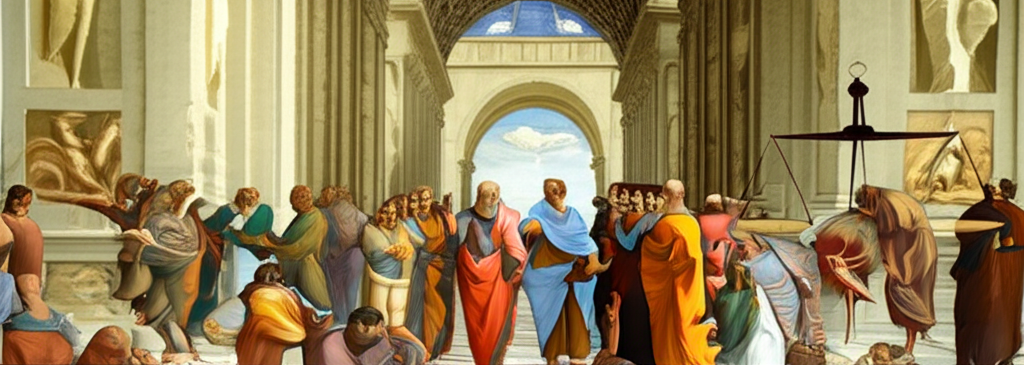
Manifestations of Prudence in Effective Government
The presence of prudence is evident in several key areas of good government:
1. Policy Formulation and Legislation
- Foresight: Prudent leaders consider the long-term impact of laws, not just immediate effects. They anticipate how a policy might reshape society, economy, or culture over decades.
- Comprehensive Analysis: They engage in thorough research, consulting experts, and listening to diverse stakeholders to understand the full scope of an issue.
- Adaptability: Recognizing that circumstances change, prudent policies often include mechanisms for review and adjustment, allowing for flexibility without compromising core principles.
2. Crisis Management
In times of crisis—be it economic downturns, natural disasters, or public health emergencies—prudence is paramount.
- Calm Judgment: Prudent leaders maintain composure under pressure, avoiding panic-driven reactions.
- Measured Response: They weigh immediate needs against long-term stability, allocating resources wisely and communicating clearly.
- Learning from Experience: They reflect on past crises to inform present actions, demonstrating a continuous accumulation of practical wisdom.
3. Resource Allocation and Fiscal Responsibility
Prudence guides the responsible stewardship of public funds and natural resources.
- Prioritization: It involves making difficult choices about where to invest limited resources for the greatest public good.
- Sustainability: Prudent fiscal policies aim for long-term economic health, avoiding excessive debt or short-sighted spending that burdens future generations.
- Transparency: Openness in financial dealings builds trust and allows for public scrutiny, which can itself be a check on imprudence.
4. International Relations and Diplomacy
In the complex arena of global politics, prudence is the bedrock of effective foreign policy.
- Strategic Vision: Understanding geopolitical landscapes, historical contexts, and the motivations of other nations.
- Negotiation and Compromise: The ability to seek mutually beneficial solutions, recognizing limits, and avoiding unnecessary confrontation.
- Peacebuilding: Prudent diplomacy prioritizes stability and cooperation, working towards peaceful resolutions of conflicts.
The Perils of Imprudence
Conversely, a lack of prudence in government often leads to disastrous outcomes.
- Rash Decisions: Policies enacted without sufficient deliberation often fail or create new problems.
- Short-sightedness: Focusing only on immediate gains can undermine long-term stability and prosperity.
- Demagoguery: Leaders who appeal to popular sentiment without practical wisdom can lead their nations astray.
- Instability: A consistently imprudent government erodes public trust, fosters division, and can lead to societal unrest.
Cultivating Prudence in Leadership
While some degree of practical wisdom may be innate, prudence is largely a virtue that can be cultivated and refined.
Key Elements for Cultivating Prudence:
- Experience: Learning from past successes and failures, both personal and historical.
- Reflection: Taking time to analyze situations, outcomes, and one's own decision-making processes.
- Seeking Counsel: Actively listening to diverse perspectives, experts, and even critics. A truly prudent leader knows they don't have all the answers.
- Moral Character: Prudence is inextricably linked to moral virtue. A person lacking in justice, temperance, or courage cannot be truly prudent, as their judgment will be skewed by self-interest or vice.
- Education: A broad education, especially in history, philosophy, and ethics, provides the context and intellectual tools necessary for sound judgment.
Conclusion
The role of prudence in government is not merely desirable; it is absolutely essential. As the intellectual virtue that guides practical action, it enables leaders to navigate the complexities of governing with wisdom, foresight, and a steadfast commitment to the common good. A prudent government is one that not only strives for justice but possesses the practical capacity to achieve it, building a society that is stable, prosperous, and truly flourishing for all its citizens. In an ever-changing world, the timeless insights into prudence from the Great Books of the Western World remain as relevant as ever, offering a profound blueprint for effective and ethical leadership.
YouTube Video Suggestions:
-
📹 Related Video: ARISTOTLE ON: The Nicomachean Ethics
Video by: The School of Life
💡 Want different videos? Search YouTube for: ""Aristotle Prudence Nicomachean Ethics explained""
2. ## 📹 Related Video: PLATO ON: The Allegory of the Cave
Video by: The School of Life
💡 Want different videos? Search YouTube for: ""Plato Republic Justice and the State""