

The Enduring Enigma: Prophecy's Central Role in Religious Thought
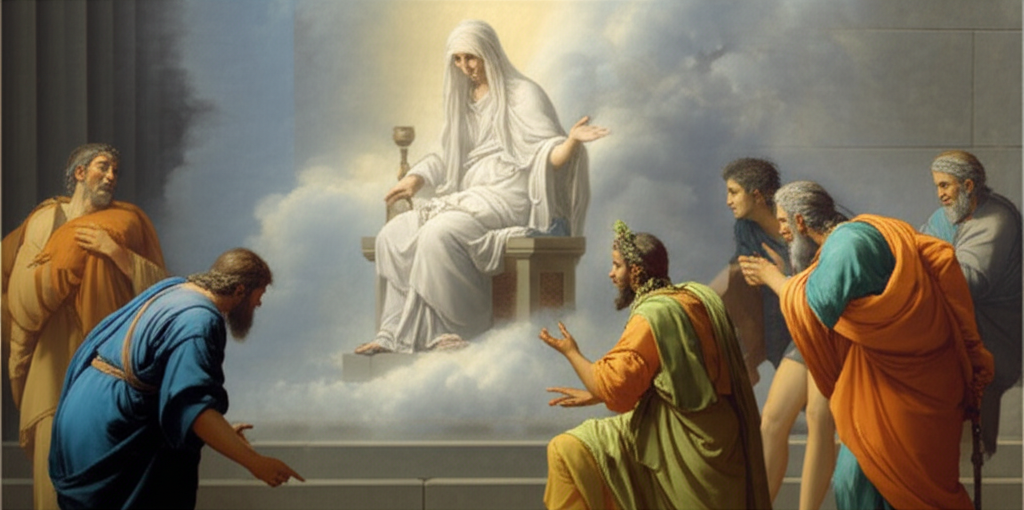
Prophecy, in its myriad forms, has served as a cornerstone for nearly every major religion throughout human history, acting as a crucial conduit between the divine and the mortal realm. Its role transcends mere prediction, profoundly shaping the doctrines, ethical frameworks, and communal identity of believers. This article delves into how prophecy functions not just as a source of foretelling, but as a fundamental mechanism for acquiring spiritual knowledge, establishing authority, and continually redefining the human relationship with the sacred. From the ancient oracles to the Abrahamic prophets, the quest for divine insight has consistently driven religious practice and philosophical inquiry, challenging the boundaries of human reason and revelation.
A Glimpse into the Divine: Defining Prophecy
At its core, prophecy is the claim of receiving and transmitting a message from a divine source. This communication can manifest in various ways: direct verbal revelation, visions, dreams, or even inspired utterances. The Great Books of the Western World are replete with accounts of such phenomena, from the pronouncements of the Oracle of Delphi in Greek tragedies to the detailed visions of the prophets in the Hebrew Bible and the revelations in the Quran. What unites these diverse expressions is the assertion that the knowledge conveyed originates beyond ordinary human perception or deduction.
Key Characteristics of Prophetic Communication:
- Divine Origin: The message is believed to come from a god, gods, or a transcendent reality.
- Authoritative Weight: Due to its divine source, prophetic messages often carry immense authority, demanding obedience or belief.
- Revelatory Content: Prophecy reveals truths, commands, or future events not otherwise accessible.
- Mediated Transmission: A chosen individual (the prophet) acts as the intermediary.
Prophecy as Foundation: Shaping Sacred Texts and Doctrines
The most profound role of prophecy lies in its foundational capacity for religion. Many of the world's sacred texts are, in essence, compilations of prophetic utterances and their interpretations. Consider the Torah, the Gospels, or the Quran—each purports to contain direct divine revelation delivered through prophets. These texts, born of prophetic experience, establish the core tenets, moral laws, and historical narratives that define a faith.
Moses, for instance, is depicted not merely as a leader but as the recipient of the Law directly from God, fundamentally shaping Judaism and influencing Christianity and Islam. His prophetic encounter on Mount Sinai provided the very blueprint for a covenantal religion. Similarly, the teachings and actions of Jesus, as recorded by his disciples, are understood by Christians as the fulfillment of ancient prophecies and a new prophetic revelation in themselves. The very structure of belief, therefore, is inextricably linked to prophetic claims.
The Quest for Knowledge: Prophecy as a Source of Understanding
Beyond establishing religious frameworks, prophecy offers a unique pathway to knowledge. This is not empirical or rational knowledge in the scientific sense, but a form of spiritual or existential understanding. It claims to provide insights into:
- Divine Nature and Will: What is the nature of God? What are His intentions for humanity? Prophecy often purports to answer these ultimate questions.
- Moral Imperatives: Prophets frequently deliver ethical codes and warnings, guiding humanity towards righteous living and away from transgression. This knowledge is prescriptive, not merely descriptive.
- Future Events (Foretelling): While not its sole purpose, the predictive aspect of prophecy—foretelling disaster, salvation, or the coming of a messiah—is perhaps its most dramatic and often debated function. This offers believers a sense of divine plan and purpose amidst the uncertainties of life.
- Hidden Truths: Prophecy can unveil mysteries, explain the origins of the universe, or reveal the true meaning behind current events from a divine perspective.
This quest for knowledge through revelation stands in fascinating contrast and occasional tension with philosophical inquiry that seeks knowledge through reason. The Great Books frequently explore this dichotomy, with figures like Plato exploring divine inspiration as a source of truth, and later theologians like Augustine and Aquinas attempting to reconcile faith and reason, prophetic insight and human intellect.
Navigating Doubt and Interpretation: The Human Element
Despite its authoritative claims, the role of prophecy is rarely without its challenges. The history of religion is also a history of false prophets, misinterpreted visions, and the complexities of human interpretation. How does one discern genuine prophecy from delusion or deception? This question has plagued religious communities for millennia.
- Discernment Criteria: Many traditions developed criteria to test prophets, often involving the fulfillment of predictions or the consistency of their message with established divine law.
- Ambiguity: Prophetic language is often symbolic, metaphorical, and open to multiple interpretations, requiring exegetical skill and spiritual insight.
- Human Agency: Even when a message is divine, its transmission and reception are human, introducing potential for error, bias, or misunderstanding.
These challenges underscore that while prophecy claims to deliver absolute knowledge, its engagement with human experience necessitates a continuous process of faith, reason, and communal discernment.
The Philosophical Lens: Reason vs. Revelation
From a philosophical standpoint, prophecy presents a compelling challenge to epistemology—the study of knowledge. If knowledge can be acquired through divine revelation, what then is the role of human reason, observation, and empirical evidence?
Thinkers in the Great Books tradition, from Aristotle's emphasis on empirical observation to Descartes's rationalism, have grappled with the limits of human intellect. Prophecy, by contrast, posits a source of knowledge that transcends these limits. This has led to enduring debates:
- Can Revelation be Rational? Can prophetic truths be logically demonstrated or are they accepted purely on faith?
- The Problem of Miracles: Prophetic claims are often accompanied by miraculous events. How do these fit within a rational understanding of the world? Hume's skepticism regarding miracles, for example, directly challenges the empirical basis for such claims.
- Moral Authority: If prophecy dictates moral law, what is the role of human ethical reasoning?
These questions highlight prophecy's enduring philosophical significance, forcing a re-evaluation of what constitutes truth and how humanity can best acquire it.
Conclusion: Prophecy's Unfolding Legacy
The role of prophecy in religion is far more intricate than simple fortune-telling. It is a foundational element that establishes identity, provides moral and existential knowledge, and continually shapes the relationship between humanity and the divine. While challenging to the rational mind, prophetic claims have undeniably inspired countless individuals, forged civilizations, and provided profound meaning. The ongoing philosophical inquiry into its nature, its veracity, and its impact ensures that prophecy remains a vibrant and essential field of study, continually prompting us to consider the boundaries of human understanding and the enduring quest for ultimate truths.
YouTube Video Suggestions:
-
📹 Related Video: What is Philosophy?
Video by: The School of Life
💡 Want different videos? Search YouTube for: ""Philosophy of Religion Revelation vs Reason""
-
📹 Related Video: ARISTOTLE ON: The Nicomachean Ethics
Video by: The School of Life
💡 Want different videos? Search YouTube for: ""Great Books of the Western World Prophecy and Faith""