

The Unruly Heart of Democracy: Navigating Opinion in the Public Square
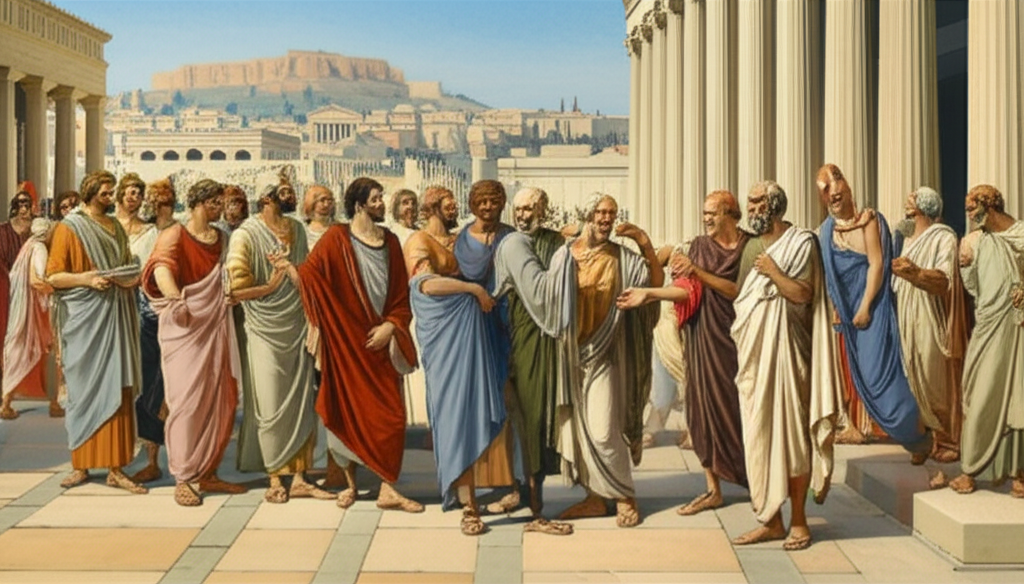
In the vibrant, often tumultuous theatre of democracy, the role of opinion is both its lifeblood and its enduring challenge. This article explores the fundamental, often paradoxical, relationship between individual and collective beliefs and the functioning of a self-governing society. From the ancient Athenian agora to the digital town squares of today, how citizens form, share, and challenge their opinions, often shaped by powerful rhetoric, determines the very health and direction of our shared political life. We will delve into how great thinkers have grappled with the distinction between informed judgment and mere popular sentiment, and the ongoing imperative for an engaged, critically thinking citizenry.
The Foundation of Freedom: Opinion as Democratic Imperative
At its core, democracy presumes that the collective wisdom (or at least the collective will) of its citizens should guide governance. This presupposes the freedom to form and express opinion. Without this liberty, the very concept of self-rule crumbles. Yet, the nature of this opinion has been a source of philosophical contention since antiquity.
- Ancient Doubts: Plato, observing the volatile Athenian democracy, expressed deep skepticism about the wisdom of the masses. In The Republic, he distinguished sharply between doxa (mere opinion, often swayed by emotion and superficial appearances) and episteme (true knowledge, attained through rigorous reason and philosophical training). For Plato, a society governed by unexamined opinion was destined for instability, likening it to a ship steered by a crew pandering to the loudest voices rather than the skilled navigator.
- Aristotle's Pragmatism: While acknowledging the potential pitfalls, Aristotle, in Politics, recognized the practical necessity of public opinion in a functioning polis. He argued that even if individual citizens might not possess perfect wisdom, their collective judgment, when pooled, could often surpass that of a single ruler or a small elite. This concept underpins the very idea of a deliberative assembly.
Table: Opinion's Dual Nature in Democracy
| Aspect | Positive Role | Potential Pitfall |
|---|---|---|
| Expression | Ensures diverse viewpoints, checks power | Can lead to misinformation, echo chambers |
| Formation | Encourages critical thinking, informed debate | Susceptible to manipulation, emotional appeals |
| Collective Will | Reflects popular sovereignty, legitimacy of rule | Tyranny of the majority, suppression of dissent |
| Change | Allows for societal progress, adaptation | Instability, impulsive policy shifts |
The Art of Persuasion: Rhetoric and the Shaping of Opinion
If opinion is the currency of democracy, then rhetoric is the language through which it is exchanged and forged. From the impassioned speeches in the Roman Forum to modern political campaigns, the art of persuasion plays a crucial role in shaping public sentiment.
Aristotle, in his seminal work Rhetoric, meticulously dissected the tools of effective persuasion:
- Ethos: The speaker's credibility and character. A trusted citizen or leader can sway opinion more effectively.
- Pathos: Appeals to emotion. Understanding and tapping into the audience's feelings can generate strong support or opposition.
- Logos: Logical argument and reason. Presenting facts, evidence, and coherent reasoning is essential for convincing a discerning public.
While rhetoric can be a noble pursuit, guiding citizens towards reasoned decisions, it also carries the potential for manipulation. Sophists in ancient Greece were often criticized for using persuasive techniques to win arguments regardless of truth, a concern that echoes today in discussions about propaganda and "fake news." The challenge for democracy is to foster a citizenry capable of discerning genuine argument from mere sophistry.
The Citizen's Burden: Cultivating Informed Opinion
John Stuart Mill, in On Liberty, championed the absolute necessity of free speech and the open marketplace of ideas for a healthy democracy. He argued that even wrong opinions serve a vital purpose, either by being proven false and thus reinforcing the truth, or by containing a "portion of truth" that challenges prevailing orthodoxies. For Mill, the suppression of any opinion was a "peculiar evil."
However, Mill's argument implicitly places a significant burden on the citizen: the responsibility to engage critically with diverse opinions, to seek out information, and to cultivate an informed judgment rather than simply adopting prevailing beliefs.
Key Responsibilities of the Democratic Citizen in Forming Opinion:
- Critical Engagement: Not accepting information at face value; questioning sources and motives.
- Diverse Exposure: Actively seeking out perspectives that differ from one's own.
- Fact-Checking: Verifying claims and distinguishing between evidence and assertion.
- Deliberation: Engaging in thoughtful discussion and debate with others, even those with opposing viewpoints.
- Intellectual Humility: Being open to changing one's opinion in light of new evidence or stronger arguments.
In contemporary democracy, the proliferation of information, often unfiltered and unverified, makes this burden heavier than ever. The echo chambers of social media, where citizens are primarily exposed to opinions that reinforce their existing beliefs, pose a significant threat to the deliberative ideal.
Conclusion: The Enduring Challenge of Opinion in Democracy
The role of opinion in democracy remains a complex, dynamic interplay of individual autonomy, collective action, and the powerful forces of rhetoric. While the freedom to hold and express opinion is non-negotiable for self-governance, the quality of that opinion is paramount. From Plato's ancient warnings to Mill's advocacy for free discourse, the great thinkers of the Western tradition consistently remind us that democracy is not merely a system of government, but a continuous project of intellectual and civic virtue.
For democracy to thrive, citizens must strive beyond mere popular sentiment, engaging in the hard work of critical thinking, informed debate, and a genuine commitment to understanding, even when faced with uncomfortable truths. Only then can opinion serve as a true engine of progress, rather than a source of division and decline.
YouTube Video Suggestions:
-
📹 Related Video: PLATO ON: The Allegory of the Cave
Video by: The School of Life
💡 Want different videos? Search YouTube for: ""Plato's Republic Doxa Episteme""
-
📹 Related Video: ARISTOTLE ON: The Nicomachean Ethics
Video by: The School of Life
💡 Want different videos? Search YouTube for: ""Aristotle Rhetoric Ethos Pathos Logos Explained""