

The Shifting Sands of Persuasion: Opinion's Indispensable Role in Democracy
Summary: In a democracy, opinion is not merely a collection of individual viewpoints; it is the very bedrock upon which collective decisions are built. This article explores how diverse citizen opinions, shaped and transmitted through rhetoric, form the dynamic landscape of democratic governance. We delve into the historical roots of opinion's significance, examine the mechanisms of persuasion, and consider the inherent challenges in distinguishing informed judgment from mere prejudice, ultimately affirming opinion's complex but vital function in a self-governing society.
The Genesis of Collective Thought: Opinion as a Democratic Imperative
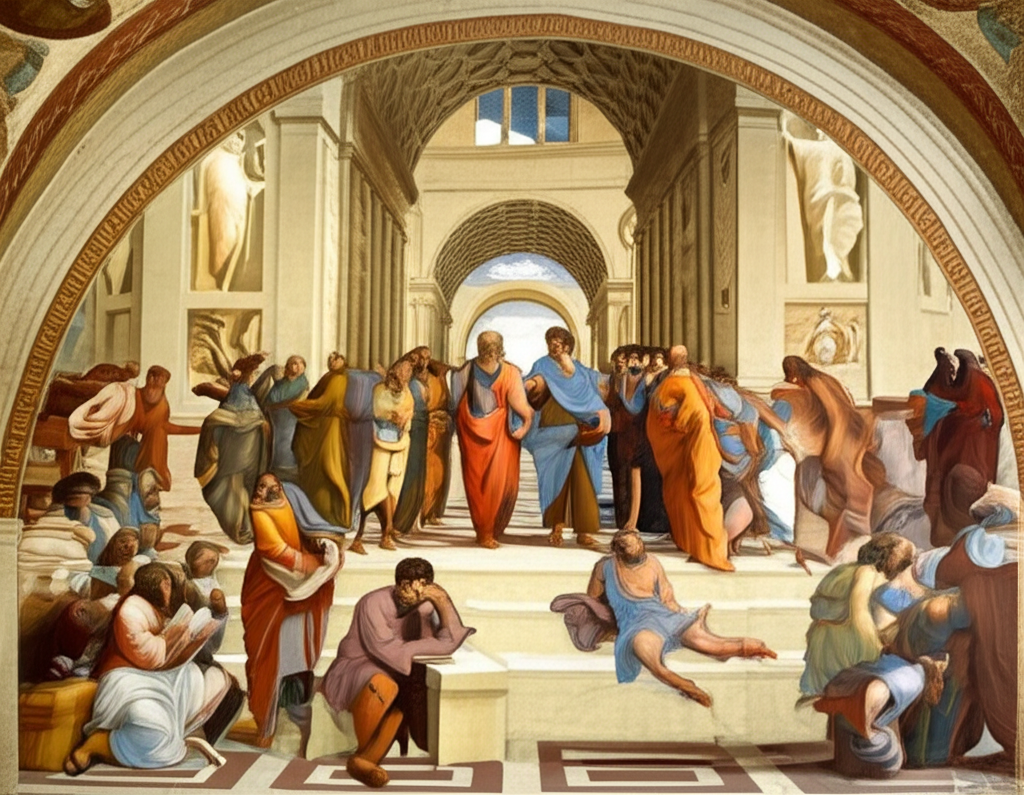
From the bustling agora of ancient Athens to the digital town squares of today, democracy has always been a system reliant on the active engagement of its citizens. At its heart lies the concept of opinion – not as an unshakeable truth, but as a fluid, often contested, articulation of belief, preference, and understanding. Without a mechanism for individual and collective opinions to be expressed, debated, and aggregated, the very notion of self-governance would crumble.
The ancient Greeks, particularly figures like Aristotle in his Politics, understood that while an ideal state might be governed by pure reason or philosophical insight, real-world polities operate on the best available judgments of many. These judgments, however imperfect, constitute public opinion. It is the raw material from which laws are forged, leaders are chosen, and societal direction is navigated. The challenge, then, is not to eliminate opinion, but to cultivate an environment where opinions can be informed, critically examined, and expressed responsibly.
The Art of Persuasion: Rhetoric as the Engine of Opinion Formation
How do individual opinions coalesce into a public will? This is where rhetoric enters the stage, an art form and a practical discipline that has shaped political discourse for millennia. As Aristotle meticulously outlined in his Rhetoric, persuasion is achieved through appeals to character (ethos), emotion (pathos), and logic (logos). In a democracy, rhetoric is the primary tool for:
- Articulating Ideas: Translating complex policies or philosophical principles into understandable arguments.
- Mobilizing Support: Inspiring citizens to act, vote, or advocate for particular causes.
- Challenging Assumptions: Forcing a re-evaluation of existing beliefs and prevailing wisdom.
However, the power of rhetoric is a double-edged sword. While it can enlighten and unify, it can also mislead and divide. The sophists of ancient Greece, often derided by Plato in works like the Gorgias for prioritizing persuasion over truth, remind us of the perpetual tension: Is rhetoric merely about winning an argument, or is it about guiding public opinion towards a greater good? This question remains central to the health of any democracy, demanding vigilance from its citizens and practitioners alike.
Table: The Dual Nature of Rhetoric in Democracy
| Aspect | Constructive Role | Destructive Potential |
|---|---|---|
| Purpose | To inform, clarify, and inspire deliberation. | To manipulate, obscure, and incite prejudice. |
| Method | Emphasizes reasoned arguments and shared values. | Relies on fallacies, emotional appeals, and misinformation. |
| Outcome | Fosters informed public opinion and consensus. | Leads to demagoguery, polarization, and irrational decisions. |
| Ethical Stance | Seeks truth and the common good. | Prioritizes personal gain or partisan victory. |
Navigating the Labyrinth: Distinguishing Informed Opinion from Mere Noise
The sheer volume and diversity of opinions in a modern democracy can be overwhelming. John Stuart Mill, in On Liberty, argued passionately for the "marketplace of ideas," believing that truth would ultimately emerge from the free exchange of diverse viewpoints. Yet, this ideal presumes a citizenry capable of discerning, evaluating, and critically engaging with these opinions.
The challenge lies in the distinction between:
- Doxa (Opinion): Often based on common sense, experience, or conventional wisdom, but lacking rigorous philosophical or scientific justification.
- Episteme (Knowledge/Truth): Justified true belief, grounded in reason and evidence.
Plato's allegory of the cave vividly illustrates this struggle, where individuals mistake shadows for reality, highlighting the difficulty of moving beyond superficial appearances to grasp deeper truths. For democracy to thrive, citizens must cultivate the intellectual virtues necessary to:
- Critically Evaluate Sources: Questioning the origin and bias of information.
- Engage in Deliberative Discourse: Listening actively and responding thoughtfully to opposing viewpoints.
- Resist Confirmation Bias: Actively seeking out perspectives that challenge one's own.
- Demand Evidence and Reason: Holding public figures and fellow citizens accountable for their claims.
The Deliberative Ideal: Refining Opinion for the Common Good
Despite the pitfalls, the ideal of democracy remains predicated on the belief that a collective of informed citizens can, through robust debate and the refinement of opinion, arrive at decisions that serve the common good. This isn't about achieving perfect truth, but about reaching the best possible judgment under conditions of uncertainty and diverse values.
The role of opinion in democracy is therefore dynamic and demanding. It requires:
- Freedom of Expression: Unfettered ability for citizens to voice their opinions, however unpopular.
- Access to Information: Ensuring citizens have the resources to form educated opinions.
- Civic Education: Cultivating critical thinking skills and an understanding of democratic processes.
- Respectful Dialogue: Fostering an environment where disagreement doesn't devolve into animosity.
Ultimately, opinion in democracy is more than just a preference; it is a contribution. It is the ongoing conversation that shapes our shared future, a constant negotiation between individual perspectives and collective aspirations. The health of our democratic institutions hinges on our ability to engage with this complex terrain, harnessing the power of rhetoric for enlightenment rather than manipulation, and elevating informed opinion above mere prejudice.
YouTube Video Suggestions:
-
📹 Related Video: PLATO ON: The Allegory of the Cave
Video by: The School of Life
💡 Want different videos? Search YouTube for: ""Plato Republic Allegory of the Cave explained""
-
📹 Related Video: ARISTOTLE ON: The Nicomachean Ethics
Video by: The School of Life
💡 Want different videos? Search YouTube for: ""Aristotle Rhetoric summary and analysis""