

The Enduring Role of Memory in Shaping Education and Knowledge
Memory is not merely a passive archive of past events; it is the vibrant crucible in which knowledge is forged, and education finds its very foundation. Without the capacity to retain, recall, and integrate information, learning would be an impossible endeavor, a fleeting whisper lost to the winds of time. This article explores the profound role of memory, often intertwined with imagination, in the educational journey, drawing insights from the timeless wisdom preserved in the Great Books of the Western World.
Memory: The Bedrock of Learning
At its core, learning is the acquisition of new knowledge or skills, and memory serves as the indispensable mechanism for this process. It allows us to build upon prior experiences, understand complex concepts, and develop expertise. From remembering basic facts to grasping intricate philosophical arguments, memory is the active faculty that enables continuity of thought and the accumulation of understanding.
The Indispensable Functions of Memory in Education:
- Retention of Information: The ability to store facts, concepts, and procedures.
- Recall and Retrieval: Accessing stored information when needed for problem-solving or understanding new material.
- Pattern Recognition: Identifying recurring themes and structures across different pieces of knowledge.
- Foundation for Critical Thinking: A robust memory provides the raw material upon which analysis, synthesis, and evaluation can operate.
- Skill Development: Repetition and memory are crucial for mastering practical skills, from mathematics to playing a musical instrument.
Philosophical Echoes: Memory Through the Ages
The role of memory has captivated philosophers for millennia, with many thinkers from the Great Books of the Western World grappling with its nature and significance.
- Plato and Recollection (Anamnesis): In dialogues like the Meno, Plato famously posited that learning is not merely acquiring new information but rather a process of recollection or remembering innate truths that the soul already possesses from a prior existence. This suggests that memory isn't just about storing external data, but about accessing deeper, inherent knowledge.
- Aristotle and the Faculty of Memory: Aristotle, in De Anima and other works, viewed memory as a distinct faculty of the soul, essential for experience and the formation of knowledge. He saw memory as the retention of phantasmata (images or sense impressions), which are necessary for thought and reasoning. Experience, built on repeated memories, leads to art and science.
- Augustine's Palace of Memory: Saint Augustine, in his Confessions, describes memory as a vast, inner "palace" or "field" of the mind, a boundless capacity not just for facts but for emotions, images, and even the very presence of God. His depiction highlights memory's profound depth and its integral connection to identity and spiritual understanding.
These ancient perspectives underscore that memory is far more than rote memorization; it is a dynamic, complex faculty intimately tied to the very essence of human understanding and being.
The Interplay of Memory and Imagination in Learning
While often treated separately, memory and imagination are deeply intertwined, especially in the context of education. Imagination is not merely fantasy; it is the faculty that allows us to combine, modify, and envision new possibilities based on our stored memories.
- Building Mental Models: Memory provides the building blocks (facts, concepts, experiences), and imagination allows us to arrange these blocks into coherent mental models or scenarios, helping us to understand complex systems or predict outcomes.
- Problem-Solving: When faced with a novel problem, we draw upon past memories of similar situations (memory) and then mentally manipulate those elements to devise new solutions (imagination).
- Empathy and Perspective-Taking: Remembering past emotional experiences (memory) allows us to imagine what others might be feeling, fostering empathy.
- Creative Synthesis: True innovation and deeper understanding in any field, be it science or art, often arise from the imaginative recombination of existing knowledge stored in memory. As David Hume noted, the imagination is crucial for connecting disparate ideas and forming complex thoughts.
Table: Memory vs. Imagination in Learning
| Aspect | Memory | Imagination |
|---|---|---|
| Primary Function | Retention and recall of past information | Creation and manipulation of mental images/ideas |
| Relationship to Reality | Grounded in actual past experiences/facts | Can extend beyond reality, envisioning possibilities |
| Role in Learning | Foundation for accumulating knowledge | Facilitates understanding, problem-solving, creativity |
| Example | Remembering historical dates or scientific laws | Envisioning a historical event or a new scientific theory |
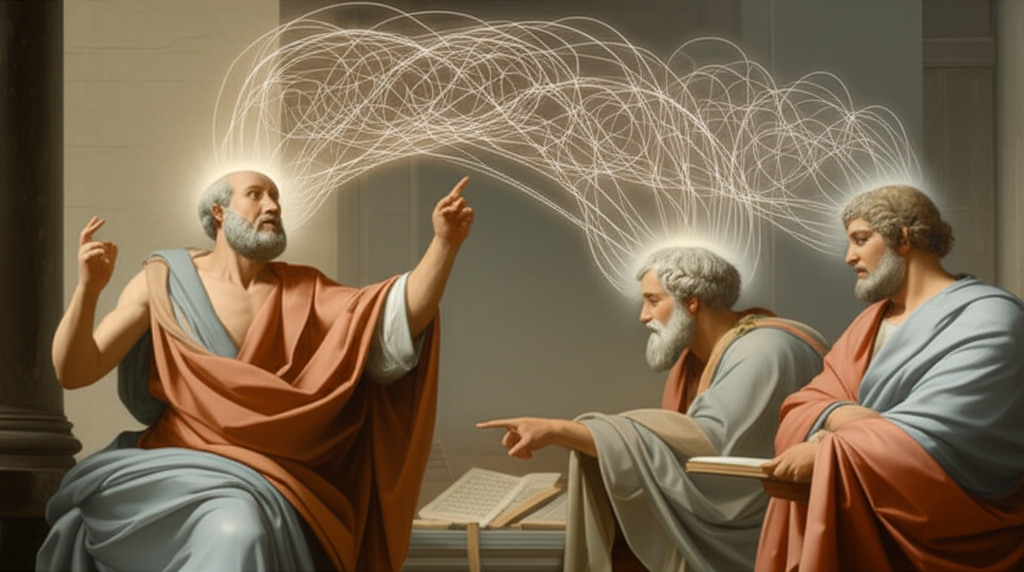
Memory as the Foundation of Knowledge
For knowledge to be robust and applicable, it must be deeply embedded in memory. Superficial learning, characterized by short-term retention, crumbles under the weight of new information, leaving little lasting impact. True education aims for durable knowledge that can be accessed, applied, and integrated over time.
- Schema Formation: As we learn, our memories organize information into complex cognitive structures called schemas. These schemas act as frameworks that help us interpret new information, make connections, and reduce cognitive load. A rich tapestry of schemas, built through extensive memory, is the hallmark of expertise.
- Long-Term Potentiation: Neuroscientific studies confirm that learning involves strengthening synaptic connections in the brain – a process known as long-term potentiation. This biological basis highlights how repeated exposure, active recall, and meaningful engagement physically alter the brain to cement knowledge into memory.
- Cumulative Learning: Every new piece of knowledge is understood in relation to what is already known. A strong memory provides the context and prior learning necessary to assimilate new information effectively, preventing isolated facts from floating unconnected in the mind.
Modern Implications for Education
Understanding the profound role of memory is critical for designing effective educational strategies. Rote memorization alone is insufficient, but active, meaningful engagement with material that promotes long-term retention is paramount.
- Active Recall: Techniques like flashcards, self-quizzing, and practice tests actively retrieve information from memory, strengthening its neural pathways.
- Spaced Repetition: Reviewing material at increasing intervals over time helps to consolidate memories and combat the natural forgetting curve.
- Elaboration and Connection: Linking new information to existing knowledge, creating analogies, and explaining concepts in one's own words deepens understanding and embeds memories more firmly.
- Meaningful Context: Presenting information within a relevant and engaging context aids comprehension and makes it more memorable than isolated facts.
- Embracing Imagination: Encouraging students to visualize concepts, create mental models, and think creatively about problems leverages the power of imagination to enhance memory and understanding.
The journey of education is fundamentally a journey of building and refining our memories. By understanding its intricate role and its dynamic relationship with imagination, we can foster learning environments that cultivate not just transient facts, but enduring knowledge that empowers individuals to think, create, and contribute meaningfully to the world.
YouTube: "Plato Meno recollection theory explained"
YouTube: "Augustine Confessions memory philosophy"
📹 Related Video: What is Philosophy?
Video by: The School of Life
💡 Want different videos? Search YouTube for: "The Role of Memory in Learning (Education) philosophy"