

The Enduring Echo: Memory's Indispensable Role in Learning and Education
Memory is far more than a mere archive of past events; it is the very bedrock upon which all learning and education are built. It acts as the dynamic architect of our understanding, constantly processing, storing, and retrieving information, thereby enabling the acquisition of new knowledge and the cultivation of critical thought. Without memory, our experiences would be fragmented, our lessons forgotten, and our capacity for imagination severely limited. This article delves into the profound role of memory, exploring its multifaceted contributions to the educational journey and its symbiotic relationship with our ability to envision and create.
Memory's Foundation: Building Blocks of Knowledge
At its heart, education is a process of accumulating and organizing knowledge. This accumulation is utterly dependent on memory. From the simplest facts to the most complex philosophical concepts, memory allows us to retain information, connect new ideas with existing frameworks, and build a coherent understanding of the world. It provides the context and background necessary for new learning to take root.
- Retention of Facts and Concepts: The most apparent role of memory is its capacity to store information – dates, definitions, theories, and methodologies. This foundational layer is crucial for progressing in any subject.
- Contextualization and Connection: Memory doesn't just store discrete units; it weaves them into a tapestry. It allows us to recall previous lessons, see patterns, and understand how different pieces of knowledge relate to one another, fostering a deeper, more integrated comprehension.
- Skill Development: From reading and writing to solving complex equations, skills are developed through practice and the memorization of procedures. Muscle memory, cognitive routines, and learned strategies are all manifestations of memory at work.
The Philosophical Lens: Memory Through the Ages
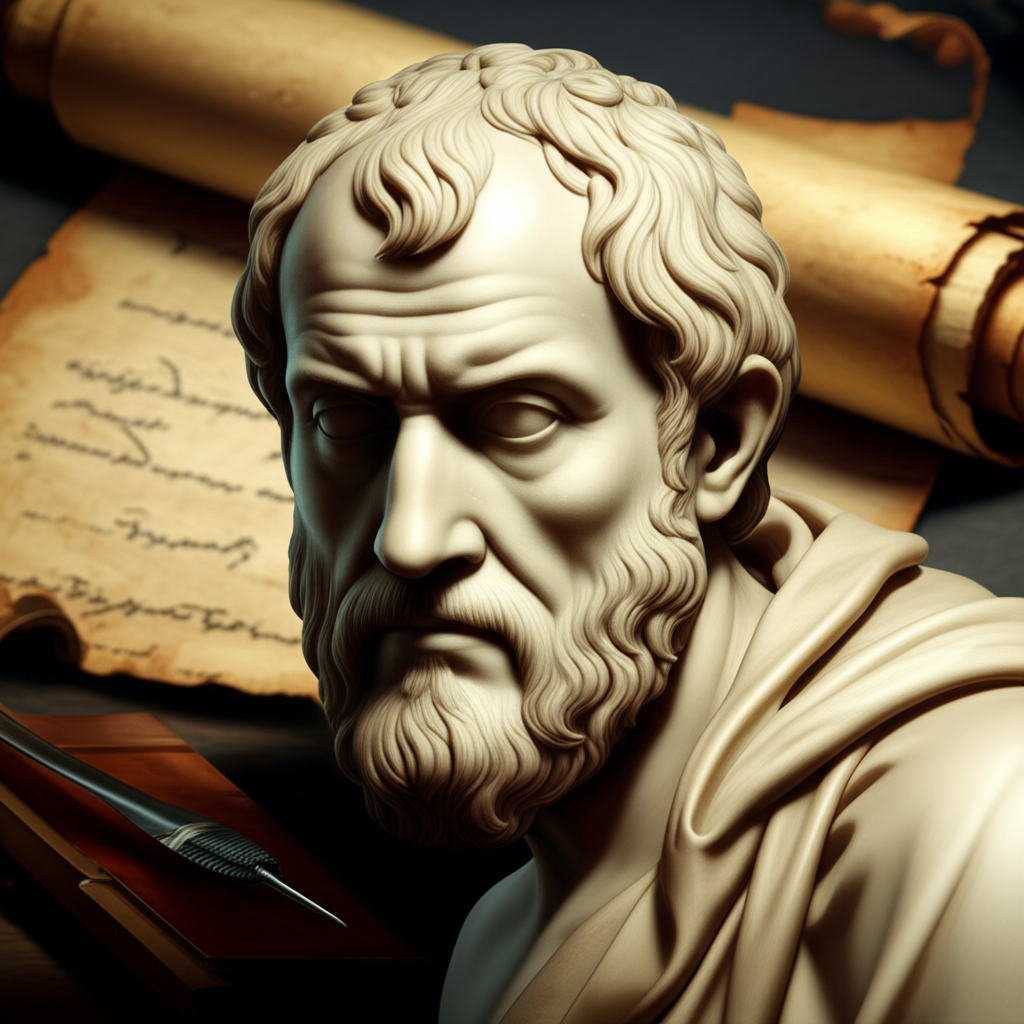
Thinkers throughout the Great Books of the Western World have grappled with the nature and role of memory. Plato, in works like Meno, famously posited the theory of anamnesis, or recollection, suggesting that learning is not the acquisition of new knowledge but the remembrance of eternal truths already residing within the soul. While perhaps not literal, this idea highlights memory's deep connection to innate understanding. Aristotle, in On Memory and Reminiscence, offered a more empirical view, seeing memory as a faculty of the soul connected to perception and experience, essential for rational thought and the formation of ideas. These ancient insights underscore memory's long-recognized importance in shaping our intellect.
Memory and Imagination: A Symbiotic Relationship
Perhaps one of the most fascinating aspects of memory's role in learning is its intimate connection with imagination. Far from being separate faculties, they are deeply intertwined, each feeding the other.
- Imagination as Informed by Memory: Our ability to imagine new scenarios, create novel solutions, or empathize with others is fundamentally based on our memories. We draw upon past experiences, observations, and acquired knowledge to construct mental models of things that do not yet exist or are not immediately present. A scientist imagining a new experiment, an artist envisioning a painting, or a writer crafting a story all rely on their reservoir of memories to fuel their creative process.
- Memory Enhanced by Imagination: Conversely, imagination can significantly aid memory. When we actively visualize concepts, create mental narratives, or form vivid associations, we encode information more deeply and make it easier to retrieve. The more creatively we engage with material, the stronger our memory traces become. This dynamic interplay is crucial for fostering innovative thinking within education.
Cultivating Memory for Effective Education
Given its critical role, how can we optimize memory for better learning outcomes? Modern cognitive science, building on centuries of pedagogical practice, offers several key strategies:
| Strategy | Description |
|---|---|
| Active Recall | Instead of passively rereading, actively retrieve information from memory (e.g., using flashcards, self-quizzing, summarizing without notes). This strengthens neural pathways. |
| Spaced Repetition | Reviewing material at increasing intervals over time. This leverages the "spacing effect," where distributed practice is more effective than massed practice for long-term retention. |
| Elaboration | Connecting new information to existing knowledge in meaningful ways. Asking "why" and "how," explaining concepts in your own words, or relating them to personal experiences. |
| Interleaving | Mixing different types of problems or subjects during study sessions. This helps build a more robust and flexible understanding, preventing rote memorization of single methods. |
| Metacognition | Thinking about thinking. Being aware of one's own memory processes, identifying what you know and don't know, and adjusting study strategies accordingly. |
| Sleep | Essential for memory consolidation. During sleep, the brain processes and strengthens memories acquired during waking hours. |
These techniques demonstrate that memory is not a passive receptacle but an active process that can be trained and improved. Effective education systems recognize and integrate these principles to help students not just memorize, but truly understand and retain knowledge.
Conclusion: Memory as the Architect of Understanding
The role of memory in learning and education is fundamental and pervasive. It is the engine that drives our capacity to acquire knowledge, the bridge that connects past experiences to future possibilities, and the canvas upon which our imagination paints new realities. From the ancient philosophers who pondered its essence to modern cognitive scientists unraveling its mechanisms, memory remains central to what it means to learn, grow, and contribute to the vast tapestry of human understanding. To truly educate is to cultivate memory, not as a mere storage device, but as a dynamic, interconnected faculty essential for profound learning and intellectual flourishing.
📹 Related Video: PLATO ON: The Allegory of the Cave
Video by: The School of Life
💡 Want different videos? Search YouTube for: ""Plato's Theory of Recollection Explained - Anamnesis and Learning""
📹 Related Video: ARISTOTLE ON: The Nicomachean Ethics
Video by: The School of Life
💡 Want different videos? Search YouTube for: ""The Science of Learning: How Memory Works in Education""