

The Enduring Echo: Memory's Indispensable Role in Shaping Knowledge and Education
Memory, often perceived as a mere repository of facts, is in truth the bedrock upon which all learning, understanding, and the very edifice of knowledge are constructed. Far from being a passive storage unit, memory plays an active, dynamic role in education, working in intricate concert with imagination to not only retain information but to synthesize, analyze, and ultimately forge new insights. Without the capacity to recall, integrate, and apply past experiences and learned concepts, true intellectual growth and the advancement of human understanding would be impossible.
Memory: The Bedrock of All Learning
At its most fundamental level, memory is the faculty that allows us to retain information and experiences over time. This foundational capacity is non-negotiable for education. Every new concept learned, every skill acquired, every piece of data processed relies on the brain's ability to encode, store, and retrieve. Imagine attempting to learn a new language without remembering previously learned vocabulary or grammar rules; it would be an endless, futile cycle.
- Retention of Fundamentals: Memory ensures that basic principles, definitions, and historical facts are not lost, providing the necessary scaffolding for more complex ideas.
- Building Blocks of Understanding: Each piece of retained information acts as a building block. Without memory, these blocks cannot be stacked, connected, or organized into coherent structures of knowledge.
- Continuity of Thought: Memory grants us intellectual continuity, allowing us to connect past lessons with present challenges, thereby enriching our learning experience.
Without memory, education as we know it simply wouldn't exist; every moment would be a rediscovery, every concept a blank slate.
Beyond Recall: The Symbiotic Dance of Memory and Imagination
While retention is crucial, the role of memory extends far beyond simple recall. Its true power unfolds when it intertwines with imagination. Memory provides the raw material – the stored facts, patterns, and experiences – which imagination then manipulates, reconfigures, and projects into new possibilities. This dynamic interplay is what allows for true innovation, problem-solving, and the creation of novel knowledge.
Consider a scientist formulating a hypothesis: they draw upon remembered theories, experimental results, and observations (memory), then envision new connections, potential outcomes, and novel methodologies (imagination). Similarly, a student grappling with a complex philosophical text uses memory to recall definitions and historical context, while imagination helps them visualize abstract concepts or reframe arguments.
- Memory stores facts and experiences: It provides the data points from our past.
- Imagination reconfigures stored data: It allows us to combine these data points in new ways, to see what could be.
- Together, they forge new knowledge: This synthesis leads to novel understanding, solutions, and creative expressions.
The true power of learning lies in this dynamic interplay, where the past informs the future, and what is known fuels what is yet to be discovered.
Memory as the Architect of Knowledge
The acquisition of knowledge is not merely about accumulating isolated facts; it's about understanding the relationships between them, recognizing patterns, and building comprehensive conceptual frameworks. Memory serves as the architect in this process, allowing us to construct these intricate mental models. It enables us to:
| Aspect of Learning | Role of Memory |
|---|---|
| Retention of Facts | Foundation for understanding, providing the raw data. |
| Conceptual Grasp | Linking disparate ideas, building schema, and recognizing overarching themes. |
| Problem-Solving | Recalling past solutions, principles, and successful strategies to apply to new challenges. |
| Critical Thinking | Comparing new information against existing knowledge to evaluate validity and coherence. |
| Creativity | Providing a rich internal library of images, ideas, and experiences for imagination to draw upon. |
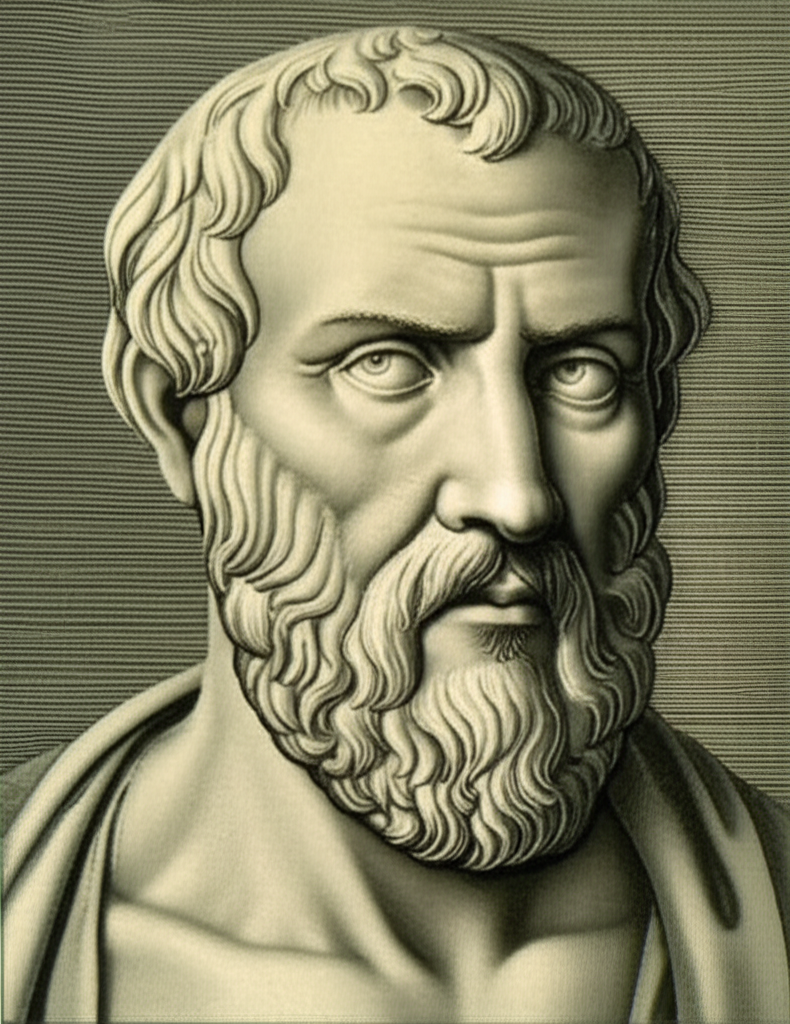 engaged in deep thought, perhaps with scrolls or a stylus, symbolizing the internal process of recollection and the external act of recording knowledge. The background might show subtle imagery of a library or an academy, reinforcing the context of education and the accumulation of wisdom over time.)
Cultivating Memory for Deeper Education
Given its central role, effective education must actively engage and cultivate memory. This goes beyond rote memorization, emphasizing strategies that promote deeper encoding and more robust retrieval. Techniques like active recall, spaced repetition, and the creation of meaningful connections between new and existing knowledge enhance memory's capacity. Philosophically, this aligns with the idea that learning is not just about passively receiving information, but actively constructing understanding. As many great thinkers have posited, true wisdom often involves the ability to synthesize vast amounts of remembered information into coherent, actionable knowledge.
Conclusion
The role of memory in education is undeniably profound and multifaceted. It is the indispensable faculty that stores our experiences, grounds our understanding, and empowers our imagination to venture into the unknown. Without memory, the journey of learning would be an endless series of disconnected moments, incapable of building the intricate structures of knowledge that define human civilization. To truly educate is to honor and cultivate this fundamental human capacity, recognizing it as the enduring echo that shapes our understanding of the world and our place within it.
YouTube Video Suggestions:
-
📹 Related Video: PLATO ON: The Allegory of the Cave
Video by: The School of Life
💡 Want different videos? Search YouTube for: ""Plato Meno recollection theory""
-
📹 Related Video: ARISTOTLE ON: The Nicomachean Ethics
Video by: The School of Life
💡 Want different videos? Search YouTube for: ""Aristotle on memory and sensation""