

The Indispensable Archive: The Role of Memory in Language
At the heart of human communication lies an intricate dance between the present moment of utterance and the vast archives of the past. The Role of Memory in Language is not merely supplemental; it is foundational, shaping every word we speak, understand, and conceive. This article delves into how memory, intertwined with imagination, constructs our linguistic reality, offering a philosophical exploration of its deep connections to the Mind as illuminated by the timeless insights of the Great Books of the Western World. Without memory, language would be an incoherent babble, devoid of meaning, structure, or the capacity for narrative.
The Silent Architect: How Memory Builds Our Linguistic World
Language, far from being a simple tool, is a complex system of symbols, rules, and shared meanings. Each element, from the smallest phoneme to the grandest narrative, relies intrinsically on our ability to recall. The very act of speaking or comprehending involves a continuous retrieval process, drawing upon a lifetime of stored linguistic experience. This isn't just about remembering vocabulary; it's about recalling grammatical structures, phonetic patterns, contextual cues, and the emotional resonance of words.
The Foundational Pillars of Linguistic Memory
Our Mind stores linguistic data across various types of memory, each playing a critical Role:
- Semantic Memory: This is our mental lexicon—the vast dictionary of words, concepts, and factual knowledge. When we recall the meaning of "justice" or the definition of "tree," we are accessing semantic memory. This is the bedrock for all understanding and expression.
- Procedural Memory: This governs the how-to of language: the motor skills for articulation, the automatic application of grammatical rules, and the fluency of sentence construction. We don't consciously think about conjugating verbs or forming plurals; these processes are largely automated through procedural memory.
- Episodic Memory: This allows us to recall specific linguistic experiences—the first time we learned a particular word, a memorable conversation, or the context in which a phrase was used. Episodic memory enriches language with personal meaning and contextual depth, crucial for understanding irony, humor, and subtext.
- Working Memory: This is the temporary workspace of the Mind, holding information active for immediate processing. When we listen to a sentence, working memory retains the initial words long enough to integrate them with subsequent ones, allowing for comprehension of the entire thought.
Without these mnemonic faculties, the very fabric of Language would unravel. Each word would be new, each sentence a puzzle without precedent.
Memory and Imagination: The Creative Nexus of Language
Beyond mere recall, memory's profound Role extends into the realm of Imagination. These two faculties are not distinct but deeply interdependent, especially in the creative and expressive dimensions of language. To understand a metaphor, to craft a compelling story, or to envision a future described in words, we must draw upon past experiences (memory) and reconfigure them into novel forms (imagination).
- Aristotle, in De Anima and On Memory and Reminiscence, posits memory as a faculty of the soul closely tied to perception and imagination (phantasia). He understood that to remember is often to re-present images to the mind, and these images are the raw material for both recollection and creative thought. The ability to form mental images from past perceptions is fundamental to using language to describe things not immediately present.
- John Locke, in An Essay Concerning Human Understanding, explored how complex ideas are formed from simpler ones, which are initially derived from sensation and reflection and retained by memory. Imagination then allows us to combine and recombine these remembered simple ideas into new, complex ones, which Language then labels and communicates. This interplay is essential for abstract thought and metaphorical expression.
This dynamic duo allows us to transcend the immediate and the literal, enabling the richness of poetry, the depth of philosophy, and the intricate narratives that define human culture.
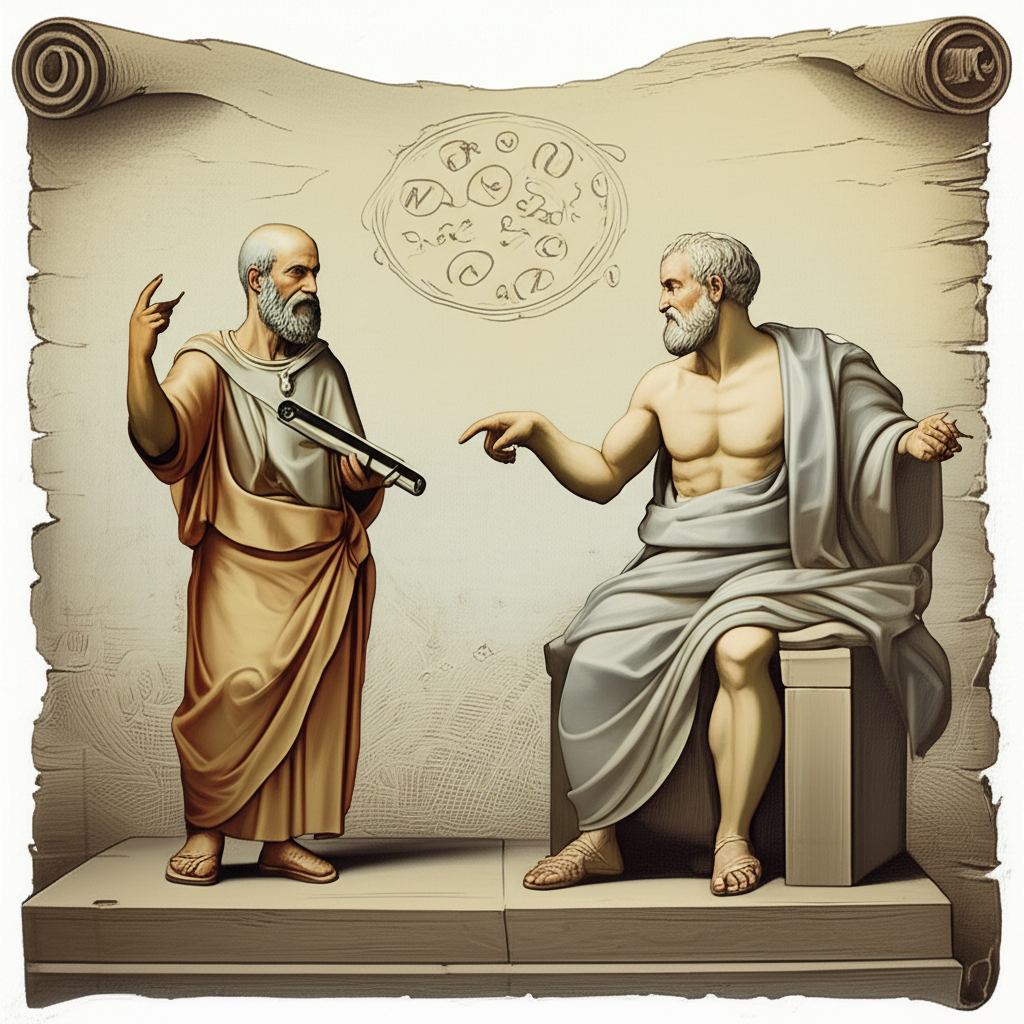
The Philosophical Roots: Echoes from the Great Books
The profound connection between memory, mind, and language has captivated philosophers for millennia, finding eloquent expression in the Great Books.
Plato's Anamnesis and the Forms
For Plato, particularly in dialogues like the Meno and Phaedo, memory takes on a transcendental Role. His theory of anamnesis, or recollection, suggests that learning is not acquiring new knowledge but rather remembering eternal truths (the Forms) that the soul knew before birth. Language, in this view, serves as a tool to prompt this recollection, guiding the Mind back to its innate wisdom. The words we use, though imperfect, point towards these perfect, remembered Forms.
Augustine's Labyrinth of Memory
Saint Augustine, in his Confessions, dedicates an entire book to the marvel and mystery of memory. He describes it as a vast, boundless palace, a "stomach of the mind" where not only images and knowledge but also emotions and intentions are stored. For Augustine, memory is deeply tied to identity and the very capacity for self-reflection and understanding God. His reflections underscore memory's Role in shaping narrative—our personal story—which is inherently a linguistic construct.
Kant and the Structure of the Mind
Immanuel Kant, in his Critique of Pure Reason, reveals how the Mind actively structures experience. While not directly focusing on memory as a storage unit in the Augustinian sense, his concept of the transcendental imagination is crucial. This faculty synthesizes sensory input into coherent perceptions, a process that relies on the retention and ordering of phenomena. For Kant, the very possibility of coherent experience, which Language then describes, depends on the synthetic unity provided by the Mind's structuring capacities, implicitly involving a form of temporal retention—a kind of working memory at a transcendental level.
Conclusion: Memory as the Lifeblood of Language
The Role of memory in Language is far more than a simple storage function; it is the very lifeblood that courses through every linguistic act. From the foundational recall of vocabulary and grammar to the imaginative leaps that allow for poetry and abstract thought, memory underpins our ability to communicate, to learn, and to construct our understanding of reality. Drawing upon the profound insights of the Great Books, we see that the Mind's capacity for recollection, interwoven with Imagination, is not merely a feature of human intellect, but its defining characteristic, making language possible and imbuing it with depth, history, and the potential for endless creation.
YouTube: "Plato Anamnesis Explained"
YouTube: "Augustine Confessions Book 10 Memory Analysis"
📹 Related Video: What is Philosophy?
Video by: The School of Life
💡 Want different videos? Search YouTube for: "The Role of Memory in Language philosophy"