

The Indispensable Architecture of Language: Memory's Central Role
The intricate tapestry of human communication, which we call language, is not merely a collection of sounds or symbols but a dynamic system deeply rooted in the role of memory. Far from being a simple storage locker for past events, memory acts as the very scaffolding upon which our linguistic abilities are built, maintained, and creatively deployed. It is the silent, persistent force that connects our present utterances to a vast reservoir of past experiences, learned vocabularies, and grammatical structures, fundamentally shaping the way our mind interacts with the world through words. Without memory, language, as we know it, would cease to exist, dissolving into an unintelligible chaos of isolated moments.
Beyond Simple Recall: Memory as Foundation
When we speak of memory, our initial thoughts often drift to recalling specific events or facts. However, in the context of language, its function is far more pervasive and multifaceted. It encompasses not just what we consciously remember, but also the unconscious retention of rules, patterns, and meanings that allow us to understand and generate speech.
Consider the depth of what memory holds for language:
- Semantic Memory: This is our internal dictionary and encyclopedia, storing the meanings of words, concepts, and factual knowledge. When we use a word like "justice" or "democracy," it's our semantic memory that supplies its rich, often culturally nuanced, definition.
- Lexical Memory: Distinct yet related, this holds the specific words themselves – their sounds, spellings, and grammatical properties. It's how we retrieve the correct word from our mental lexicon at lightning speed during conversation.
- Syntactic Memory: This refers to our internalized knowledge of grammatical rules and sentence structures. We don't consciously recite rules like "subject-verb-object" as we speak, but our syntactic memory guides the construction of coherent sentences.
- Episodic Memory: While often associated with personal events, episodic memory plays a crucial role in language by providing the context and experiences that imbue words with personal significance. It allows us to recall specific conversations, stories, or instances where certain words were used, enriching our understanding and enabling narrative.
This complex interplay of memory types highlights that language is not an external tool we simply pick up, but an integral part of our cognitive architecture, profoundly shaped and enabled by the mind's capacity to remember.
The Intertwined Threads of Language Acquisition
The role of memory is perhaps most evident and profound in the process of language acquisition. From infancy, the developing mind is a prodigious memorizer, absorbing sounds, patterns, and associations at an astonishing rate.
- Early Childhood: A child learns their native tongue by repeatedly hearing words, associating them with objects or actions, and internalizing grammatical structures through exposure and repetition. This is not rote memorization in the traditional sense, but an active, dynamic process of pattern recognition and retention. Each new word or phrase is cataloged, cross-referenced, and integrated into an ever-expanding linguistic network.
- Vocabulary Expansion: Throughout life, our vocabulary continues to grow. Each new word encountered requires a new memory trace, linking its sound, spelling, meaning, and usage patterns. Without this capacity, learning a second language, or even expanding our first, would be impossible.
- Fluency and Recall: The fluidity of speech relies on rapid, effortless access to our stored linguistic data. Hesitation, mispronunciation, or incorrect grammar often stem from momentary failures or inefficiencies in memory retrieval.
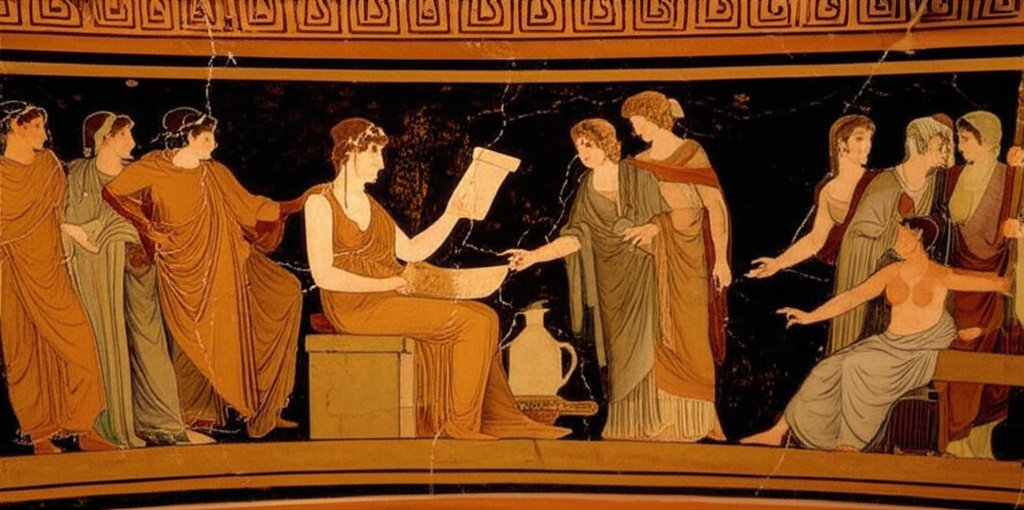
Memory, Imagination, and the Construction of Meaning
Beyond mere recall, memory's role extends into the realm of imagination – a critical component of language. When we engage in conversation, read a novel, or craft a story, we are not simply regurgitating stored information. We are actively constructing new meanings, envisioning scenarios, and expressing novel ideas. This creative process is inextricably linked to memory.
- Metaphor and Analogy: Understanding and creating metaphors requires accessing stored knowledge (semantic memory) and applying it to new contexts, often requiring an imaginative leap. For example, understanding "time is money" draws on our remembered experiences of both concepts.
- Narrative Construction: Building a coherent story, whether factual or fictional, relies on recalling events, characters, and settings (episodic memory) and then imaginatively rearranging, embellishing, or inventing new elements based on established patterns and possibilities.
- Counterfactual Thinking: Language allows us to ponder "what if" scenarios. This ability to imagine alternative realities is predicated on our memory of how things are or were, providing the baseline for hypothetical variations.
The mind's ability to combine and recombine stored linguistic units, informed by past experiences and guided by imagination, is what gives language its incredible power to express the infinite possibilities of human thought.
The Philosophical Echoes: Mind and the Logos
Philosophers throughout history, from the ancient Greeks to modern phenomenologists, have grappled with the profound connection between memory, mind, and language. Plato, in his theory of anamnesis, suggested that learning is a form of recollection, implying an inherent, remembered knowledge within the soul that language helps to unlock. Aristotle, in his De Anima, explored how memory stores sensory impressions and concepts, which are then articulated through speech.
Later thinkers, like John Locke, emphasized the empirical basis of knowledge, where ideas are formed from sensory experience and then named and communicated through language. For these philosophers, the very structure of our thought, and thus our capacity for reason and communication, is inseparable from our ability to retain and recall information. The role of memory, therefore, is not merely functional but existential, defining a core aspect of human consciousness and our engagement with the world. It is the bridge between our inner mental landscape and the shared public space of discourse.
Conclusion: The Unseen Scaffolding of Thought
In conclusion, the role of memory in language is far more fundamental than often recognized. It is the unseen scaffolding that supports every word we utter, every sentence we comprehend, and every new idea we conceive. From the acquisition of basic vocabulary to the sophisticated construction of narratives and the imaginative exploration of possibilities, memory is the bedrock upon which our linguistic world stands. It is the repository of our shared meanings, the archive of our individual experiences, and the engine that drives the continuous evolution of our collective human mind. To speak is to remember; to understand is to access a shared mnemonic heritage.
YouTube Video Suggestions:
-
📹 Related Video: What is Philosophy?
Video by: The School of Life
💡 Want different videos? Search YouTube for: ""philosophy of memory and language""
2. ## 📹 Related Video: What is Philosophy?
Video by: The School of Life
💡 Want different videos? Search YouTube for: ""Great Books Western World philosophy mind language""