

The Echoes of Thought: Memory's Indispensable Role in the Architecture of Language
Summary: This article delves into the profound and often underestimated role of memory in the very fabric of language. From the foundational acquisition of vocabulary and grammatical structures to the nuanced acts of comprehension and creative expression, memory serves as the essential bedrock upon which our linguistic capabilities are built. We explore how memory not only stores the raw materials of communication but also, in conjunction with imagination, enables the dynamic construction of meaning, profoundly shaping the very nature of the mind itself and underpinning all human discourse.
Unpacking the Linguistic Ledger: Memory as the Foundation of Utterance
To speak, to write, to understand – these fundamental human acts, so seemingly effortless, rest upon an intricate scaffolding of recall. The role of memory in language is not merely incidental; it is constitutive. Without memory, language as we know it would simply cease to exist, dissolving into an incoherent stream of present-moment sounds devoid of context or meaning.
Consider the child, embarking on the monumental task of acquiring their native tongue. Each word, each phrase, each grammatical pattern must be encountered, processed, and, crucially, remembered. This isn't a passive storage; it's an active integration into a growing cognitive network that allows for recognition, association, and ultimately, production. The very lexicon we possess, the vast treasury of words at our disposal, is a testament to the enduring power of memory.
The Lexical Archive: Storing the Building Blocks
Our vocabulary is, in essence, a monumental mnemonic feat. Each word is a complex package: a sound pattern, a visual representation (for readers), a semantic meaning, and a web of associations.
Key Aspects of Lexical Memory:
- Semantic Memory: This allows us to recall the meaning of words and concepts (e.g., knowing what "justice" means). It's the storehouse of facts and general knowledge.
- Episodic Memory: While often associated with personal events, episodic memory can influence language by providing context for how we learned a word or phrase, or the specific situations in which we've used it.
- Procedural Memory: This subtle form of memory guides the motor skills involved in speaking (articulation) and writing, allowing for fluent execution without conscious thought about each muscle movement.
Without the robust functioning of these memory systems, the simple act of naming an object or articulating a thought would become an insurmountable challenge, requiring constant re-learning.
The Grammar of Recall: Syntax, Structure, and Sense
Beyond individual words, memory is equally critical for understanding and generating grammatical structures. We don't consciously parse every sentence according to explicit rules; rather, our minds access remembered patterns of syntax and morphology. This allows for the rapid construction and deconstruction of sentences, enabling fluid communication.
- Syntactic Memory: The unconscious recall of how words fit together to form coherent phrases and sentences (e.g., subject-verb-object order in English).
- Morphological Memory: The ability to recall how prefixes, suffixes, and root words combine to alter meaning (e.g., understanding that "un-" negates a word).
This intricate dance of recall ensures that our utterances are not merely collections of words but structured expressions of thought. It's the memory of grammatical paradigms that allows us to distinguish between "The dog bit the man" and "The man bit the dog," two sentences composed of the same words but conveying radically different meanings.
Memory and Imagination: Forging New Realities with Language
The role of memory and imagination in language is deeply intertwined. While memory provides the raw materials—words, grammatical structures, past experiences—imagination allows us to combine these elements in novel ways, to construct narratives, hypothesize about the future, or conceive of abstract ideas that have no direct sensory input.
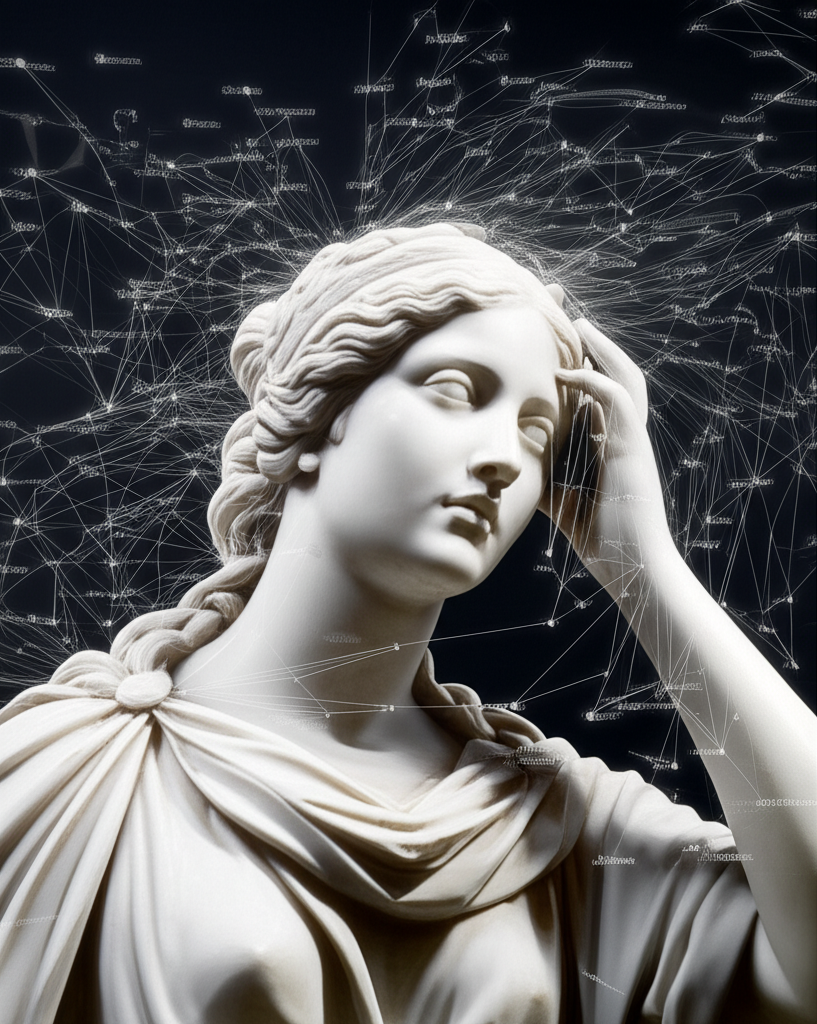
Consider the act of storytelling. We draw upon memories of people, places, emotions, and past events, but then we imagine new scenarios, new dialogues, new outcomes. Language becomes the vehicle through which these remembered and imagined elements are woven into a coherent, communicable tapestry. This creative synthesis is a hallmark of human cognition, a testament to the dynamic interplay between what we have stored and what we can conceive.
The Creative Loop:
- Recall: Accessing vocabulary, grammatical rules, and past experiences from memory.
- Combine: Using imagination to arrange these elements into new configurations.
- Articulate: Employing language to express the imagined concept.
- Store: The newly formed linguistic construct (e.g., a new idea or narrative) can itself be stored in memory.
This cyclical process highlights how memory is not just a passive repository but an active participant in the generation of new thought and expression.
Language as a Repository of Collective Memory: Shaping the Mind
Beyond individual cognition, language itself serves as a vast, intergenerational memory system for humanity. The very words we use carry the accumulated history, philosophy, and cultural understanding of countless generations. Concepts like "democracy," "justice," or "tragedy" are imbued with meanings forged over millennia, preserved and transmitted through linguistic forms.
This collective memory, embedded in language, profoundly shapes the individual mind. When we learn a language, we are not just acquiring a tool for communication; we are inheriting a framework for understanding the world, a set of conceptual categories, and a vast store of shared knowledge. The nuances of a language can reflect a culture's priorities, its values, and its unique way of perceiving reality.
How Language Embodies Collective Memory:
| Feature of Language | Reflection of Collective Memory | Example YOLO | The term "YOLO" is an acronym for "you only live once," which is often used to justify acting impulsively or taking risks. While the sentiment is about embracing life, the phrase has become synonymous with a certain recklessness. This philosophical exploration of "YOLO" delves into its implications for our decisions, values, and the meaning we derive from our finite existence.
The Philosophical Underpinnings of "You Only Live Once"
The phrase "you only live once" (YOLO) encapsulates a profound philosophical truth: the finitude of human existence. This core understanding has preoccupied thinkers from ancient Greece to modern existentialists.
Ancient Roots: Carpe Diem and the Epicurean Pursuit
The sentiment behind YOLO is not new. It echoes the Latin "carpe diem," or "seize the day," a phrase popularized by the poet Horace. This wasn't a call for recklessness but an urging to make the most of the present, acknowledging the fleeting nature of time.
- Horace: Advocated for enjoying present pleasures without excessive worry for the future, recognizing that "the moment you speak, time is grudging, has fled."
- Epicurus: His philosophy, often misunderstood, sought to achieve ataraxia (tranquility) through the pursuit of pleasure, defined as the absence of pain and disturbance. This meant living simply, cultivating friendship, and engaging in intellectual pursuits, rather than indulging in hedonistic excess. The emphasis was on intelligent choices leading to lasting contentment, not impulsive gratification.
Existentialism and the Burden of Freedom
In the 20th century, existentialist philosophers like Jean-Paul Sartre and Albert Camus grappled intensely with the implications of a singular, finite life without inherent meaning.
- Sartre: Argued that "existence precedes essence," meaning we are born without a predetermined purpose and are condemned to be free. This freedom comes with the heavy responsibility of creating our own meaning and values through our choices. YOLO, in this context, could be seen as an acknowledgment of this radical freedom, but also a potential abdication of the responsibility to choose authentically.
- Camus: Explored the "absurd," the conflict between humanity's search for meaning and the universe's indifferent silence. His solution was not despair but rebellion – embracing life's absurdity, finding joy in the present, and creating meaning despite the lack of ultimate purpose.
The Modern Dilemma: Impulsivity vs. Intentionality
In its contemporary usage, YOLO often leans towards impulsivity. It becomes a justification for actions that might be considered risky, short-sighted, or even hedonistic. This raises critical questions about the nature of a "good life."
Table: YOLO - Impulsive vs. Intentional Interpretations
| Aspect | Impulsive Interpretation of YOLO | Intentional Interpretation of YOLO |
|---|---|---|
| Focus | Immediate gratification, short-term pleasure | Maximizing long-term fulfillment, meaningful experiences |
| Risk | Justification for unnecessary risk, ignoring consequences | Calculated risk-taking for growth, embracing challenges |
| Responsibility | Dismissal of future consequences, self-centered | Acknowledging personal agency and the impact of choices on self & others |
| Meaning | Ephemeral thrills, superficial experiences | Deep engagement with life, purpose-driven actions |
| Philosophical Link | Hedonism (vulgar sense), unchecked desire | Stoicism, Epicureanism (true sense), Existentialism (authentic choice) |
The core tension lies in whether "you only live once" empowers us to live more fully and authentically, or merely serves as an excuse for unexamined behavior.
The Ethical Implications: A Life Lived for Others?
If we only live once, does that imply a purely self-serving existence? Many philosophical traditions argue against this.
- Utilitarianism (Mill, Bentham): Suggests that ethical actions are those that maximize overall happiness or well-being. A YOLO mentality focused solely on individual pleasure might conflict with this, especially if it harms others.
- Deontology (Kant): Emphasizes moral duties and rules, regardless of consequences. Acting on impulse without considering universal moral principles would be antithetical to Kantian ethics.
- Virtue Ethics (Aristotle): Focuses on developing good character traits (virtues) over a lifetime. A life of continuous impulsive decisions might prevent the cultivation of virtues like prudence, courage, or justice.
A truly robust philosophical understanding of "you only live once" would integrate the awareness of our finitude with a sense of responsibility – not just to ourselves, but to the communities and world we inhabit. It would transform from a fleeting justification for impulse into a profound motivator for intentional, meaningful living.
Conclusion: Embracing Finitude with Purpose
The phrase "you only live once" carries significant weight. It is a stark reminder of our singular journey through existence. The philosophical challenge, however, is to move beyond its superficial interpretation as a call to mere impulsivity and to embrace its deeper meaning: to live with intention, to make choices that resonate with our deepest values, and to craft a meaningful narrative for the one life we are given. This requires not a rejection of consequences, but a profound engagement with them, understanding that every choice shapes the unique essence of our finite existence.
YouTube Video Suggestions:
-
📹 Related Video: EXISTENTIALISM: The Philosophy of Freedom
Video by: The School of Life
💡 Want different videos? Search YouTube for: ""Existentialism and the meaning of life""
2. ## 📹 Related Video: What is Philosophy?
Video by: The School of Life
💡 Want different videos? Search YouTube for: ""Carpe Diem philosophy history""